‘Major milestone’ as beavers released into Loch Ness area
-
Published
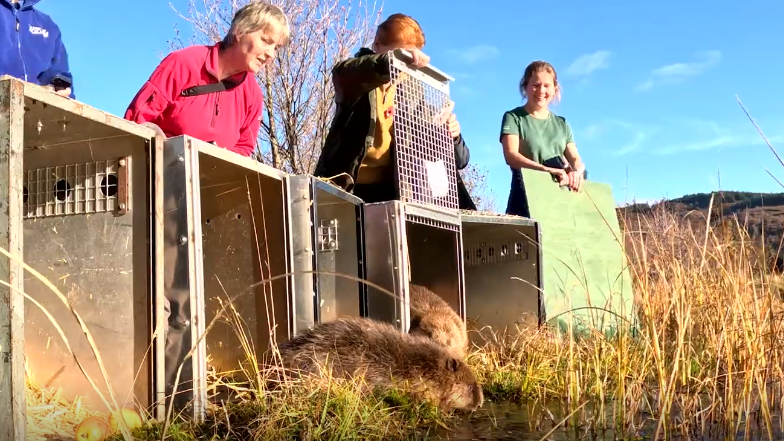
A family of six beavers have been released into the Loch Ness catchment, 500 years since the species was last recorded there.
The beavers were reintroduced to the Dundreggan rewilding estate in Glenmoriston, having been relocated from elsewhere in Scotland.
The Ness Beaver Project will reintroduce at least 15 beaver family groups into lochs, lochans and rivers around Loch Ness over the next three years.
Beavers were first reintroduced to Scotland in 2009 after being hunted to extinction about 400 years ago.
The family consists of a mother beaver, two juveniles that are about two years old, and three young beavers who were born earlier this year.
NatureScot has approved the release and has granted a licence to Trees for Life and the Beaver Trust.
 Image source, Trees For Life
Steve Micklewright, chief executive of Trees for Life, said it was a “very beautiful thing to see” the animals back in their natural habitat.
He said: “I can see them swimming and very calm, which is a really good sign.”
He added that the beavers looked “very settled” and relaxed straight away.
The project is designed to allow beaver populations to connect and grow in a suitable habitat, including woodlands and hundreds of miles of river and loch banks.
The beavers came from areas where they were having a negative impact on prime agricultural land and where mitigation measures had not been successful or possible.
 Image source, Trees For Life
The last widely-cited historical record of Scotland’s beavers, dating from 1526 to 1527, placed them around Loch Ness.
Alan McDonnell, head of nature restoration at Trees for Life, said: “The Ness Beaver Project is now set to be a major milestone for nature recovery in Britain.
“Five hundred years since Loch Ness became the last recorded site of Scotland’s beavers before they were eradicated, they are back with the space and habitat to flourish.”
He said the beavers brought “the potential for new wetlands, more wildlife, and healthier rivers.”
The beavers will dig channels, coppice trees and build dams to create pools, wetlands and light-filled woodland gaps.
It is hoped these will support frogs and dragonflies, with the abundance of insects providing food for birds and bats.
Trees For Life said that on smaller streams, beaver dams slow the flow of water and trap sediment, helping to improve water quality.
 Image source, Trees For Life
Once the animals have settled, the organisation plans to introduce guided tours at Dundreggan, offering opportunities to spot beavers and see signs of their activity.
The River Ness catchment was identified by NatureScot in 2022 as one of the most suitable locations in Scotland for the rodents.
NatureScot said responses to the applicants’ consultation process were positive, with more than 73% of respondents supportive.
Future release sites will be announced once the beavers have settled into their new environment.
Before release, the animals underwent health checks at the specialist beaver holding facility at Five Sisters Zoo.
-
-
Published6 days ago

-
-
-
Published1 day ago

-
-
-
Published29 July

-
Disclaimer : This story is auto aggregated by a computer programme and has not been created or edited by DOWNTHENEWS. Publisher: BBC