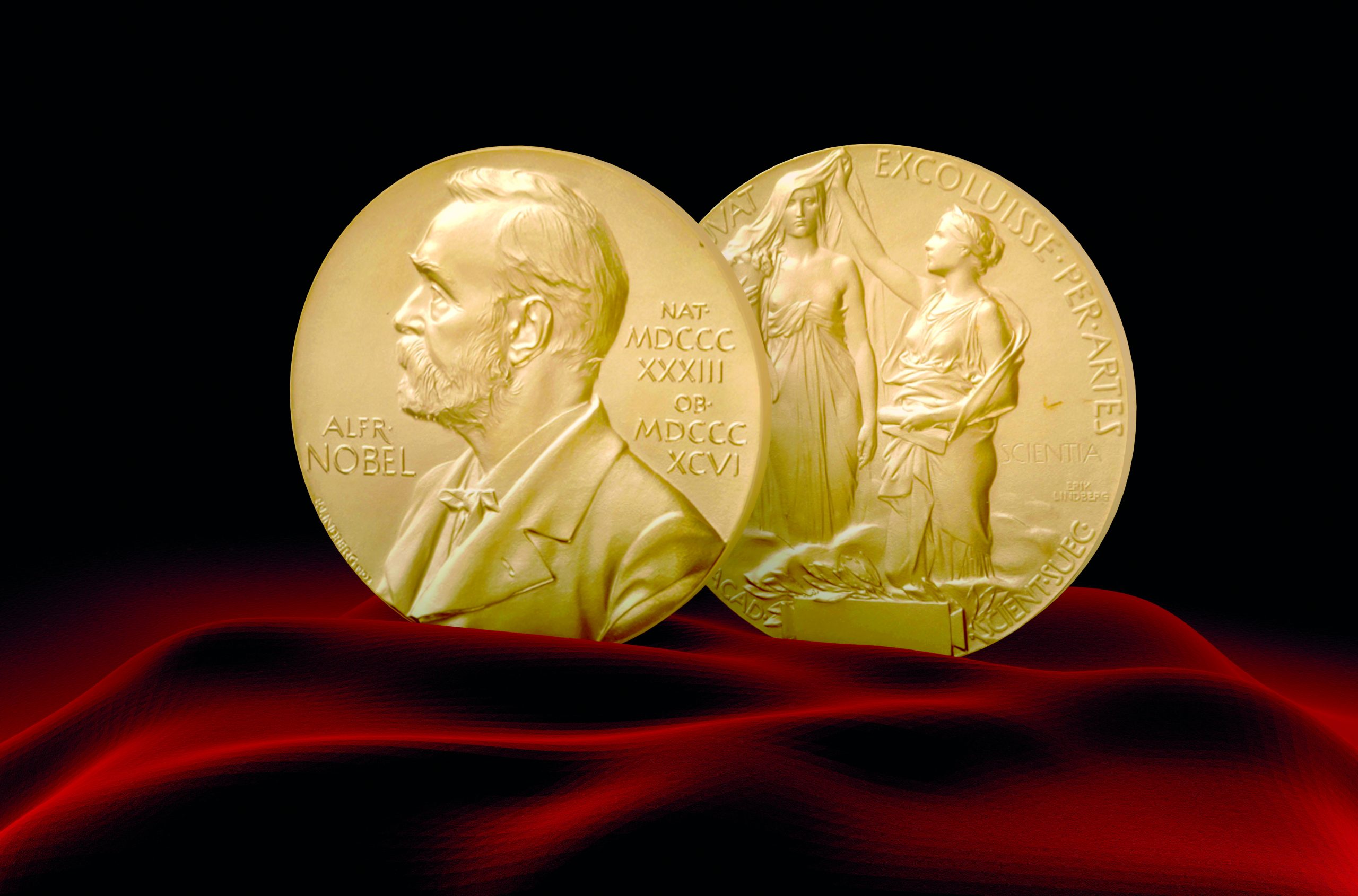
In the maelstrom of politics, where one event overwhelms another in quick succession hijacking attention from everything else, sometimes one needs to pause to take stock of some other less sensational but equally important matters. In India, the flavour of the season is the controversial SIR exercise and the role of the Election Commission. In America, President Donald Trump and his Republican Party have just been routed in the mid-term Congressional and Senate elections.
After this major setback, it would seem that Trump’s desire to somehow get the Nobel Peace Prize might have receded. But frankly, nothing surprises me anymore about the choices of the Nobel Prize jury. So far, four US Presidents and two vice-presidents have won the Prize. Mr Trump could easily have been the fifth — in fact more than one Norwegian lawmaker recommended his name — but alas he did not get it. His claim on Greenland was perhaps too close to the Scandinavian arbiters, even if the pummelling of Iran could be ignored.
But there are other fields where far more deserving candidates have also suffered Mr Trump’s fate. This year one of the nominees for the Nobel Prize in Literature was the 94-year-old titan of Indian letters, Gulzar. I am among countless people who wanted his name to be nominated. I wrote to the then vice-president of India to do the honours, but got no reply. I spoke also to the president of the Sahitya Akademi, but he did not follow up. His name was finally nominated by the chancellor of the Symbiosis International University, the legendary educationist, S.T. Mujumdar.
Having spent a monumental lifetime in the meticulous crafting of words, Gulzar is a household name across India, and through translations, respected globally. The sheer canvas of his writing is breathtaking, spanning classical poetry, film lyrics, children’s books, dramas, short stories, prose works and cinematic scripts. His poems have fundamentally transformed the idiom of modern poetry in India.
Given his age and lifelong dedication to literature, it was only befitting that his literary contribution be honoured.
Instead, the Academy’s opaque panel of judges overlooked this living legend, choosing instead the Canadian writer Anne Carson. Carson is undoubtedly a competent classical philologist who works in playful dialogue with Greek antiquity to craft experimental verse, but her literary niche reach pales in comparison to the vast, living and democratised canvas of Gulzar’s oeuvre, which speaks directly to the souls of over a billion people. But the cloistered committee in Sweden simply never took the trouble to explore any profound merit outside the predictable, comfortable canvas of familiar Western languages.
The last — and only — time an Indian writer received the Nobel Prize for Literature was Rabindranath Tagore in 1913. More than a century has elapsed since then. Are we to seriously believe that in a subcontinent of 1.4 billion people, cradling 24 highly developed literary languages with written traditions going back millennia, there has not been a single writer worthy of this prize?
The list of historical casualties from the non-Western world, as a result of Stockholm’s insular and systemic neglect, is shocking. For instance, Argentina’s Jorge Louis Borges, or African giants like Chinua Achebe and Ngũgĩ wa Thiong’o, or the Syrian colossus Adonis, were ignored. In India, apart from Gulzar, writers like Premchand, R.K. Narayan, Vaikom Muhammad Basheer or Mahasweta Devi, were never considered. Nor were literary giants like Leo Tolstoy. With such omissions, how is the Prize an indicator of global excellence?
The truth, in my view, is that, except perhaps in the hard fields of science, the Prizes have largely become a Eurocentric farce, aggressively Western-dominated, arbitrary, and biased. The data itself delivers a damning indictment of this structural prejudice and cultural cartelisation. Out of the 123 laureates for literature since the inception of the Prize in 1901, a single Western nation, France, holds the crown with 15 laureates, closely shadowed by the United States and the United Kingdom. English accounts for an astounding 30 laureates, followed predictably by French with 16, German with 14, and Spanish with 11. Combined, these four Western tongues alone cannibalise nearly two-thirds of the global Prize pool. The rest of the world — encompassing the ancient civilisations of Asia, the Middle East and Africa — is left to scramble for a few residual crumbs tossed from Stockholm’s high table.
This parochialism is not merely a matter of geographic bias; it is an organic consequence of a completely opaque selection process. The deliberations of the Swedish Academy are sealed in absolute secrecy for 50 years, shielded from public scrutiny or peer review. This allows the Prize to be hijacked by transient geopolitical considerations. The bias of the Nobel system is revealed most explicitly when one examines the Nobel Peace Prize. Mahatma Gandhi, the greatest messiah of peace in recent human history, was nominated some 14 times but was denied the award. Conversely, Henry Kissinger — who presided over the dropping of napalm bombs in Vietnam — won the Prize.
Unfortunately, especially in the developing world, people set far too much score by what a few over-the-hill judges decide in Sweden or Norway. The barrier of translation is an admission of failure disguised as an excuse. If a prize advertises itself as global, the onus is on the institution to build the capacity to read the world, not on the world to translate itself into the languages of a small European elite.
We must urgently decolonise our parameters of validation. Our writers do not need the legitimisation of a cloistered Swedish Academy to be deemed great. It is the Nobel Prize that stands diminished by its failure to comprehend the depth of India, not Indian literature that stands diminished by the neglect of the Nobel.
Let there be some consolation then for Trump Saheb, and for other political aspirants for the Prize. They may not deserve it, but even if they get it, its calibre has been devalued to a point where it doesn’t really amount to much.
Disclaimer : This story is auto aggregated by a computer programme and has not been created or edited by DOWNTHENEWS. Publisher: deccanchronicle.com