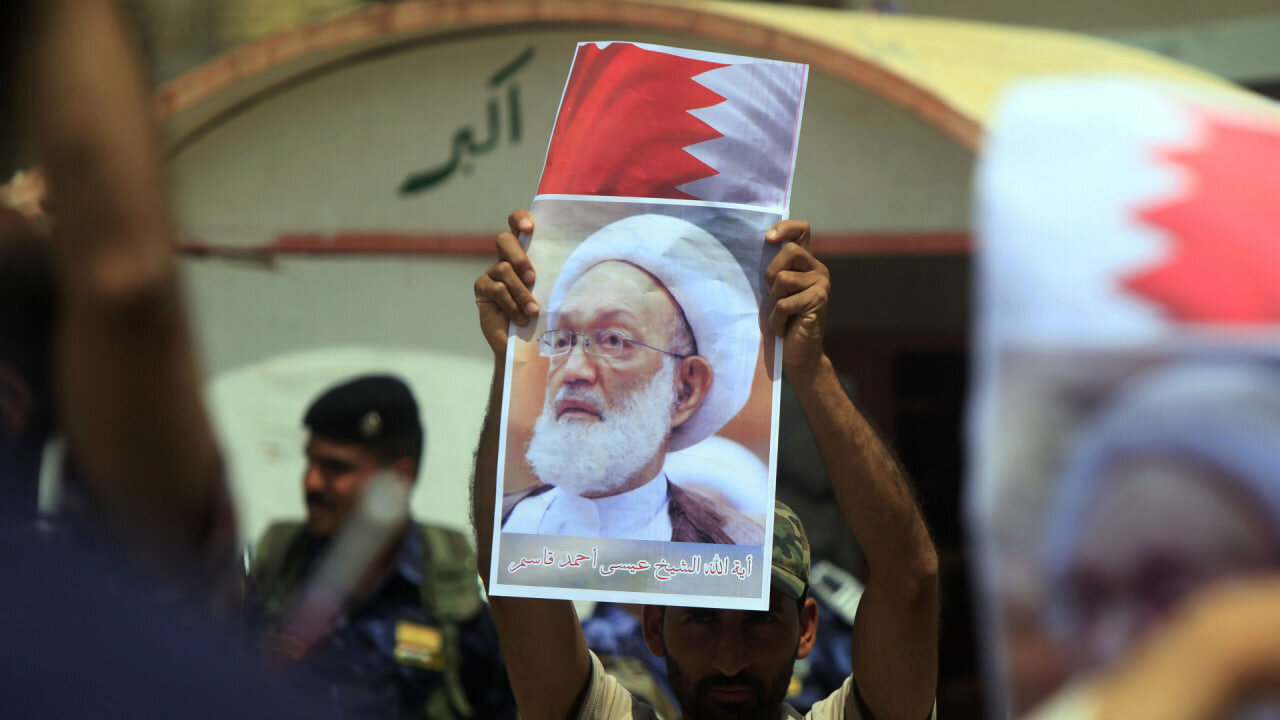
TEHRAN — Sheikh Isa Qassim, the senior Shia cleric whom Bahrain’s rulers stripped of his citizenship in 2016, urged the public on Friday to stand peacefully behind 60 clerics awaiting a court verdict on November 8, and warned the monarchy that a case built on “fabricated and defamatory accusations” could carry grave consequences.
Qassim, 89, told Bahrainis in a statement on Friday that defending the scholars is a duty falling on “every single individual,” and that the nation owes them the loyalty they have always shown it.
He cast the hearing as a test. The government could honor the clerics’ service to the country, or keep treating them as enemies. He gave the public two tasks: use every lawful means to protect the scholars’ health, dignity and standing, and stay peaceful, as the scholars themselves always have.
Protests have spread through Shia towns and villages against the detention of clerics and young men and the heavy security around them. Activists reportedly want rallies on the day of the ruling.
Sermons as evidence
On Sunday, the so-called High Criminal Court will rule on 69 defendants: 60 clerics and nine affiliates, among them reciters known as “radoods.” 56 are in custody. 13 clerics are tried in absentia.
Prosecutors claim the group sought to “overthrow the constitutional order” and “promote wilayat al-faqih,” Iran’s doctrine of clerical guardianship, by “controlling” mosques and local gatherings. According to rights groups, the so-called evidence includes religious teaching, books, khums (the Shia religious tax), charitable funds and contacts with scholars abroad.
Among the accused are Sheikh Mohammed Sanqour and Sheikh Ali Al-Sadadi, who led Friday prayers at the Imam Al-Sadiq Grand Mosque in Duraz, home to the country’s largest Shia Friday congregation.
Confessions without recordings
Detainees held at the Criminal Investigation Directorate told the Bahrain Institute for Rights and Democracy (BIRD) of forced standing, prolonged blindfolding and handcuffing, sleep deprivation, and threats of sexual violence against them and their families.
Some were warned of “the same fate as Sayed Mohamed Al-Mousawi,” who died in custody in April, a death rights groups attribute to torture.
Sayed Moosa Jawad Alwedaie, 57, says interrogators threatened to rape his daughter. Sheikh Mohammed Saeed Al-Taitoon, 62, says he was restrained for a week and made to stand despite urinary bleeding and kidney stones.
The monarchy’s “Special Investigation Unit” dismissed both complaints. In the first case, it said CCTV had auto-deleted after a month. In the second, it recorded his depression and anxiety, then called the allegations unsubstantiated.
The defense fared no better. Lawyers could not copy the case files and worked from handwritten notes. Defendants were split into four groups, and those in custody appeared by video link after the judge refused to bring them to court. Identical passages appear in different men’s purported confessions, and requests for interrogation recordings met the same answer: deleted after a month.
20 organizations, including Amnesty International, Human Rights Watch and the World Organization Against Torture, want coerced confessions excluded and the detainees freed.
“When allegations of torture are brushed aside, and defendants are denied a meaningful opportunity to challenge the evidence against them, the judiciary becomes an instrument of persecution,” said BIRD advocacy director Sayed Ahmed Alwadaei, who called the trial a “mockery of justice.”
A crackdown with a pattern
Saudi and Emirati troops helped crush the popular 2011 uprising, and the Al Khalifa monarchy never conceded the political rights its Shia majority demanded.
This year’s campaign followed the U.S.-Israeli campaign of aggression against Iran. Human Rights Watch says at least 37 clerics were seized on May 9 and more than 700 people have been arrested, children among them.
In April, the government stripped 69 Bahrainis of Iranian descent of their citizenship, 33 of them children, the youngest 19 days old. It undid the 2024 thaw, when hundreds of political prisoners went free, and Manama opened talks with Tehran. Relatives and lawyers say the state is criminalizing belief.
Washington’s base, Tel Aviv’s partner
The United States maintains the headquarters of its Navy’s Fifth Fleet in Manama. The base has paid a price of its own. Iranian missiles and drones hit Naval Support Activity Bahrain on the first day of the war, February 28, and kept coming for months.
A Wall Street Journal analysis of satellite imagery found the Fifth Fleet headquarters building no longer usable, according to a U.S. official, with damage estimated near $400 million.
Washington’s statements promoting human rights globally stand in sharp contrast to its silence regarding the routine torture and mass imprisonment of dissidents in Bahrain.
The rift has widened as Manama integrated its military operations more closely with Western allies and normalized diplomatic ties with Israel through the U.S.-brokered “Abraham Accords.”
While the royal court aligns itself with Washington and Tel Aviv, the Shia population views these alliances as an insult to Palestinian rights and a surrender of regional independence.
Disclaimer : This story is auto aggregated by a computer programme and has not been created or edited by DOWNTHENEWS. Publisher: tehrantimes.com