
The financial regulator has warned Australians to be wary of “lead generators” who put people’s life savings at risk by coaxing them to switch their superannuation and introducing them to dodgy financial services, often at the request of licensed financial advisers.
The Australian Securities and Investments Commission said lead generators – businesses that critics say use high-pressure tactics to push people into risky investment options – are using marketing techniques such as social media ads and unsolicited phone calls to identify consumers and introduce them to financial services offerings.
High-profile collapses of funds such as Shield Master and First Guardian highlight the potential fallout when financial services providers do not act in the best interest of Australian investors, the commission said, noting about 12,000 investors lost more than $1 billion in these collapses – many being advised to make these investments after being approached by a lead generator.
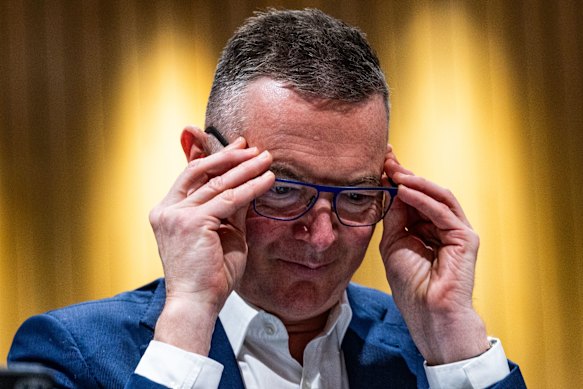
ASIC commissioner Alan Kirkland said the commission had led to thousands of Australians losing large amounts of retirement savings after being lured into financial advice deals that started with conversations with lead generators who then convinced them to switch their super into high-risk investments.
“When those investments go south, people can lose everything,” he said, noting lead generators often begin with an offer that sounds reasonable such as a super health check or a super review. “But really, what they’re trying to do is harvest personal information so that they can pepper you with phone calls. Social media has made it much easier for lead generators to wreak harm.”
In its review, the commission found unqualified lead generators used potentially misleading statements, fear-based claims and non-like-for-like performance comparisons to persuade clients to seek a review of their super arrangements or to switch their investments.
‘If you receive a call from anybody wanting to talk to you about your superannuation, that in itself is a warning sign.’
ASIC commissioner Alan Kirkland
“We have found material weakness in the controls used by some advice licensees who employ, or allow their representatives to employ, lead generators,” the commission said.
“Involving lead generation in financial advice is likely to be inconsistent with the obligations that apply to financial advisers and their authorising licensees, including the obligations to act in the best interests of their clients and to only provide personal advice if appropriately authorised.”
The commission said such activities put advisers and licence holders at risk of breaking the law.
Kirkland says the simplest message for consumers is that they should never feel pressured to switch their super in a short period of time.
“If anybody that you’ve never met wants to talk to you on the phone about moving your super, and they’re trying to get you to make that decision and sign on the bottom line, that should be an immediate warning sign because for far too many people, that has actually resulted in them losing lots of money,” he said.
“If you receive a call from anybody wanting to talk to you about your superannuation, that in itself is a warning sign. They’ll often start out sounding really friendly and helpful.”
For those looking to get financial advice safely, Kirkland directs people to the ASIC Moneysmart website.
“In general, it’s much better for you to decide you want to get some financial advice and approach somebody who’s appropriately qualified for that advice than it is to receive advice from somebody who has rung you out of the blue,” he said.
Across 15 Australian financial services licensees reviewed by the commission, more than 7600 new clients – roughly one-third of total new clients – were obtained through lead generation services between January 2025 and June 2025.
These customers invested nearly $680 million following lead generation referrals, and more than 90 per cent of this was superannuation money. Licensees deducted $9.8 million in upfront service fees and clients agreed to a further $4.5 million in annual ongoing fees, the commission also found.
Five of the licensees examined by the commission did not have controls or standards in place that prohibited, or were likely to identify, high-risk superannuation switching by their authorised representative.
While Kirkland said lead generation wasn’t necessarily against the law, giving personal financial advice without an appropriate license or qualification, and licensed providers allowing these sorts of activities, was in breach of the law.
“We have already issued multiple consumer warnings, we have banned financial advisers, we have cancelled financial services licenses, and we’ve taken formal action through the courts,” he said. “We will continue to do so where we find individuals and businesses who are breaching the law through their involvement in lead generation.”
The Business Briefing newsletter delivers major stories, exclusive coverage and expert opinion. Sign up to get it every weekday morning.
 Millie Muroi is the economics writer at The Sydney Morning Herald and The Age covering workplace and economics. She was formerly an economics correspondent based in Canberra’s Press Gallery and the banking writer based in Sydney. Instagram/TikTok: @millie.muroiConnect via X or email.
From our partners
Disclaimer : This story is auto aggregated by a computer programme and has not been created or edited by DOWNTHENEWS. Publisher: www.smh.com.au