
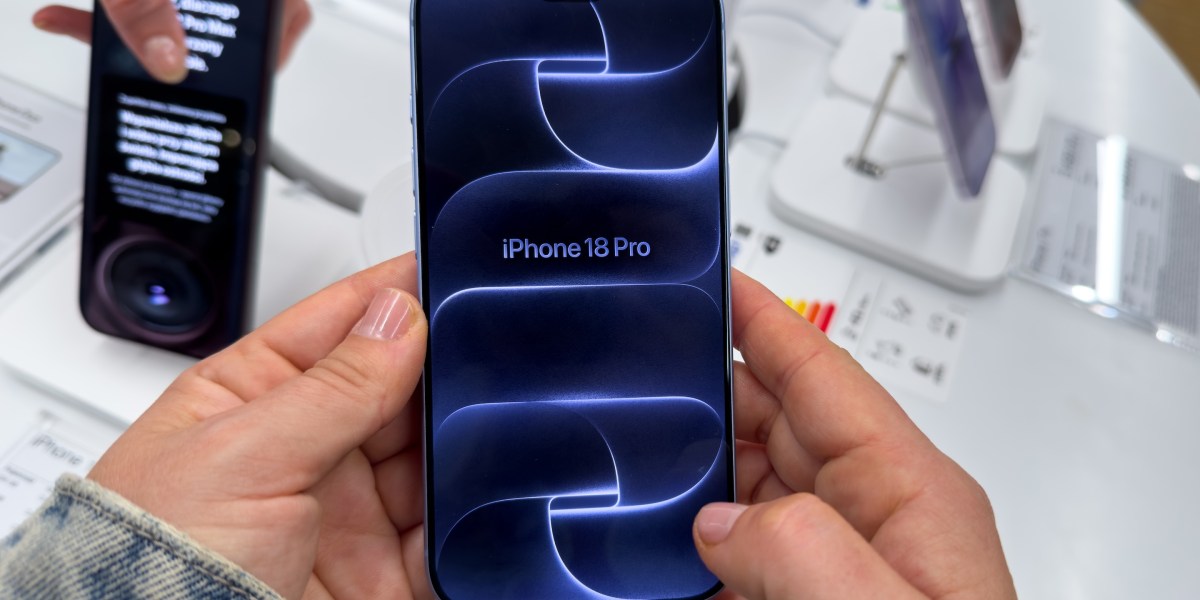
Apple has told some suppliers to cut production of components for the iPhone 18 Pro and iPhone 18 Pro Max, Nikkei Asia reported Friday, raising fresh questions about how much more consumers are willing to pay for premium smartphones as memory-chip costs soar.
Citing people familiar with the matter, Nikkei reported that Apple’s October component orders for the two models are at least 15% below what the company originally requested. Demand has been softer than expected from late August into October, according to the report, and Apple has grown more cautious about shipments since early September.
“In October alone, we are seeing orders from Apple reducing by 15% to 20% for both the premium models; we don’t know how things would develop from here,” one executive-level source told the publication.
The cuts will affect some, but not all, suppliers’ October production volumes, depending on their lead times. It remains unclear whether Apple will make further adjustments from November onward.
Apple has not confirmed the reported reductions and did not immediately respond to Fortune‘s request for comment.
The report comes barely a month into John Ternus’s tenure as CEO. Ternus succeeded Tim Cook on Sept. 1, and the iPhone 18 Pro lineup is the first flagship launch under his leadership.
Why consumers may be balking at the iPhone 18 Pro
Suppliers quoted by Nikkei pointed to price. The iPhone 18 Pro starts at $1,199 and the iPhone 18 Pro Max at $1,299, according to Apple’s website—each $100 more than the iPhone 17 Pro models they replaced. Apple unveiled the phones on Sept. 9 and began selling them on Sept. 18.
The increases come amid a global memory-chip shortage fueled by the AI boom. Tech giants racing to build AI data centers are gobbling up a growing share of memory supply, leaving less for makers of phones, laptops, and other consumer electronics. Apple had already raised prices on Macs and iPads in June, and on his final earnings call as CEO in July, Cook described memory pricing as a “100-year flood.”
J.P. Morgan Global Research estimates that prices for dynamic random-access memory, or DRAM, will have risen more than 400% from the start of 2024 through the end of 2026.
Those costs are rippling through the broader economy. The Consumer Price Index for software and accessories and the Producer Price Index for storage devices have both risen 23% since the end of 2024, while the import price index for computers, peripherals, and parts has climbed 37%, according to J.P. Morgan economist Abiel Reinhart.
The smartphone industry is feeling the squeeze, too. In August, International Data Corporation (IDC) forecast that global smartphone shipments will fall 16.7% in 2026 to just over 1 billion units, the steepest annual decline on record. IDC also expects the average selling price of a smartphone to rise 27.6% to $581 as manufacturers pass higher costs on to consumers.
A split launch muddies the picture
Apple’s launch calendar may also be a factor. This fall, the company introduced only premium models: the iPhone 18 Pro, the iPhone 18 Pro Max, and its first foldable, the $2,000 iPhone Duo. It held back the standard iPhone 18, which is expected to arrive in spring 2027 alongside the lower-cost iPhone 18e and a second-generation iPhone Air, according to Bloomberg and other reports.
One supply-chain manager told Nikkei that demand isn’t as strong as in previous years, when Apple introduced all of its new models at once. Still, suppliers said the staggered schedule alone doesn’t account for the weaker demand. One source said they expect the iPhone Duo, which goes on sale Oct. 23, could face similar cuts once it ships.
The delay leaves price-sensitive shoppers with fewer new options this fall, although its role in the reported production cuts remains unclear.
Smartphone rivals are also under pressure
Apple isn’t the only phone maker navigating rising component costs. In June, Nikkei Asia reported that three major Chinese smartphone makers, Xiaomi, Oppo, and Vivo, had cut their 2026 shipment targets by as much as 30%, their second round of reductions this year.
Manufacturers that rely on lower-priced devices have less room to absorb higher costs, while raising prices risks alienating budget-conscious buyers. IDC expects Android phones to absorb nearly all of this year’s shipment decline, as Apple, Samsung, and Huawei lean on their scale to weather the crunch. But Apple’s pricing power doesn’t make it immune to weaker demand.
What the production cuts mean for Apple
The reported reductions don’t, on their own, mean Apple is losing market share or facing a broader financial downturn. Supplier orders can shift with demand expectations, inventory levels, and component availability.
Apple’s latest financial results offer some context, though they predate the iPhone 18 launch. For its fiscal third quarter ended June 27, Apple reported revenue of $109.4 billion, up 16% from a year earlier and a June-quarter record. iPhone revenue rose nearly 22%, also a June-quarter record. Cook, then CEO, called it Apple’s “strongest June quarter ever,” with double-digit revenue growth across iPhone, Mac, and Services, and in every geographic segment.
But Cook also warned on that call that tight supply would weigh on iPhone, Mac, and iPad sales in the months ahead. That’s a reminder that Apple’s near-term numbers could reflect both what it can build and what shoppers are willing to buy.
The key question is whether the reported cuts reflect a temporary adjustment or a broader pullback in consumers’ willingness to pay for premium smartphones. Apple’s brand and pricing power may help cushion rising costs, but the reported reductions suggest that even the world’s most valuable consumer tech brand faces limits as devices get more expensive.
Disclaimer : This story is auto aggregated by a computer programme and has not been created or edited by DOWNTHENEWS. Publisher: fortune.com




