On 24 April 1890, more than 10,000 mill workers filled the Race Course Ground at Mahalaxmi in Bombay to ask for something most Indians now take for granted, a weekly day of rest.
Narayan Meghaji Lokhande, a mill storekeeper turned organiser, had called the gathering after mill owners decided to shut the mills two days every week, and many women workers also addressed the crowd.
Mill owners accepted a Sunday holiday on 10 June, 1890, and that year the Government of India included Lokhande as an associate member of its Factory Labour Commission.
Born in 1848 in Thane, Lokhande worked for the railways and the postal department before he joined the Mandavi Textile Mills as a storekeeper in 1870.
Life on the mill floor exposed him to punishing working hours and miserable living conditions, and that experience prompted him to organise the mill hands into an association that pressed their grievances.
How a rest day became a retirement question
Lokhande’s campaign concerned rest rather than retirement, yet it began a long argument about what employers and the state owed the people who ran India’s factories, and that argument moved slowly.
The first Provident Fund Act arrived in 1925, but it regulated the funds of only some private concerns, so its reach stayed limited. In 1929, the Royal Commission on Labour stressed the need for provident funds for industrial workers, and the Indian Labour Conference of 1948 agreed that a statutory scheme for industrial workers could be introduced.
To test the idea in a restricted field, the government launched the Coal Mines Provident Fund Scheme in 1948. Its success led to demands for expansion to other industries, and the Conference of Provincial Labour Ministers in January 1951 largely endorsed proposed legislation for that purpose, which set the stage for a national law.
The ordinance that reached the mills
The Government of India promulgated the Employees’ Provident Funds Ordinance on 15 November, 1951, and the Employees’ Provident Funds Act replaced it on 4 March, 1952. The scheme then came into force in stages, and by 1 November, 1952 it covered six industries, namely cement, cigarettes, engineering products, iron and steel, paper and textiles.
Textile workers, the trade Lokhande had organised in Bombay, therefore stood among the first to gain cover, which brought the story of the mills full circle.
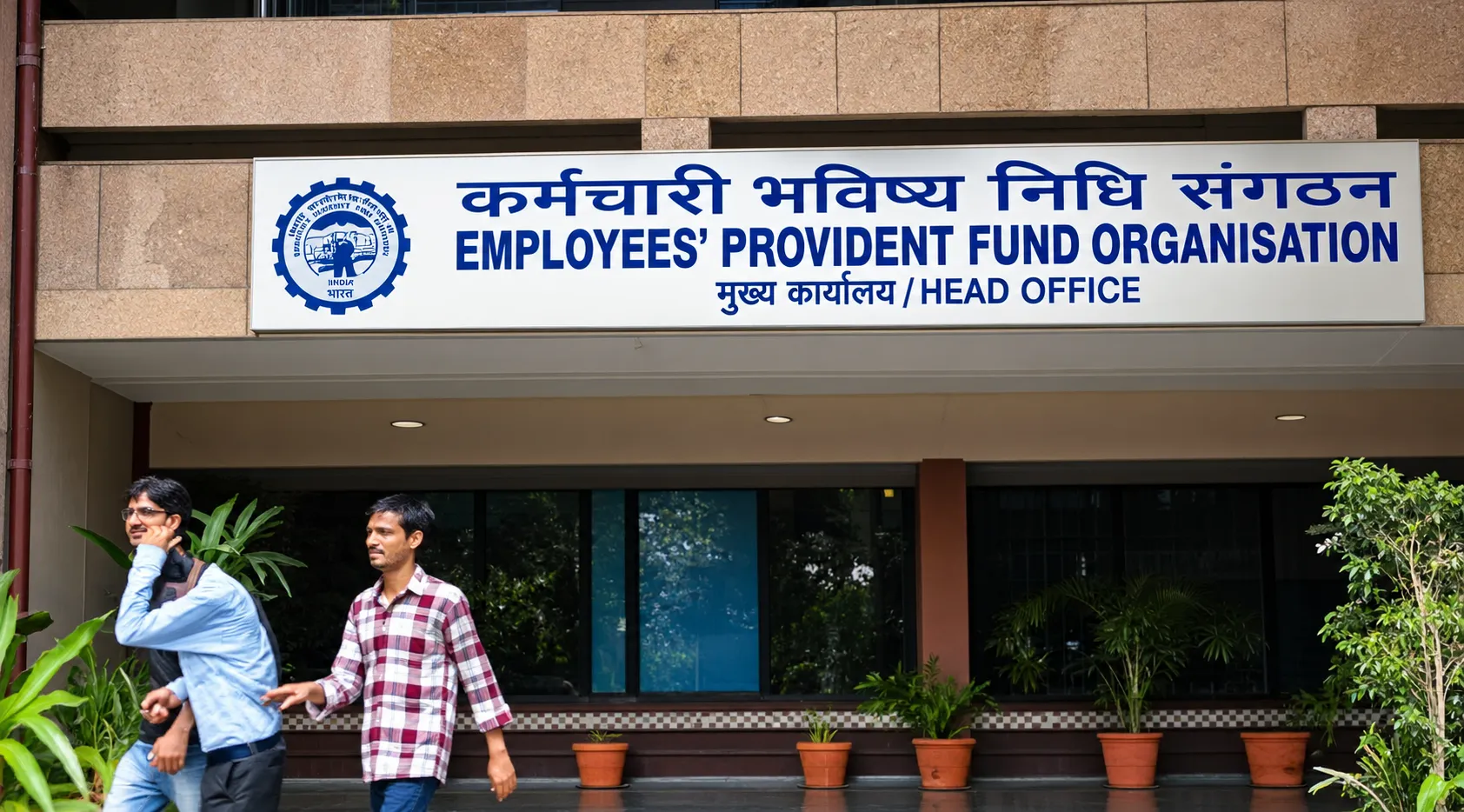
A tripartite Central Board of Trustees, with representatives of the central and state governments, employers and employees, administers the Act and its schemes.
The board runs a contributory provident fund, a pension scheme and an insurance scheme for workers in the organised sector, while the Ministry of Labour and Employment holds administrative control over the organisation.
How the safety net widened
In the decades that followed, the safety net widened, as the Employees’ Deposit Linked Insurance Scheme of 1976 began paying a benefit when a member dies, and the Employees’ Pension Scheme of 1995 replaced the Employees’ Family Pension Scheme of 1971 and started paying monthly pensions on retirement, disability and death of a member.
EPFO’s official website describes the body as one of the world’s largest organisations by clientele and the volume of financial transactions.
The scheme now answers a worker’s everyday needs as well as retirement. Members receive their accumulation plus interest on retirement, resignation or death, and can make partial withdrawals for house construction, higher education, marriage or illness.
The Act extends to 187 classes of establishments, and any such establishment that employs more than 19 persons comes under it automatically.
The latest figures show how far the idea has travelled, since Business Standard reported on 22 September, 2026 that EPFO has about 7.98 crore contributing members, that its pension scheme benefits around 82 lakh pensioners and that it oversees retirement savings of more than Rs 25 lakh crore.
More than 130 years separate the Race Course Ground from today’s EPFO offices, yet both rest on the claim Lokhande’s crowd pressed on Bombay’s mill owners: that labour deserves protection beyond the wage packet.
The Sunday holiday gave mill hands time to recover, and the provident fund, pension and insurance schemes now give crores of Indians a measure of security once their careers end.
No single law traces to Mahalaxmi, but the demands raised there fed the expectation that employers and the state share responsibility for workers’ futures.
Sources:
1. ‘About Us‘: by EPFO for Employees’ Provident Fund Organisation, Published on date not shown on page
2. ‘Narayan Lokhande: Founder of the Indian Labour Movement‘: by author not credited for Labour File
3. ‘Imperfect providence‘: by Business Standard Editorial Comment for Business Standard, Published on 22 September, 2026
4. ‘Laws for Labour Welfare and Social Security, Unit 27: The Employees‘ Provident Funds and Miscellaneous Provisions Act’: by IGNOU for eGyankosh
Disclaimer : This story is auto aggregated by a computer programme and has not been created or edited by DOWNTHENEWS. Publisher: thebetterindia.com