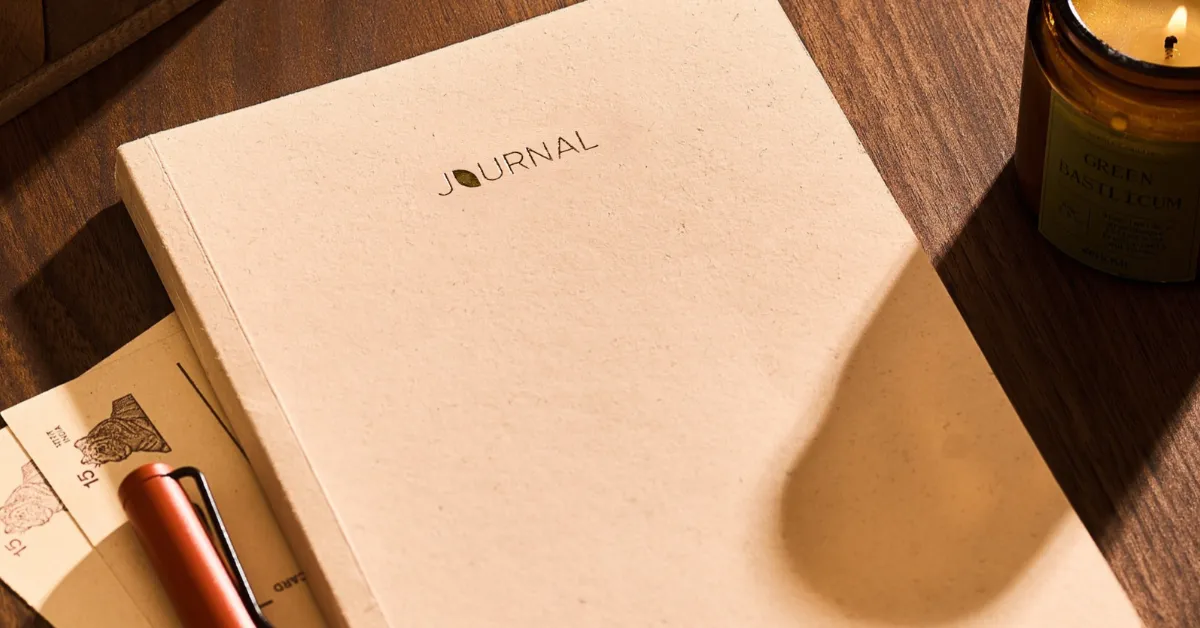
The next time you pick up a notebook, pause for a moment. An earthy brown cover, a leaf logo, or the words ‘eco-friendly’ might make it look like the greener choice. But appearances can be deceptive. What you should consider is the paper inside, the materials used to make it, how long it lasts, and whether it can be recycled after use.
For Ashutosh Ananth, co-founder of paper and stationery brand ‘Rescript’, sustainability is about looking beyond appearances and rethinking how everyday paper products are made.
“A notebook being sustainable is about much more than having a kraft cover or looking natural. You have to look at what it is made from, how it is put together, how long it will last, and what happens to it after you are done using it,” he says.
Founded in 2021 by Ashutosh and his school friend Naren Raj, the brand makes copier paper, notebooks, journals, planners, and other stationery using 100 percent recycled paper.
After pursuing ideas such as biofuels in 2019, the friends entered corporate gifting. That experience showed them how much paper businesses consume every day. “We realised that the opportunity was much larger than gifting. If we could make everyday paper products more sustainable, the impact could be greater,” he says.
Recycled paper and notebooks became their starting point, eventually growing into a wider stationery range.
So, what should you look for when buying a notebook? The co-founder shares six things consumers should check before making a choice.
1. Check what the paper is made from
Since paper makes up most of a notebook, its composition is the first thing to examine. Rather than relying on broad descriptions such as ‘eco-friendly’, ‘green’ or ‘sustainable’, he recommends looking for a clear statement of the recycled content.
“A notebook made with 100 percent recycled paper reduces the need for virgin fibre and gives already-used paper another life,” he explains.
The percentage matters. A notebook containing 10 or 20 percent recycled fibre is different from one made entirely from recycled paper, even though both may be marketed as containing recycled material. If virgin fibre is used, consumers should also look for information about whether it is responsibly sourced.
“Look at the fibre composition, including how much is recycled and where any virgin fibre comes from,” he adds.
2. Look for credible certifications
Claims are more meaningful when independently verified. Ashutosh recommends checking recognised labels such as the Forest Stewardship Council (FSC) and the Programme for the Endorsement of Forest Certification (PEFC), while understanding what each means.
An FSC Recycled label verifies that the relevant fibre is 100 percent recycled. FSC Mix, on the other hand, can include a combination of recycled material, FSC-certified virgin fibre and controlled virgin fibre.
“A precisely stated fibre composition, certification number, and manufacturing information tell you much more than a brown cover with a leaf printed on it,” he says.
3. Do not judge the paper by its colour
Brown, beige, and grey paper are mostly associated with sustainability. But a notebook’s colour alone cannot tell you how responsibly it has been made.
“A brownish or grey notebook does not necessarily mean it is more sustainable,” he says. “Colour can tell you something about how the paper has been processed, but it does not tell you enough about where the fibre came from, how much of it is recycled, or how responsibly the notebook has been made.”
Bright white paper may undergo additional processing, bleaching, and optical brightening. Recycled paper can also be made bright white, while virgin paper can be brown or beige.
“Rescript uses careful sourcing, segregation, de-inking, and controlled processing, while avoiding chlorine bleaching, to achieve its natural warm-white shade. For us, the goal was never just to make recycled paper. It was to make recycled paper that people would choose because it is good paper,” he explains.
4. Examine the cover and finishing
A notebook may contain recycled paper but still include materials that make it harder to recycle. Plastic lamination, synthetic covers, heavy coatings, foil, and other decorative finishes can add to the number of materials used. When these are permanently bonded to paper, separating them at the end of the notebook’s life can become more difficult.

“It is common to talk about sustainable paper while adding heavily laminated, plastic-coated or synthetic covers around it,” he says. He recommends paper-based or recycled covers and avoiding finishes that serve little practical purpose.
5. Make sure it is built to last
Sustainability is not only about what a notebook is made from. It is also about how long it remains useful. A notebook with weak pages, poor binding, or a cover that falls apart prematurely may need to be replaced before it has served its purpose.
“A notebook that falls apart halfway through its life and has to be replaced is not particularly sustainable,” the co-founder says.
Check the binding, paper strength, and construction. Thread binding keeps materials relatively simple, while a metal spiral can usually be separated from the paper before recycling.
“Choosing to stay sustainable should not mean accepting an inferior product,” he says. “The ideal is to get both things right. A lower-impact material and a genuinely good product made from it.”
6. Consider what happens after the last page
Ashutosh recommends choosing products with easier construction and fewer unnecessary non-paper components. Once a notebook has been completely used, removable metal spirals and other separable parts should be taken off where possible.
Plastic lamination, glitter, foil, and heavy coatings deserve particular attention because some can interfere with the recovery of paper fibres. Recyclability also depends on the facilities available locally, so consumers should check what their local recycler accepts.
“The less the construction, the easier it generally is to recover and recycle the materials,” he says.
His advice is to use the notebook fully, separate removable components, keep the paper clean and dry, and check local guidance.
“Recyclability is not just about whether a material can theoretically be recycled somewhere in the world. It is about whether the product has been designed sensibly enough, and whether the recycling system available to you can actually recover it,” he explains.
Turning recycled paper into an everyday choice
For Ashutosh and Naren, these considerations are central to Rescript’s effort to make recycled paper a common choice for consumers and businesses.
Their paper is made from 100 percent recycled material and processed without chlorine bleaching. Its published comparisons state that the paper uses around 50 percent less water and produces 37 percent lower carbon dioxide emissions than its conventional paper benchmark. The company holds FSC certification under licence code FSC C163185.

As of September 2026, it has used more than 1,000 tonnes of recycled paper since its launch. The company estimates that this represents more than 18,000 trees saved, around four crore litres of water conserved and approximately 13 lakh kilograms of carbon dioxide emissions avoided compared with producing an equivalent quantity through conventional virgin-paper processes.
It now supplies products to individual customers as well as institutional and corporate buyers, including DMart, JP Morgan, Hero MotoCorp, LIC, and ICICI Prudential. Ashutosh says replacing conventional paper at scale can accelerate the impact.
“We use recycled paper because we believe it is the right material choice, but the ambition is not only to make a sustainable notebook. It is to make a notebook that someone would choose for its paper, texture, construction, and experience even if sustainability were not the first thing on their mind,” he concludes.
All pictures courtesy Rescript.
Disclaimer : This story is auto aggregated by a computer programme and has not been created or edited by DOWNTHENEWS. Publisher: thebetterindia.com