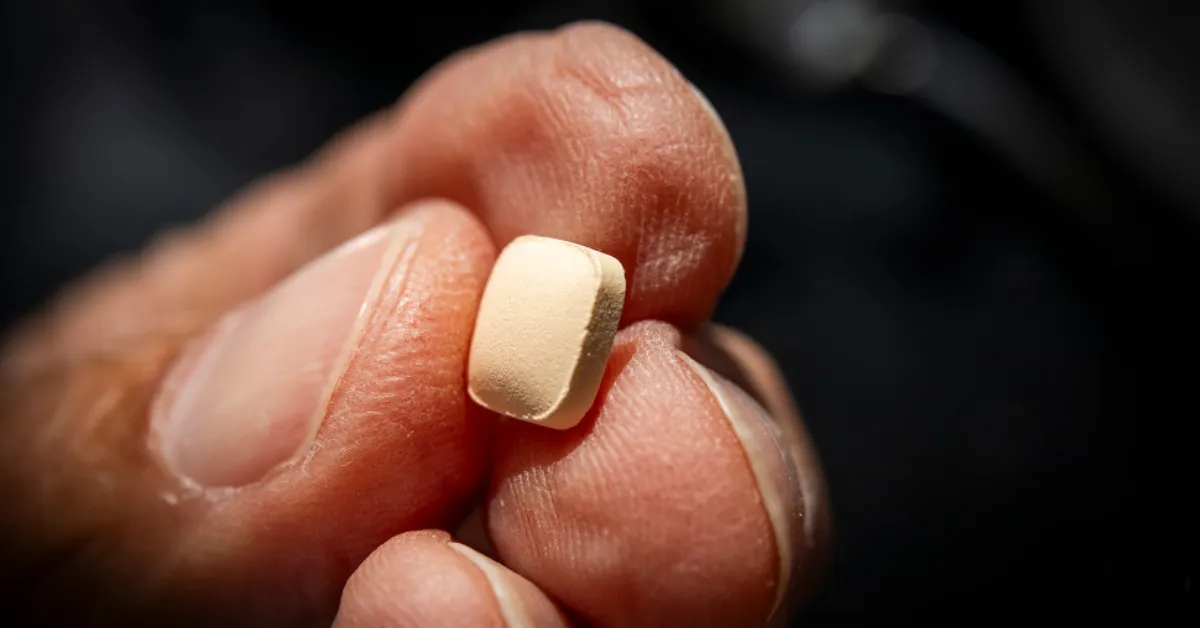
There is a small white tablet that millions of people in India and around the world take every day without much thought. Sold under the brand name ‘Singulair’ and generically as montelukast, it has been a first-line prescription for asthma and allergic rhinitis since the late 1990s.
It stops airways from narrowing and controls hay fever. It is cheap, widely available, and so well understood that doctors consider it one of the safest long-term medications on the market.
Now, a study published in the journal Nature Cancer suggests this familiar little tablet may have a remarkable second life — one far beyond the lungs.
The problem with immunotherapy
To understand why this discovery matters, it helps to understand both the promise and frustration of cancer immunotherapy. The idea is elegant: rather than bombarding the body with chemotherapy, train the immune system to recognise and destroy cancer cells on its own.
Over the past decade, treatments called immune checkpoint inhibitors have transformed outcomes for several cancers, including some melanomas and lung cancers, giving patients years of remission where there were once very few options.
But immunotherapy does not work for everyone. In some of the most aggressive cancers, including triple-negative breast cancer, tumours seem to shrug it off entirely. Triple-negative breast cancer accounts for between 20 and 31 per cent of all breast cancer cases in India — a significantly higher proportion than in Western countries — and predominantly affects younger, pre-menopausal women.
Its five-year survival rate in metastatic cases remains below 30 per cent. Understanding why immunotherapy fails in these tumours, and finding ways to reverse that failure, is one of oncology’s most urgent challenges.
How tumours hijack the immune system
Researchers at Northwestern Medicine in Chicago set out to understand exactly how certain tumours manage to escape immune attack. What they found points to a molecule called CysLTR1, which will be familiar to many pharmacists or pulmonologists: it is the very receptor that asthma drugs like montelukast block.
In healthy lungs, CysLTR1 plays a role in managing inflammation. In cancer, however, the Northwestern team discovered that tumours use this same molecule for something far more sinister.
They hijack it to recruit and reprogramme a class of white blood cells called neutrophils — ordinarily part of the body’s front-line defences — into cells that actively shield the tumour from immune attack.
These corrupted neutrophils suppress the immune response, essentially turning the body’s own soldiers against it. For tumours, this is a highly effective strategy, and it helps explain why immunotherapy so often stalls in CysLTR1-active cancers.
“When we turned off this switch, either genetically or with existing drugs, we not only slowed tumour growth, but also helped the immune system recover its ability to fight the cancer,” said Dr Bin Zhang, the study’s senior author and Professor of Cancer Immunology at Northwestern University Feinberg School of Medicine.
What the research found
The team combined several approaches: mouse models of triple-negative breast cancer, melanoma, ovarian, colon, and prostate cancer; analysis of human immune cells and tumour samples; and examination of large public cancer datasets.
In multiple mouse models, blocking CysLTR1 — either by genetically removing the molecule or by administering montelukast — slowed tumour growth, improved survival, and restored sensitivity to immunotherapy. Notably, the effect held even in tumours that had already stopped responding to treatment.
The mechanism they identified is especially interesting. The drug did not simply reduce the number of harmful neutrophils. It reprogrammed them, converting immunosuppressive cells into ones that actively supported the immune attack on cancer.
Analysis of human tumour samples and datasets reinforced this finding, showing that patients with higher CysLTR1 activity tended to have worse survival outcomes and poorer responses to immunotherapy across multiple cancer types.
Why is this finding significant for India?
The implications extend beyond the laboratory, especially for a country like India. Approximately 100,000 women are diagnosed with triple-negative breast cancer in India each year, according to published research. Access to newer, experimental therapies remains limited outside major urban centres, and cost remains a significant barrier even where availability exists.
/filters:format(webp)/english-betterindia/media/media_files/2026/06/02/3-2026-06-02-16-37-00.png)
Montelukast, by contrast, is already approved by regulatory bodies, including the US Food and Drug Administration, and has decades of safety data behind it. Generic versions are inexpensive and widely manufactured.
This is what scientists refer to as drug repurposing — finding new clinical uses for medicines already proven safe in humans — and it carries a practical advantage that entirely new molecules do not: the pathway to clinical trials is considerably shorter.
What comes next
It is important to be clear about where this research currently stands. These findings come from animal models and human tissue analyses, not clinical trials involving cancer patients. The researchers themselves are careful to frame it as a promising early signal rather than a confirmed treatment.
“The next steps are to confirm this mechanism in patients, identify who will benefit most, optimise how we use these drugs — especially in combination with immunotherapy — and begin carefully designed clinical trials,” Dr Zhang said.
For now, the study opens a genuinely exciting avenue. The idea that a drug millions already take safely every day might, in carefully designed combinations with immunotherapy, help re-sensitise tumours that have learned to hide from the immune system is the kind of finding that shifts the direction of research.
How quickly it translates into an option for patients will depend on the clinical trials ahead. But the scientific rationale — and the motivation to move quickly — have rarely been clearer.
Sources:
‘Common asthma drug shows promise against aggressive cancers‘: by Northwestern University via EurekAlert!, Published on 19 May 2026
‘Asthma drug improves treatment of aggressive cancers in preclinical studies‘: by Northwestern Now, Published on 19 May 2026
‘Some cancer patients don’t respond to immunotherapy. An existing asthma drug could change that‘: by Live Science, Published on 19 May 2026
‘Common asthma drug may supercharge cancer immunotherapy, study finds‘: by Pharmacy Times, Published on 26 May 2026
‘A comprehensive analysis of immune landscape of Indian triple negative breast cancer‘: published on bioRxiv, by researchers at Tata Memorial Centre Mumbai and collaborating institutions
Disclaimer : This story is auto aggregated by a computer programme and has not been created or edited by DOWNTHENEWS. Publisher: thebetterindia.com