Documentary maker Asif Kapadia had a poster of Kenny Dalglish on his wall as a child. Now he has created a loving tribute.
Asif Kapadia has a unique way of making documentary films; he doesn’t use a camera. It’s allowed him to make a handful of films about famous and outrageously talented people, many from the sporting world. His first was about Brazilian racing driver Ayrton Senna in 2010, some 16 years after Senna’s death. Then came the Oscar-winning Amy, a heartbreaking portrait of the singer Amy Winehouse and the duty of care she was owed but not given. His documentary on Diego Maradona came out in 2019, one year before the footballer’s death.
In contrast to those films, the subject of his latest, Kenny Dalglish, is very much alive. Sir Kenny is a feted figure in the world of English football. Born in Scotland, he had a 22-year playing career at Celtic and most famously at Liverpool FC. He went on to manage Liverpool through triumph and tragedy, culminating in the Hillsborough disaster in 1989 when 97 fans were crushed to death in an accident that could have been prevented.
The now 75-year-old Dalglish narrates the latest film which, like Kapadia’s previous ones, is comprised solely of archive footage. Kapadia, despite growing up and living in London, is a lifelong Liverpool fan. He had a poster of Dalglish on the wall of his childhood bedroom, and his devotion to the club hasn’t wavered. “Kenny, genuinely, is the reason why I’m a Liverpool fan all these years later, now in my mid-50s,” says Kapadia.
As well as his prowess as a player and manager, Dalglish is heroised for the stance he took in the aftermath of the Hillsborough tragedy, standing up for the victims and the community in the face of an ugly campaign by newspapers, politicians and authorities to blame the disaster on “drunk” fans.
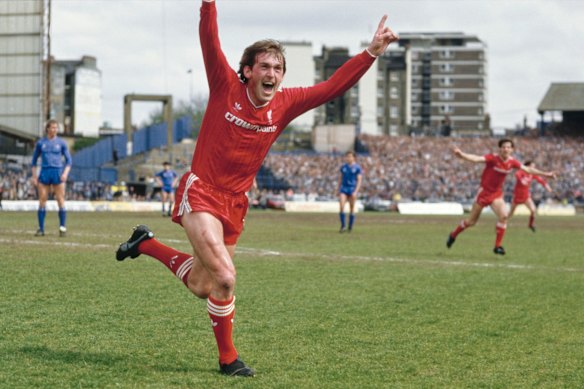
Kapadia wanted to make the film to remind his and his children’s generations of Dalglish’s brilliance. “Friends and people around the world who’ve seen the film had no idea how good he was and how modern he was, and how it’s not like [watching] black-and-white football … in slow motion. They’re playing everything that Pep [Guardiola] or [Jürgen] Klopp would be talking about now,” he says referring to two of football’s best-known contemporary coach-managers.
The film is also “an ode to an era that doesn’t exist any more”.
“I started off making a film about a footballer, and realised … the reason why people still sing his name now isn’t the football. It’s what he did to stand up for the fans after Hillsborough. It’s him taking on the government, it’s him taking on the police, it’s him taking on the law. It’s him taking on all of the establishment by just telling the truth, when everyone else tried to cover it up and lied.
“My kids’ generation … they’ve never really understood what happened at Hillsborough. They’ve never really understood this huge miscarriage of justice, which has carried on until this day. Kenny just stayed strong. He didn’t leave, he didn’t go off to another club. He stayed and for him, it was all about the community. And really, that’s where football’s originally from.”
When the idea of making the film was first floated, Kapadia met with Dalglish at a Champions League match. Kapadia ascended from the cheap seats to the boardroom to meet his childhood hero. “I said ‘I have a very particular way of working, Kenny, I don’t have a camera. We just meet. We have a chat. I’ll record the sound. I’ll ask you questions. You give me answers. I go off and make it’. He goes, ‘no cameras?’ I’m like, ‘yeah, yeah, really low-key’. That was it.”
The opportunity to create archive-constructed documentaries first presented itself with Senna, which was meant to be a traditional documentary with interviews and archival footage.
“I spent a lot of time researching, and I just thought, there’s a better film here. There’s a much more original way to make a film. I can make the film that I’m being asked to make, but I can also make it much more cinematic so it will work on a big screen for an audience, and it’s exciting and dramatic and emotional,” he says. “I’ve always been interested in the films that I’ve made, in all of my fiction films and my documentaries, to experiment a bit, to play with the form. None of the producers thought it was a good idea.”
When it came to Amy, there was a question of trust because of how the singer and her inner-circle had been mistreated by the paps and media. “[Filmed interviews] would have been the worst thing ever. No one would have talked to me,” says Kapadia.
So the film became an investigation of a very tragic death, told through concert and studio footage, intimate phone grabs and home movies. “I wanted to show how amazing she was, and also to show how the industry and the media and family and boyfriends, that everyone somehow is involved in this very complex story.”
Maradona was still alive but in a bad way when Kapadia started work on that film. He was OK talking to Kapadia, but had he brought a crew, Maradona would have cancelled the appointment.
For Kapadia, everything is in the service of telling a story to an audience and delivering an emotional pay-off. “If you’re talking about an athlete, or if you’re talking about a singer … It’s all about what they did at the time when they were the athlete. It’s all about the time when they were racing the car. It’s all about the moment when she’s singing. So talking to people now or seeing their faces now … I think it’s the worst, clunkiest form of filmmaking.
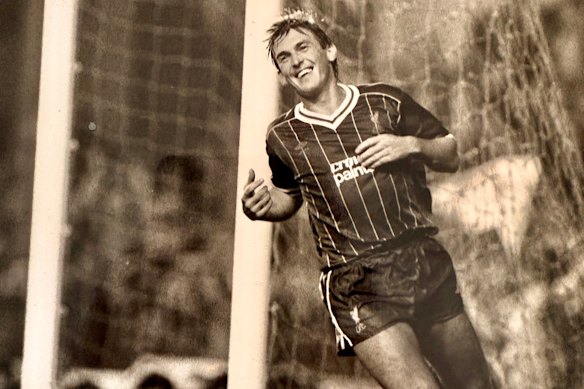
“If I’m going to tell a story of Kenny Dalglish, I want you to know how brilliant he was. I’m going to show you. I want you to hear how sharp he was, how funny he was and how witty, and that beautiful smile that he has, and the simplicity of his celebration.”
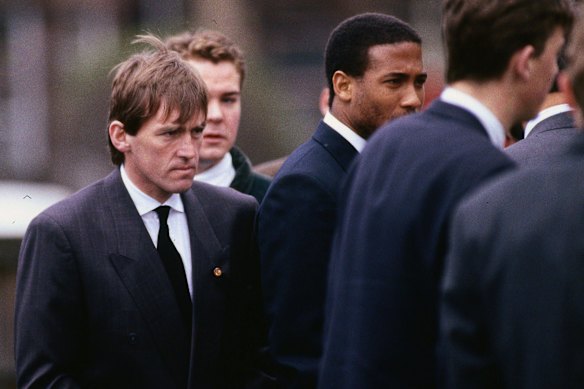
The films, Kapadia says, are portraits. “They’re about people’s faces and how they change, with what happens to them with fame, with power, with drugs, with money, with an awful situation, like being present at Hillsborough. When you see Kenny’s face at the end of the film, and you see where he began, you understand he couldn’t carry on. He has to leave to save himself.”
Next up for Kapadia is 70 Up, the final instalment of the epic documentary series started in 1964 that revisits a group of men and women every seven years. It’s hard to think of another filmmaker more qualified to bring this one home.
Kenny Dalglish is on Docplay now.
Find out the next TV, streaming series and movies to add to your must-sees. Get The Watchlist delivered every Thursday.
Disclaimer : This story is auto aggregated by a computer programme and has not been created or edited by DOWNTHENEWS. Publisher: www.smh.com.au