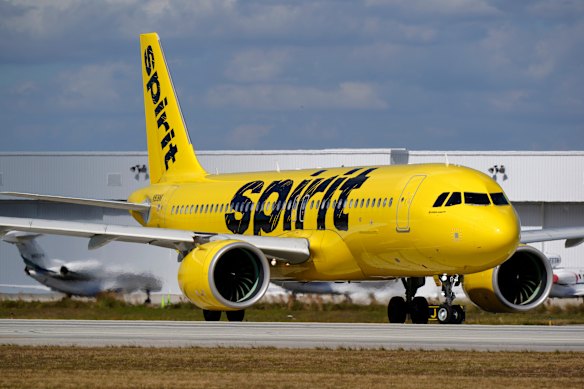

Like a leash implies a dog, an airline ticket implies a seat on a plane. Not so with America’s Spirit Airlines. Its “seats” were really stress position devices, designed to hold customers knees near their faces with no more padding for their backs than a public bus shelter bench.
Everything else was extra: checked baggage, cabin baggage, food, even water.
But no one will get to experience such mistreatment any more. This month, Spirit went broke for the second time, and stopped flying.
The immediate cause of death was high fuel prices, but the structural problem is that its nickel and dime model had gone entirely mainstream in the years since it debuted the approach in the early 2000s. There was no point flying Spirit when a major airline would offer just as cheap seats (almost; they are padded after all) and then sting customers for everything else.
Airlines aren’t alone in this parsimonious approach. Streamers like Netflix once promised to offer viewers endless entertainment without a single ad and bragged of tacitly accepting login sharing. Both are now paid features.
At the high end, Apple’s iPhone is no longer a glitteringly complete piece of high technology equipment. It’s a chance to spend more on iCloud storage, AppleCare+, a charging plug, Apple Arcade and app subscriptions galore. The $1.99 app that’s genuinely useful is basically dead.
If AI has the potential to overcome information asymmetries that can cost consumers, it has to first be on their side.
At the low end, plumbers have decided to get in on the act. A plumber out to inspect a slow leak in Sydney now reaches for his iPad rather than his wrench.
Looking at the pipe pressure into the shower? That’s $363. Running the shower to see if it leaks? $816. Getting in the leak professionals to hunt the problem down if those methods don’t work? $1600. And if by some chance one of those methods succeeds, the actual plumbing is obviously extra.
The Economist magazine predicted in October last year that AI would herald the end of the “rip-off economy”.
Consumers would check whether they were getting a fair price by snapping a photo of a used car and uploading it to Claude or find the perfect bottle of wine by asking ChatGPT.
That will happen for some people. But the proliferation of businesses nickel and diming their customers shows why technology is no panacea.
It was once an administrative hassle for a plumber to offer five different quotes, including a discounted combo price, so most charged by the hour.
Airlines offered one price in part because adding on every skerrick of food or space would have played havoc with their ticketing systems before the turn of the millennium.
But technology has overcome that hurdle. Billion-dollar businesses have been built to offer those pricing services. One of the biggest Australian-founded technology firms, Rokt, offers the software that generates the pop-up digital coupons that deluge users after they’ve bought something online.
There is little reason that AI could not be put to the same effect. It could let businesses calculate just how much to charge each thirsty flyer for water, hours into a long flight, or which element of a level they should lock away to extract an extra payment from a gamer.
There is a reason OpenAI has hired the former Facebook executive who oversaw the social network’s creation of mobile and video ads, Fidji Simo: a user searching for the best bottle of wine would be a great target for results slanted by an advertiser’s dollars.
If AI has the potential to overcome information asymmetries that can cost consumers, it has to first be on their side.
The Business Briefing newsletter delivers major stories, exclusive coverage and expert opinion. Sign up to get it every weekday morning.
 Nick Bonyhady is the business editor of The Sydney Morning Herald and The Age. He is a former deputy federal editor, technology editor and industrial relations reporter.Connect via X or email.
From our partners
Disclaimer : This story is auto aggregated by a computer programme and has not been created or edited by DOWNTHENEWS. Publisher: www.smh.com.au