
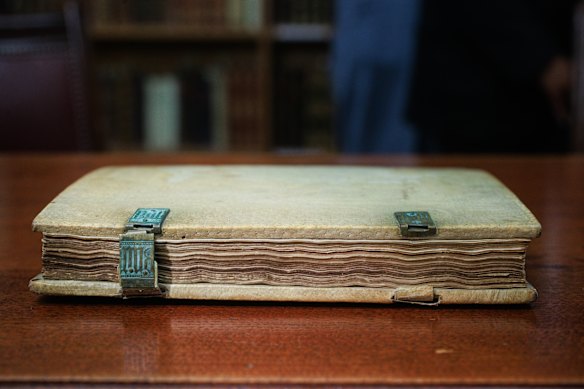
In 1487 a book was published that changed the course of history – for the worse. Heinrich Kramer, a Dominican friar and inquisitor, was left smarting after a failed attempt to prosecute witches and so turned his hand to literature. At the end of a nine-month frenzy of writing, he emerged with the Malleus Maleficarum – also known as the Hammer of Witches.
Accompanied by a papal bull – a formal decree – from Pope Innocent VIII, the Malleus Maleficarum declares that witches are real, underscores the danger they pose, and outlines in detail how to prosecute a witch, emphasising the importance of torture in this process.
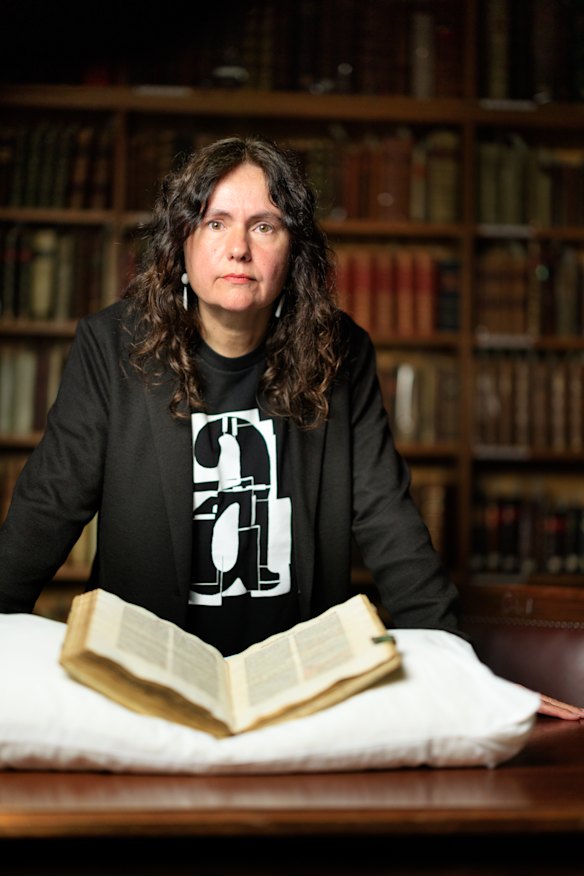
The book is as notorious as it was popular – 500 years after it was first published it still appears regularly in pop culture, referenced in Buffy the Vampire Slayer and Supernatural, and has been a source of inspiration for heavy metal bands. Now, a rare 1494 copy of the book published by Anton Koberger has been acquired for the University of Melbourne’s archives and special collections.
“This particular copy of the Malleus was a really important thing for us to purchase,” says Susan Millard, curator of rare books, archives and special collections. “It fits really well with our academics and their subjects and what they’re researching, so that’s absolutely fantastic, but also it fits well with printing history.”
This copy falls into an extremely specific time window where old methods and new technology were at odds. The printing press had existed for less than 50 years, and so while the pages were mass-produced, they were augmented with handwritten details known as rubrication. As a job “it died out about five, six years after this because they worked out that you could do the same job quite just as easily with coloured type”, explains Jon Buckingham, acting associate director of archives and special collections.
Along the bottom leaves of the book is a name or phrase, though time has made it impossible to decipher. Purchased from a UK bookseller for $160,000, this version of the Malleus belonged to two different German monasteries before being sold at auction in 1883. “It’s very rare [to have] something that’s passed through so few hands,” says Buckingham.
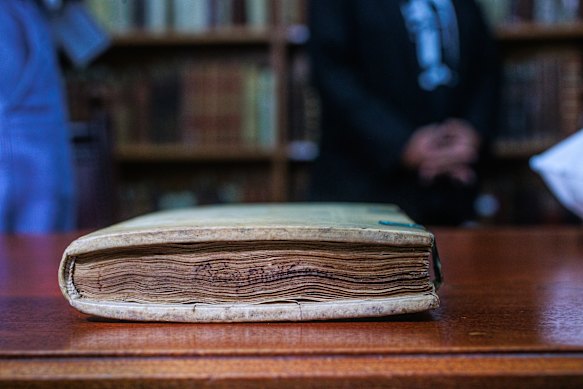
Kramer’s book was finished during a perfect storm of societal upheaval and technological innovation which allowed his ideas – unhinged as they were – to spread.
“There were other witchcraft manuals beforehand, but they weren’t printed and they weren’t circulated in the same way,” explains Dr Charlotte Millar, senior lecturer in the school of historical and philosophical studies in the faculty of arts. “So [Koberger’s] decision to publish it also really changed how influential it was going to be.”
What set Kramer’s book apart was that he emphasised that witchcraft resulted from a pact with the devil, and made the case – not only in the book, but also in its title – that women were more likely to become witches. Maleficarum is a word that refers specifically to female witches.
“He acknowledges that men can do some of these things, but really it’s about women, because of their moral weakness and moral inferiority.”
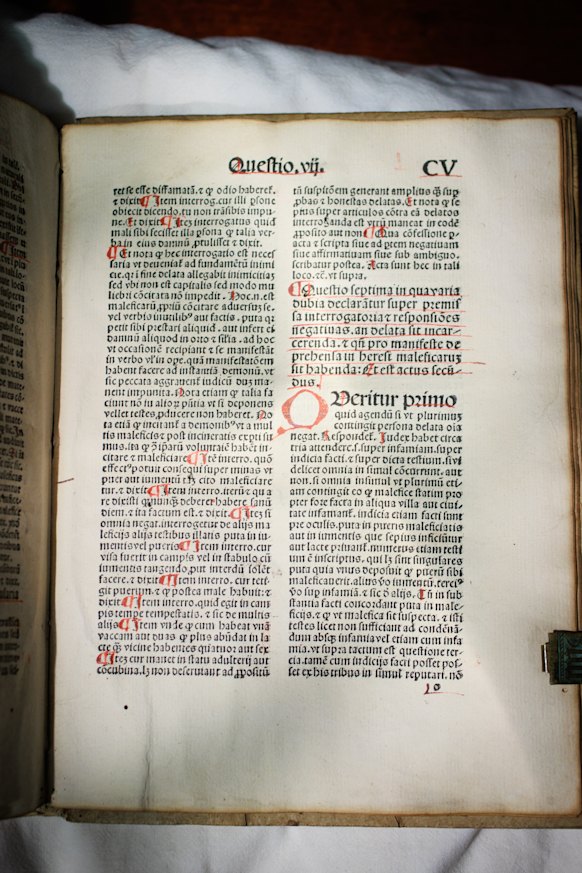
Even for the late 15th century, Kramer’s views were extreme. “Kramer is actually genuinely misogynistic for his time,” says Millar.
“He says that witchcraft is an exceptional crime … and that means we can use exceptional methods, such as torture, to find out if people are witches.” The book didn’t exist purely as a philosophical exercise – it was written as a practical handbook on how to hunt and prosecute witches.
“It really helps the witch hunts [to] take flight, and it really leads to really intense trials,” explains Millar. “Before the 15th century, people believe in witches and magic, but they don’t associate [them] with the devil, and so people aren’t executed for witchcraft. The executions for witchcraft don’t start until the late 15th century, and they take off in the 16th century,” says Millar.
It is estimated that 50,000 people, mostly women (many of them elderly or widows) were executed in the witch trials.
The university was keen to acquire the book as it was an important text relating to the persecution of women, as well as a piece of publishing history.
“The popularity of subjects in the university that deal with early modernism and witchcraft and gender studies is huge. So it was always going to be something that the university [would find] very, very useful,” says Buckingham.
Despite being published in 1487, the core themes that drive it remain unsettlingly familiar; as is the use of new technology to spread misinformation rapidly.
“I think the attitudes towards women are still prevalent, and I think they’re disseminated on the internet,” says Millar. “The ideas in here are, I think, quite recognisable today. The idea that women are inherently morally inferior, that they’re lustful, that they’re greedy. We see those ideas in concepts [in] the manosphere … which is depressing 500 years later.”
Find out the next TV, streaming series and movies to add to your must-sees. Get The Watchlist delivered every Thursday.
Disclaimer : This story is auto aggregated by a computer programme and has not been created or edited by DOWNTHENEWS. Publisher: www.smh.com.au





