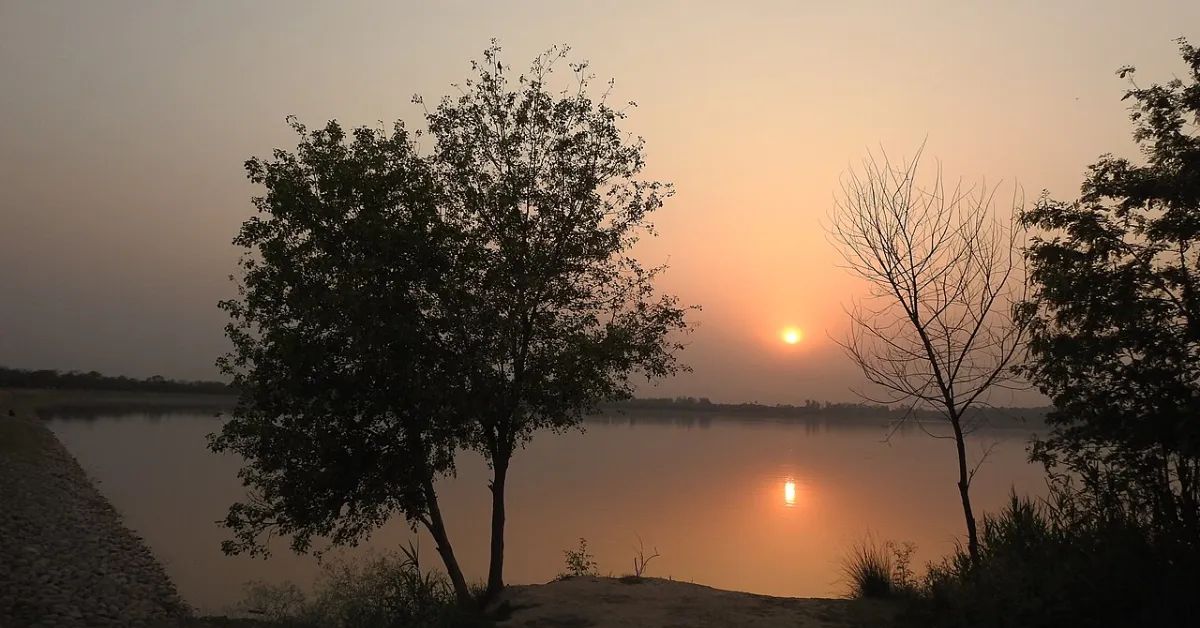
Chandigarh’s iconic Sukhna Wetland has been officially designated as India’s 103rd Ramsar Site. The wetland has been assigned Site Number 2602, placing Chandigarh on the global map of internationally recognised wetlands.
On the edge of Chandigarh, where the Shivalik Hills rise towards the Himalayas, Sukhna Lake offers residents more than a stretch of open water.
Its banks, surrounding vegetation and adjoining woodland form habitats that sustain wildlife, including birds that travel thousands of kilometres between continents.
Sukhna is a peri-urban reservoir. This means it is a waterbody located within or near an urban area, while still performing important ecological functions.
Now, this ecological importance has received international recognition.
Four habitats, one interconnected ecosystem
A wetland is not simply an expanse of water. Its ecological character depends on the different habitats that exist within and around it, and these habitats allow different forms of wildlife to use the wetland in different ways. Some species depend on the open water, while others use the vegetation along the banks or the surrounding woodland.
This diversity is particularly important for birds that use Sukhna as a seasonal stopover.
For migratory waterbirds, wetlands are not isolated destinations. They form part of larger geographical routes connecting breeding grounds, feeding areas and wintering habitats.
A stop along the Central Asian Flyway
Sukhna lies along the Central Asian Flyway, a major migratory route used by birds travelling between their breeding and non-breeding grounds.
During these journeys, birds need suitable places to feed, rest and recover before continuing their migration. Wetlands such as Sukhna provide these essential habitats.
The lake serves as a feeding, breeding, roosting, and wintering ground for migratory waterbirds. Each of these functions matters at a different stage of a bird’s life cycle.
Sukhna also supports species with different conservation statuses, highlighting the importance of protecting its habitats.
India’s Ramsar Site network grows to 103! With Sukhna Lake in Chandigarh and Sauj Jheel in Uttar Pradesh joining the list, India’s commitment to wetland conservation continues to grow. These wetlands conserve biodiversity, strengthen water and climate security, and sustain local livelihoods. Their recognition also reinforces the importance of protecting these vital ecosystems for future generations. #AmritDharohar
— MoEF&CC (@moefcc) October 15, 2026
Three notable species associated with the wetland include:
Common Pochard: Classified as Vulnerable, this diving duck depends on suitable freshwater habitats.
Pallas’s Fish Eagle: Classified as Endangered, this large raptor is associated with wetland and riverine ecosystems.
Black Pond Turtle: Classified as Endangered, this freshwater turtle depends on suitable aquatic environments for its survival.
What does the Ramsar designation mean?
The Ramsar Convention is an international agreement for the conservation and wise use of wetlands. Named after the Iranian city where it was adopted in 1971, it provides a framework for recognising wetlands that are important at an international level.
Being included on the Ramsar List brings international recognition to a wetland’s ecological significance and draws attention to the need for its conservation.
With Sukhna’s inclusion, India’s Ramsar network now stands at 103 sites. For Chandigarh, the designation places one of its important urban wetlands within this international conservation framework.
Its new status is therefore more than an international listing. It is recognition that even within a planned city, a wetland can remain part of a much larger ecological network, connecting local landscapes with wildlife and migratory routes that extend far beyond national boundaries.
Sources:
‘India’s Ramsar Site tally reaches 103 with addition of Sukhna Wetland (Chandigarh) and Sauj Jheel (UP)’: By PIB Delhi, Published on 15 October 2026
‘The Ramsar Sites Criteria-The nine criteria for identifying Wetlands of International Importance’: By Ramsar Convention on Wetlands
‘Sukhna Lake-Chandigarh’: Chandigarh Tourism
Disclaimer : This story is auto aggregated by a computer programme and has not been created or edited by DOWNTHENEWS. Publisher: thebetterindia.com