The Chicago White Sox enter the 2027 offseason with something that has been missing on the South Side for several seasons: legitimate expectations. After finishing 84-78 and advancing to the American League Division Series, the White Sox find themselves ranked 10th in all three evaluations according to my way-too-early look at baseball’s 30 franchises.
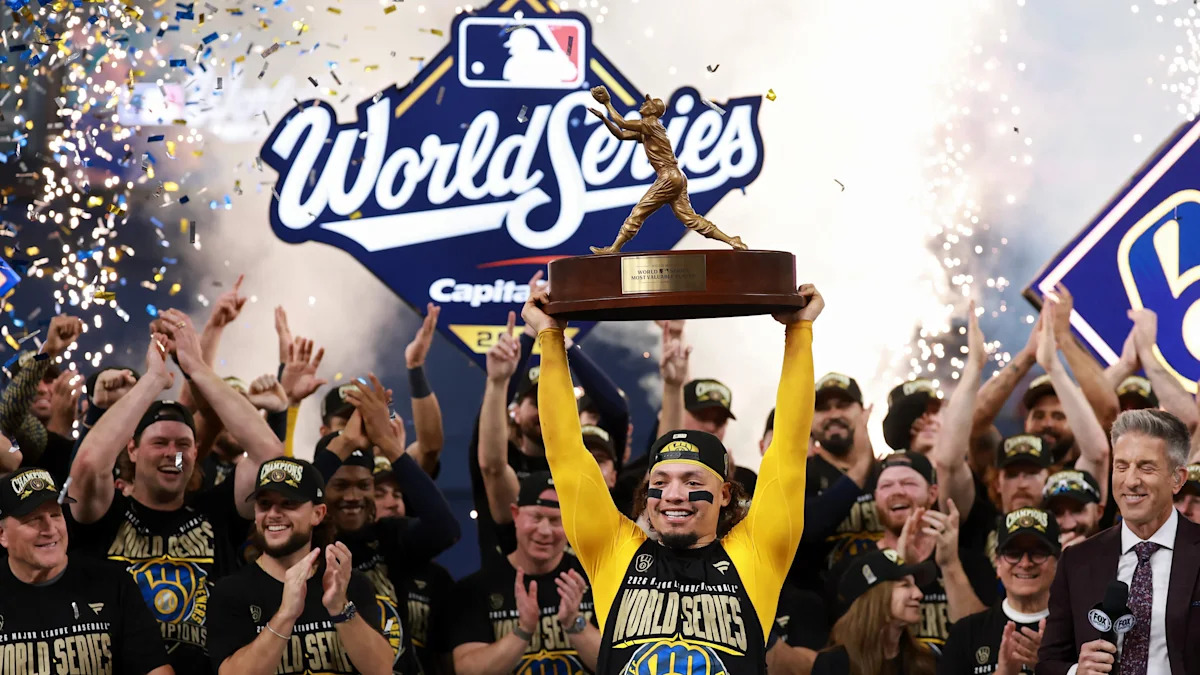
While Milwaukee celebrates its first World Series championship and the Dodgers and Yankees prepare for another winter of high-priced roster decisions, the emergence of the White Sox reflects a potentially changing competitive landscape across Major League Baseball.
Advertisement
The rankings combine MLB.com’s early 2027 power rankings with independent predictions from Michael Malcom-Bjorklund (MMB) and my son, James Bjorklund (JB). Each vote carries equal weight, with the three rankings averaged to determine the consensus. Lower averages indicate stronger positions, while tied averages remain tied even when teams appear consecutively in the list.
1. Milwaukee Brewers
2026 Record: 103-59
Milwaukee begins the offseason as baseball’s defending champion and the unanimous No. 1 team. The Brewers have built a championship foundation around Jackson Chourio, Jacob Misiorowski and an emerging group of young players, but retaining veteran pitching will be critical to their chances of repeating.
Advertisement
Consensus Ranking: MLB.com (1), MMB (1), JB (1). Average: 1.00.
Key Free Agents: Brandon Woodruff, Jake Bauers, JoJo Romero and Dustin May.
Top Priority: Retain pitching depth while preserving the young core.
2026 Payroll: $139 million.
Defining Statistic: Milwaukee won 103 games with approximately one-third of the Dodgers’ payroll.
2027 Outlook: World Series favorite.
2. Los Angeles Dodgers
2026 Record: 100-62
The Dodgers remain among baseball’s most talented organizations, but their loss to Milwaukee in the NLCS exposed questions about an aging position-player core. Los Angeles has the financial resources to address nearly any weakness, although balancing pitching investments with offensive needs will shape its offseason.
Advertisement
Consensus Ranking: MLB.com (2), MMB (2), JB (2). Average: 2.00.
Key Free Agents: Tarik Skubal, Evan Phillips and Alex Vesia.
Top Priority: Strengthen the bullpen, address second base and determine whether to re-sign Skubal.
2026 Payroll: $415.2 million.
Defining Statistic: Los Angeles won 100 games but was swept in four games by Milwaukee in the NLCS.
2027 Outlook: World Series favorite.
3. New York Yankees
2026 Record: 93-68
New York enters another offseason confronting the gap between regular-season success and postseason expectations. Aaron Judge remains the franchise’s centerpiece, but several important free agents and an expensive veteran roster leave the Yankees with difficult decisions.
Advertisement
Consensus Ranking: MLB.com (3), MMB (4), JB (3). Average: 3.33.
Key Free Agents: Jazz Chisholm Jr., David Bednar, Trent Grisham and Paul Goldschmidt.
Top Priority: Rebuild the bullpen and determine Chisholm’s future.
2026 Payroll: $337.1 million.
Defining Statistic: The Yankees entered 2026 with baseball’s third-highest opening-day payroll.
2027 Outlook: World Series contender.
4. Tampa Bay Rays
2026 Record: 98-64
Tampa Bay’s unexpected American League championship demonstrated the organization’s ability to compete without the financial resources of its division rivals. However, the Rays face difficult decisions involving several veteran contributors who helped carry them through October.
Advertisement
Consensus Ranking: MLB.com (4), MMB (3), JB (6). Average: 4.33.
Key Free Agents: Freddy Peralta, Nick Martinez and Cedric Mullins.
Top Priority: Preserve rotation depth and improve offensive consistency.
2026 Payroll: $108.3 million.
Defining Statistic: Tampa Bay reached the World Series despite spending approximately $229 million less than the Yankees.
2027 Outlook: American League pennant contender.
5. Atlanta Braves
2026 Record: 94-68
Atlanta remains one of baseball’s most stable organizations despite injuries that devastated its starting rotation. With much of its offensive core intact, the Braves can focus on targeted improvements rather than a significant roster overhaul.
Advertisement
Consensus Ranking: MLB.com (5), MMB (5), JB (4). Average: 4.67.
Key Free Agents: Raisel Iglesias, Ha-Seong Kim, Mauricio Dubón and Tyler Mahle.
Top Priority: Strengthen the rotation and address shortstop.
2026 Payroll: $246.6 million.
Defining Statistic: Spencer Strider, Spencer Schwellenbach, AJ Smith-Shawver and Hurston Waldrep combined for only 15 starts.
2027 Outlook: Division favorite.
6. San Diego Padres
2026 Record: 91-71
San Diego’s strong finish and competitive postseason performance reinforced its position among the National League’s contenders. With a new ownership group influencing the franchise’s direction, the Padres could become one of the offseason’s more aggressive organizations.
Advertisement
Consensus Ranking: MLB.com (8), MMB (6), JB (5). Average: 6.33.
Key Free Agents: Adrian Morejon, Ty France, Jason Adam, Austin Hays, Walker Buehler, Ramon Laureano, Casey Mize, Robbie Ray, Luis Rengifo
Top Priority: Maintain pitching depth and strengthen the lineup.
2026 Payroll: $256 million.
Defining Statistic: San Diego won 91 games and pushed the Brewers harder than any other opponent during Milwaukee’s postseason run.
2027 Outlook: World Series contender.
7. Boston Red Sox
2026 Record: 87-75
Boston demonstrated championship potential at various points in 2026, but injuries and inconsistency contributed to another early postseason exit. The Red Sox have enough young talent to compete in the American League East, although improved health and pitching depth will be essential.
Advertisement
Consensus Ranking: MLB.com (6), MMB (7), JB (9). Average: 7.33.
Key Free Agents: Sonny Gray, Isiah Kiner-Falefa and Patrick Sandoval.
Top Priority: Address rotation depth and improve roster consistency.
2026 Payroll: $266.1 million.
Defining Statistic: Gray finished 18-5 with a 2.72 ERA over 29 starts.
2027 Outlook: Playoff contender.
8. Chicago Cubs
2026 Record: 89-73
The Cubs possess one of baseball’s most explosive offenses, but their pitching staff faces significant uncertainty. Pete Crow-Armstrong provides a dynamic foundation, although several departing veterans could force Chicago into an aggressive winter.
Advertisement
Consensus Ranking: MLB.com (7), MMB (8), JB (8). Average: 7.67.
Key Free Agents: Seiya Suzuki, Ian Happ, Shota Imanaga, Matthew Boyd and Kevin Gausman.
Top Priority: Rebuild the starting rotation and retain offensive production.
2026 Payroll: $248.5 million.
Defining Statistic: Six pitchers entering free agency combined for 106 of Chicago’s 162 starts.
2027 Outlook: Division contender.
9. Philadelphia Phillies
2026 Record: 88-74
Philadelphia’s championship window remains open, but declining offensive production and an aging roster have created urgency. The Phillies continue investing heavily in veteran talent, making improvements to their lineup particularly important.
Advertisement
Consensus Ranking: MLB.com (9), MMB (9), JB (7). Average: 8.33.
Key Free Agents: Luis Arráez, Alec Bohm, José Alvarado and Adolis García.
Top Priority: Improve offensive production and address third base.
2026 Payroll: $313.2 million.
Defining Statistic: Philadelphia ranked 23rd in on-base percentage and 24th in slugging percentage.
2027 Outlook: Playoff contender.
10. Chicago White Sox
2026 Record: 84-78
The White Sox enter 2027 with legitimate expectations after transforming themselves from perennial losers into postseason contenders. Chicago’s young offensive core helped deliver a dramatic turnaround, but the club’s reliance on veteran pitching and occasional struggles with offensive consistency leave significant questions. General manager Chris Getz has an opportunity to build on that success if ownership provides the financial resources necessary to strengthen the roster.
Advertisement
Consensus Ranking: MLB.com (10), MMB (10), JB (10). Average: 10.00.
Key Free Agents: Erick Fedde, Randal Grichuk, Sean Newcomb, Tommy Pham and Trevor Richards.
Top Priority: Acquire dependable starting pitching and improve production with runners in scoring position.
2026 Payroll: $108.4 million.
Defining Statistic: Chicago improved by 24 victories in 2026.
2027 Outlook: Playoff contender with an opportunity to challenge for the AL Central title.
11. Cleveland Guardians
2026 Record: 85-77
Cleveland enters 2027 looking to build on another postseason appearance, but the Guardians need José Ramírez to rebound after an unusually difficult season. Their pitching staff remains a strength, although improving the lineup will be essential to remaining ahead of Chicago and Detroit.
Advertisement
Consensus Ranking: MLB.com (11), MMB (12), JB (13). Average: 12.00.
Key Free Agents: Foster Griffin, Shawn Armstrong, Rhys Hoskins and Trevor Stephan.
Top Priority: Add a middle-of-the-order hitter while maintaining pitching depth.
2026 Payroll: $87.8 million.
Defining Statistic: Cleveland reached the postseason despite Ramírez producing his first below-average offensive season since 2015.
2027 Outlook: Division contender.
12. Seattle Mariners
2026 Record: 76-86
Seattle’s disappointing season created uncertainty for an organization that entered 2026 with significant expectations. The Mariners possess considerable starting pitching talent, but inconsistent offensive production and several looming free-agent decisions could lead to substantial roster changes.
Advertisement
Consensus Ranking: MLB.com (14), MMB (11), JB (12). Average: 12.33.
Key Free Agents: Randy Arozarena, J.P. Crawford, Taylor Ward and Hoby Milner.
Top Priority: Improve offensive consistency while evaluating potential trades involving pitching depth.
2026 Payroll: $197.6 million.
Defining Statistic: Seattle finished 10 games below .500 despite entering the season with postseason expectations.
2027 Outlook: Wild-card contender.
13. Toronto Blue Jays
2026 Record: 79-83
Toronto’s decline following its 2025 World Series appearance demonstrated how quickly a championship window can narrow. Vladimir Guerrero Jr.’s disappointing season contributed to an inconsistent offense, leaving the Blue Jays searching for ways to maximize their expensive veteran roster.
Advertisement
Consensus Ranking: MLB.com (13), MMB (15), JB (11). Average: 13.00.
Key Free Agents: George Springer, Shane Bieber, Max Scherzer and Jameson Taillon.
Top Priority: Improve run production and replace departing rotation contributors.
2026 Payroll: $309.5 million.
Defining Statistic: Guerrero hit only nine home runs in 2026.
2027 Outlook: Bounce-back candidate.
14. Arizona Diamondbacks
2026 Record: 86-76
Arizona remained competitive but again fell short of the postseason. The Diamondbacks face important decisions involving Ketel Marte and several pitchers, creating uncertainty about whether the franchise will pursue immediate contention or a more substantial roster transition.
Advertisement
Consensus Ranking: MLB.com (12), MMB (14), JB (14). Average: 13.33.
Key Free Agents: Zac Gallen, A.J. Puk, Kevin Ginkel and Michael Soroka.
Top Priority: Rebuild pitching depth and resolve Marte’s future.
2026 Payroll: $232.7 million.
Defining Statistic: Arizona finished better than .500 but missed the postseason for the third consecutive season.
2027 Outlook: Wild-card contender.
15. Detroit Tigers
2026 Record: 76-86
Detroit’s disappointing record obscured the development of an exciting young offensive core led by Riley Greene and Kevin McGonigle. The departure of Tarik Skubal changed the organization’s pitching outlook, but the Tigers could improve quickly if their young players continue developing.
Advertisement
Consensus Ranking: MLB.com (19), MMB (13), JB (15). Average: 15.67.
Key Free Agents: Jack Flaherty, Kenley Jansen, Gleyber Torres and Tyler Kinley.
Top Priority: Replace frontline starting pitching while developing the young lineup.
2026 Payroll: $239.8 million.
Defining Statistic: Detroit finished 10 games worse than .500 despite a positive run differential.
2027 Outlook: AL Central dark horse.
16. Pittsburgh Pirates
2026 Record: 82-80
Pittsburgh’s young roster took an important step forward in 2026, creating optimism about the franchise’s future. Paul Skenes remains the pitching centerpiece, while Konnor Griffin and an improving offense give the Pirates a foundation capable of challenging in the National League Central.
Advertisement
Consensus Ranking: MLB.com (15), MMB (18), JB (16). Average: 16.33.
Key Free Agents: Brandon Lowe, Gregory Soto and Kirby Yates.
Top Priority: Maintain offensive production and strengthen the bullpen.
2026 Payroll: $134.5 million.
Defining Statistic: Pittsburgh finished better than .500 for the first time since 2018.
2027 Outlook: National League dark horse.
17. New York Mets
2026 Record: 74-88
Few organizations experienced a more disappointing season than the Mets, who finished well short of .500 despite one of baseball’s largest payrolls. However, the emergence of Carson Benge, Nolan McLean and A.J. Ewing provides hope that the organization can build a more sustainable foundation around its established stars.
Advertisement
Consensus Ranking: MLB.com (17), MMB (17), JB (20). Average: 18.00.
Key Free Agents: Bo Bichette, Devin Williams, Jorge Polanco, Luke Weaver, Luis Garcia, MJ Melendez, Richard Lovelady, Austin Slater.
Top Priority: Rebuild pitching depth and improve the supporting cast around Juan Soto and Francisco Lindor.
2026 Payroll: $381 million.
Defining Statistic: The Mets carried baseball’s second-highest opening-day payroll but lost 88 games.
2027 Outlook: Rebound candidate.
18. Houston Astros
2026 Record: 81-81
Houston’s division championship masked substantial concerns about the team’s overall performance. The Astros reached the postseason despite finishing .500, but an early playoff exit exposed weaknesses that new general manager Randy Flores must address.
Advertisement
Consensus Ranking: MLB.com (16), MMB (21), JB (18). Average: 18.33.
Key Free Agents: Bryan Abreu, Daulton Varsho, Enyel De Los Santos and Steven Okert.
Top Priority: Rebuild bullpen depth and improve the offense around Yordan Alvarez.
2026 Payroll: $235.1 million.
Defining Statistic: Houston won the AL West with an 81-81 record.
2027 Outlook: Division contender facing significant questions.
19. Baltimore Orioles
2026 Record: 79-82
Baltimore’s young core has not developed as consistently as expected, forcing the organization to reconsider its roster construction. Pete Alonso provides a veteran offensive centerpiece, but pitching concerns and the departure of several contributors could make this a pivotal offseason.
Advertisement
Consensus Ranking: MLB.com (18), MMB (20), JB (17). Average: 18.33.
Key Free Agents: Trevor Rogers, Chris Bassitt, Zach Eflin and Ryan Mountcastle.
Top Priority: Rebuild the starting rotation and restore consistency among the club’s young hitters.
2026 Payroll: $217.7 million.
Defining Statistic: Baltimore finished worse than .500 despite entering the season with a payroll exceeding $217 million.
2027 Outlook: Wild-card hopeful.
20. Texas Rangers
2026 Record: 80-82
Texas continues searching for the formula that produced its 2023 World Series championship. An aging and expensive roster has struggled to generate consistent results, leaving the Rangers facing difficult decisions about veteran contracts and the direction of the franchise.
Consensus Ranking: MLB.com (20), MMB (16), JB (19). Average: 18.33.
Key Free Agents: Joc Pederson, Jordan Montgomery, Cal Quantrill and Jakob Junis.
Top Priority: Improve roster flexibility while strengthening pitching depth.
2026 Payroll: $202.4 million.
Defining Statistic: Texas finished worse than .500 for the second time in three seasons following its 2023 championship.
2027 Outlook: Wild-card hopeful.
21. Miami Marlins
2026 Record: 80-82
Miami quietly emerged as one of baseball’s more intriguing young teams in 2026. With Otto Lopez, Xavier Edwards and Jakob Marsee contributing offensively and Sandy Alcantara returning to form, the Marlins appear positioned to continue improving despite operating with baseball’s lowest payroll.
Consensus Ranking: MLB.com (21), MMB (22), JB (22). Average: 21.67.
Key Free Agents: Pete Fairbanks.
Top Priority: Improve bullpen reliability and add another productive bat.
2026 Payroll: $81.9 million.
Defining Statistic: Miami finished just two games worse than .500 despite having MLB’s lowest Opening Day payroll.
2027 Outlook: Emerging dark horse.
22. Kansas City Royals
2026 Record: 69-93
Kansas City’s disappointing season demonstrated how difficult it can be to build a competitive roster around one superstar. Bobby Witt Jr. remains among baseball’s premier players, but injuries, inconsistent pitching and insufficient offensive support contributed to another difficult year.
Consensus Ranking: MLB.com (26), MMB (19), JB (21). Average: 22.00.
Key Free Agents: Carlos Estévez, Jonathan India, Craig Kimbrel and Josh Rojas.
Top Priority: Add offensive contributors around Witt and rebuild the bullpen.
2026 Payroll: $183.2 million.
Defining Statistic: Kansas City lost 93 games, finishing 24 games worse than .500.
2027 Outlook: Rebound candidate.
23. St. Louis Cardinals
2026 Record: 77-85
St. Louis remains committed to rebuilding around a younger roster, even as the franchise continues adjusting to life outside the National League’s traditional contenders. Several promising players established themselves in 2026, providing a foundation for future improvement, but the Cardinals are unlikely to pursue an aggressive win-now strategy.
Consensus Ranking: MLB.com (22), MMB (25), JB (23). Average: 23.33.
Key Free Agents: Ryne Stanek.
Top Priority: Continue developing young talent while identifying long-term pitching solutions.
2026 Payroll: $111.6 million.
Defining Statistic: St. Louis fell short of .500 for the third time in four seasons.
2027 Outlook: Rebuilding.
24. Washington Nationals
2026 Record: 77-85
Washington’s rebuilding process finally produced meaningful offensive progress in 2026. James Wood and CJ Abrams helped transform the Nationals into one of baseball’s more productive lineups, but the pitching staff remains a significant obstacle to postseason contention.
Consensus Ranking: MLB.com (23), MMB (23), JB (24). Average: 23.33.
Key Free Agents: No major remaining departures identified in the previously reviewed offseason snapshot; current status requires confirmation.
Top Priority: Acquire dependable starting pitching and improve bullpen depth.
2026 Payroll: $114.6 million.
Defining Statistic: Washington finished fourth in MLB in runs scored.
2027 Outlook: Improving rebuild.
25. Cincinnati Reds
2026 Record: 75-87
Cincinnati took a step backward after reaching the postseason in 2025, but Elly De La Cruz and Sal Stewart provide reasons for optimism. The Reds must improve their pitching and find more consistent offensive support if they hope to compete in an increasingly difficult National League Central.
Consensus Ranking: MLB.com (25), MMB (24), JB (26). Average: 25.00.
Key Free Agents: Current free-agent list requires additional verification.
Top Priority: Improve pitching depth and build a more consistent lineup around De La Cruz.
2026 Payroll: $148.7 million.
Defining Statistic: Cincinnati’s win total declined from 83 in 2025 to 75 in 2026.
2027 Outlook: Rebuilding with upside.
26. Minnesota Twins
2026 Record: 77-85
Minnesota enters 2027 with a new leadership group and several difficult decisions about its roster. Although the Twins possess promising young talent, the organization must find greater consistency and determine how aggressively to pursue immediate improvement.
Consensus Ranking: MLB.com (24), MMB (26), JB (25). Average: 25.00.
Key Free Agents: Ryan Jeffers, Josh Bell, A.J. Minter and Taylor Rogers.
Top Priority: Improve offensive depth and establish a dependable bullpen.
2026 Payroll: $123.3 million.
Defining Statistic: Minnesota finished eight games worse than .500.
2027 Outlook: Transitional season.
27. San Francisco Giants
2026 Record: 65-97
San Francisco endured a disastrous season despite substantial financial commitments to its roster. Rafael Devers provided an important offensive bright spot, but the Giants must improve nearly every aspect of their supporting cast to return to relevance in the National League West.
Consensus Ranking: MLB.com (27), MMB (27), JB (27). Average: 27.00.
Key Free Agents: Current free-agent list requires additional verification.
Top Priority: Rebuild pitching depth and develop a more balanced offense.
2026 Payroll: $229 million.
Defining Statistic: San Francisco lost 97 games despite carrying an Opening Day payroll exceeding $229 million.
2027 Outlook: Rebuilding.
28. Athletics
2026 Record: 64-98
The Athletics possess an intriguing offensive foundation featuring Nick Kurtz and Shea Langeliers, but their pitching staff remains one of baseball’s weakest. With the franchise approaching its final season in West Sacramento before its planned move to Las Vegas, the organization must begin establishing a competitive foundation for the future.
Consensus Ranking: MLB.com (28), MMB (28), JB (28). Average: 28.00.
Key Free Agents: Jeffrey Springs, Jeff McNeil, Jonah Heim and Mark Leiter Jr.
Top Priority: Acquire starting pitching and improve run prevention.
2026 Payroll: $136 million.
Defining Statistic: The Athletics finished with a 5.51 team ERA.
2027 Outlook: Rebuilding.
29. Los Angeles Angels
2026 Record: 62-100
The Angels enter another offseason searching for organizational stability after losing 100 games. Questions surrounding the front office, managerial leadership and Mike Trout’s future create uncertainty for a franchise that has struggled to translate individual star power into sustained team success.
Consensus Ranking: MLB.com (29), MMB (30), JB (29). Average: 29.33.
Key Free Agents: Yoán Moncada, Travis d’Arnaud, Adam Frazier and Robert Stephenson.
Top Priority: Establish stable leadership and rebuild the pitching staff.
2026 Payroll: $194.5 million.
Defining Statistic: Los Angeles lost 100 games despite spending nearly $195 million on its Opening Day roster.
2027 Outlook: Rebuilding.
30. Colorado Rockies
2026 Record: 58-104
Colorado remains in the early stages of a substantial organizational overhaul under president of baseball operations Paul DePodesta. The Rockies have begun addressing their long-term development problems, but rebuilding the pitching staff and establishing a sustainable roster will require patience.
Consensus Ranking: MLB.com (30), MMB (29), JB (30). Average: 29.67.
Key Free Agents: Current free-agent list requires additional verification.
Top Priority: Develop pitching and improve organizational depth.
2026 Payroll: $131.6 million.
Defining Statistic: Colorado lost 104 games, the most in the National League.
From the Clubhouse: A verified offseason quote is still needed.
2027 Outlook: Long-term rebuild.
Reporting notes: The consensus rankings use MLB.com’s November 4 list and the two ballots supplied for MMB and JB. The Opening Day payroll figures come from The Baseball Cube, and offseason roster context was checked against MLB.com’s November reporting.
Disclaimer : This story is auto aggregated by a computer programme and has not been created or edited by DOWNTHENEWS. Publisher: Sports.yahoo.com