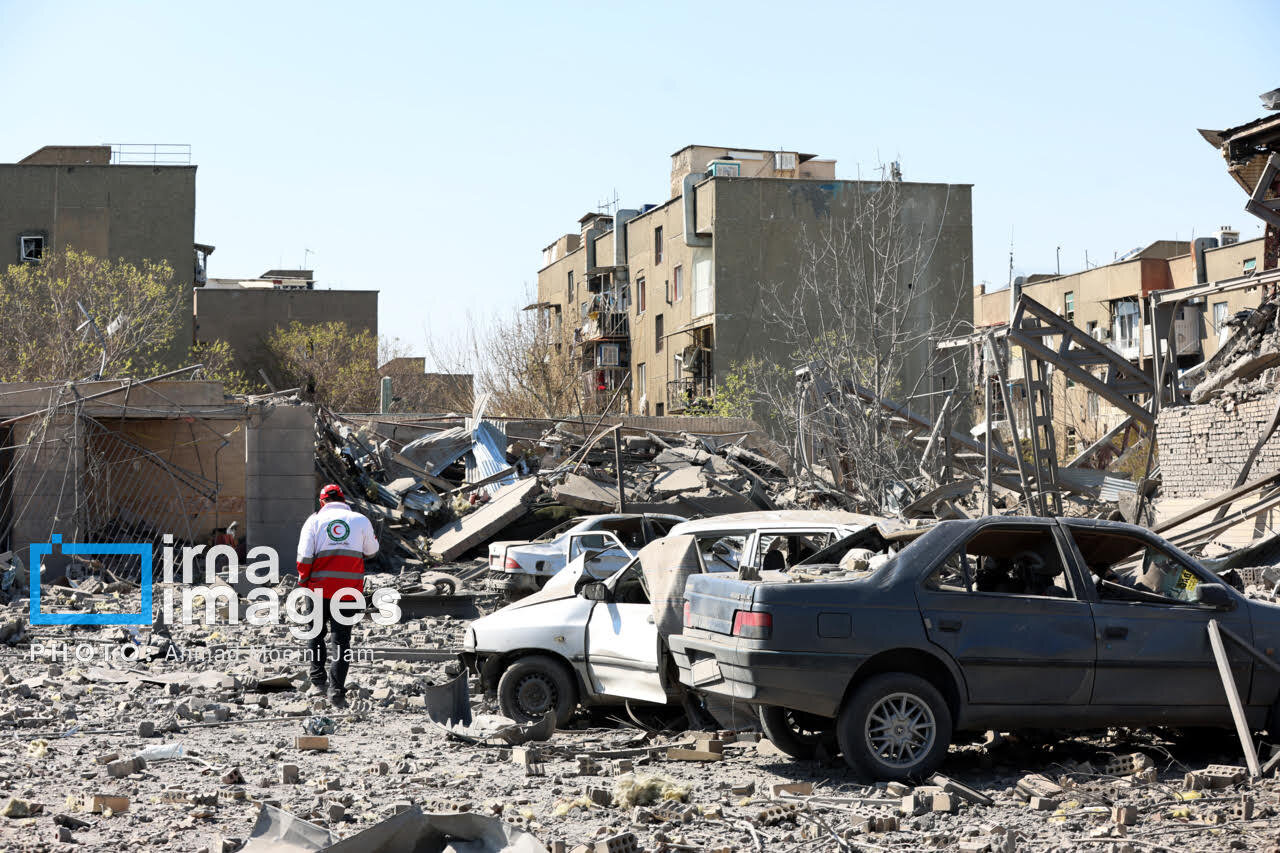
TEHRAN- Central Insurance announced: In the latest phase of compensation payments for vehicles damaged in the “Third Imposed War,” an amount of 4.16 trillion rials (about $2.5 million) was deposited into the accounts of affected owners for 6,885 completed cases.
According to IRNA from Central Insurance on Friday, with this phase included, the total government compensation paid for 13,592 damaged personal vehicles has reached 5.168 trillion rials (over $3 million).
Based on a documented report by Iran Insurance Company, the process of assessing and compensating damaged vehicles, which began at the start of the Third Imposed War, will continue with seriousness.
According to this report, these payments have been made with legal authorizations and from funds deposited by the Central Insurance of the Islamic Republic of Iran.
So far, 28,050 damaged vehicles in 28 provinces of the country have been referred by the Crisis Management Organization of Metropolises and provincial governments to Iran Insurance Company branches for assessment. Of these, the assessment process for 22,731 vehicles has been completed. Thus far, compensation for approximately 60 percent of the assessed cases (equivalent to 13,592 claims) has been fully paid.
Another part of the report states that as of the date of this announcement, compensation for 4,444 damaged personal vehicles in the “12-Day War” has also been settled with their owners, with the payment of 4.06 trillion rials (about $2.4 million).
According to senior state officials, the insurance industry has acted beyond its legal obligations and social responsibilities during the recent wars.
Meanwhile, the Minister of Industry, Mining and Trade, referring to the damages inflicted on some industrial units of the country during the “Third Imposed War,” said: The reconstruction process of damaged units must be pursued with greater speed, and achieving this goal requires coordination between the government and parliament to formulate and grant special authorities and mechanisms.
According to an IRNA report from the Ministry of Industry, Mining and Trade, Seyyed Mohammad Atabak stated in a meeting with the representatives of Isfahan province in the parliament: Isfahan province, as the second most damaged province in terms of the extent of losses caused by the imposed war, has suffered significant damage, and given the prominent industrial position of this province, the most important damage is attributed to the Mobarakeh Steel complex.
Referring to the continuous follow-up on the status of damaged units, he added: The reconstruction of these units requires a set of special authorities, supports, and laws so that the process of revival and return to the production cycle is carried out with greater speed and effectiveness.
The Minister of Industry, Mining and Trade, emphasizing the necessity of forming a headquarters for the reconstruction of damaged units, stated: From the very first days of the Third Imposed War, a special headquarters was formed in the Ministry of Industry, Mining and Trade, and through continuous communication with the provinces, the supply status of basic goods and the needs of different regions of the country were monitored and tracked every three hours.
Stating that this action prevented shortages in the market, he noted: At that time, some consumer goods faced a several-fold increase in demand, but production units, by increasing work shifts and enhancing production capacity, managed to meet market demand.
Atabak, referring to the importance of stable supply of goods in the market, reminded: The shelves of shops being full is of strategic importance; because their emptiness does not merely mean a shortage of goods, but can pave the way for widespread consequences and turbulence in the market.
He added: With the cooperation of trade unions and producers, conditions were managed such that basic goods and household needs were supplied and distributed at a desirable level.
The Minister of Industry, Mining and Trade continued: After the damage occurred, the country’s conditions entered a new phase, and now some vital sectors require urgent and serious reconstruction. In this regard, two specialized headquarters have been formed for the reconstruction of the steel and petrochemical industries.
He also, referring to the commencement of jihadi actions in the Mobarakeh Steel Complex and its subsidiary companies, stated: From the very first day, specialized meetings were held to assess the status of the steel industry, and now executive and operational actions are being seriously pursued on the path to reconstruction.
Atabak, emphasizing the need to accelerate the reconstruction process of industrial units, said: In some sectors, due to the sensitivity of the situation and the necessity of reducing risk, reconstruction operations have begun without interruption and are being carried out with a jihadi approach.
On May 12, a comprehensive support package for projects and industrial units damaged during the recent wars (the 12-Day War and the Ramadan War), proposed by the Small Industries Deputy of the Small Industries and Industrial Parks Organization of Iran (ISIPO) and approved by the organization’s Board of Directors (General Assembly of Provincial Companies), has been issued.
According to IRNA reporting from the Ministry of Industry, Mining and Trade, this package has been issued in line with the implementation of support policies within the framework of assigned missions, aligned with the Cabinet’s support package, the approvals of the Headquarters for Facilitating and Removing Production Barriers, and aimed at supporting production and employment in the country.
Granting extensions for debt payments, settling remaining debts of damaged projects and units located in industrial towns and zones, and accelerating the possibility of operation and commencement of production for damaged projects are among the provisions approved in this support package.
Additionally, damaged units, in order to return to the production cycle and preserve employment, can benefit from facilities and incentives in the area of land allocation or land relocation within the country’s industrial towns and zones.
Allocation of land exploitation rights in industrial towns and zones outside of auction with grace periods and long-term installments is another measure allocated to damaged units within the framework of this support package.
Special incentives, including leasing existing ready-made workshops at minimum cost for damaged units producing basic household goods such as food, medicine, hygiene products, and medical equipment, have also been included in this package to help sustain production.
EF/MA
Disclaimer : This story is auto aggregated by a computer programme and has not been created or edited by DOWNTHENEWS. Publisher: tehrantimes.com