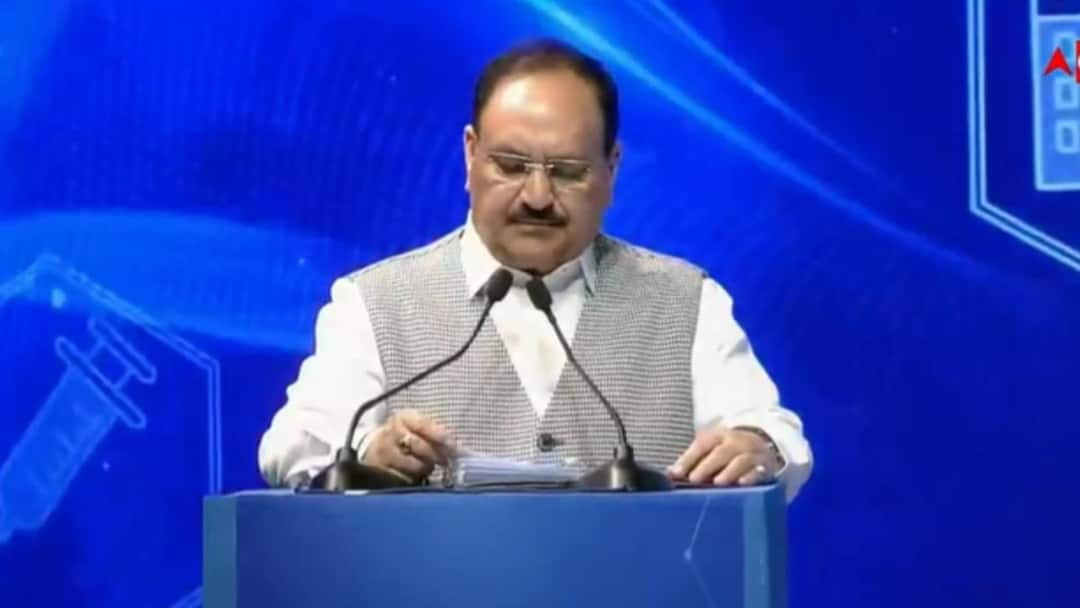
- Minister: India’s 2047 vision requires holistic, preventive healthcare.
- Ayushman Mandirs provide expanded primary care with digital tracking.
- Incentives boosted deliveries, widespread screenings reduced mortality effectively.
India’s ambition to become a developed nation by 2047 hinges on building a healthier population, with preventive healthcare, early disease detection and stronger primary health services forming the backbone of this vision, the Union Health Minister said at the ABP News Health Conclave. Highlighting the shift in the country’s healthcare policy since 2017, the minister stressed that a healthy population was essential for improving productivity and ensuring active participation in national development.
The government’s approach, he said, now encompasses prevention, treatment, rehabilitation and palliative care, rather than focusing primarily on curing illnesses after they develop.
Prevention First
The minister said the National Health Policy introduced in 2017 marked a departure from the earlier approach to healthcare, placing greater emphasis on comprehensive and inclusive services.
He outlined a framework spanning preventive, promotive, curative, palliative and rehabilitative care, with a focus on preventing illness, enabling early diagnosis and identifying risk factors before they lead to serious complications.
The minister also stressed the need to strengthen the three tiers of healthcare-primary, secondary and tertiary-so patients could access appropriate treatment at the right level. While primary healthcare should serve as the first point of contact, secondary facilities should manage conditions requiring further intervention, with tertiary hospitals handling more complex and serious cases.
He said India had expanded high-quality tertiary healthcare while developing stronger links between primary and secondary services to improve access and reduce the unnecessary burden on specialist hospitals.
ABP News Health Conclave | केंद्रीय स्वास्थ्य मंत्री जेपी नड्डा LIVE #HealthConclave #ABPNewsHealthConclave | @JPNadda https://t.co/mkBacveqBM
— ABP News (@ABPNews) October 21, 2026
1.86 Lakh Health Centres
Highlighting the expansion of primary healthcare, the minister said India now had 1.86 lakh Ayushman Arogya Mandirs, which serve as the first point of contact for citizens seeking healthcare.
These centres offer 12 packages of services covering areas including maternal and child health, eye and ENT care, dental services, mental healthcare, elderly care and palliative support.
The minister said digital systems were also being used to track maternal and child healthcare, ensuring that pregnant women received scheduled check-ups, vaccinations and specialist consultations.
Under the government healthcare system, pregnant women are offered five antenatal check-ups, two vaccinations and one consultation with a specialist. High-risk pregnancies receive eight check-ups, including three with a specialist.
Accredited Social Health Activists (ASHA) workers use digital systems to track visits, medical appointments and vaccination schedules, with alerts sent to help ensure timely care.
The minister said the immunisation programme covers 11 types of vaccines, with 27 doses administered from birth until the age of 16 to protect against 12 vaccine-preventable diseases.
Safer Motherhood
The government has also introduced incentives and financial support to encourage institutional deliveries, the minister said.
These measures include incentives for ASHA workers to help pregnant women reach healthcare facilities, free Caesarean procedures, free treatment for post-operative complications and free transport to and from medical institutions. Mothers also receive financial incentives to support institutional delivery.
According to figures cited by the minister, institutional deliveries increased from 78 per cent in 2014 to 90.6 per cent in 2023-24, as reported in the National Family Health Survey.
He also highlighted improvements in maternal and child health outcomes, citing United Nations figures that indicated an 86 per cent decline in India’s maternal mortality ratio, compared with a global decline of 48 per cent.
The minister further cited a 79 per cent decline in under-five mortality in India, against a global reduction of 61 per cent, and a 70 per cent decline in neonatal mortality, compared with 54 per cent globally.
He attributed these improvements to sustained interventions in maternal, reproductive and child healthcare, alongside better access to institutional deliveries and preventive services.
Screening At Scale
The minister said preventive screening had become a major component of the government’s healthcare strategy, particularly for conditions that can lead to serious complications if left undetected.
Screening initiatives cover hypertension, diabetes, breast cancer, cervical cancer and oral cancer. Community-level efforts also encourage people aged 30 and above to visit Ayushman Arogya Mandirs for screening.
Citing digital data collected since 2017-18, the minister said around 44 crore people had been screened for hypertension. Of these, 7.6 crore had been diagnosed with the condition.
He stressed that early diagnosis was critical to preventing complications such as kidney failure and heart disease, arguing that identifying health risks before they become severe was central to the country’s wider preventive healthcare agenda.
The minister said these initiatives reflected a broader shift towards a comprehensive healthcare system, linking prevention, early detection and treatment with the government’s ambition of achieving a developed India by 2047.
Check out below Health Tools-
Calculate Your Body Mass Index ( BMI )
Calculate The Age Through Age Calculator
Disclaimer : This story is auto aggregated by a computer programme and has not been created or edited by DOWNTHENEWS. Publisher: abplive.com