- MEA reaffirmed India’s unchanged position on Indus Waters Treaty.
- Pakistan’s minister, Musadik Malik, arrived for SCO forum.
- Malik avoided bilateral questions, focusing on multilateral discussions.
- BJP rejected bilateral talks; Congress questioned India’s policy.
The Ministry of External Affairs (MEA) on Friday reiterated that India’s position on the Indus Waters Treaty (IWT) remained unchanged, following the arrival of Pakistan’s Climate Change Minister Musadik Masood Malik in New Delhi for the Shanghai Cooperation Organisation (SCO) Civilisational Dialogue Forum.
Malik had earlier criticised India’s decision to place the 1960 Indus Waters Treaty in abeyance after the 2025 Pahalgam terror attack, in which 26 people were killed.
In June, he warned that Pakistan would “cut off that hand” which attempted to take away its share of water, accusing New Delhi of using water as a means of exerting pressure on Islamabad.
Responding to a question about Malik’s arrival and his earlier remarks on the treaty, MEA spokesperson Randhir Jaiswal said, “As far as the IWT is concerned, we have made our position very clear, and that is where it remains. There is absolutely no change.”
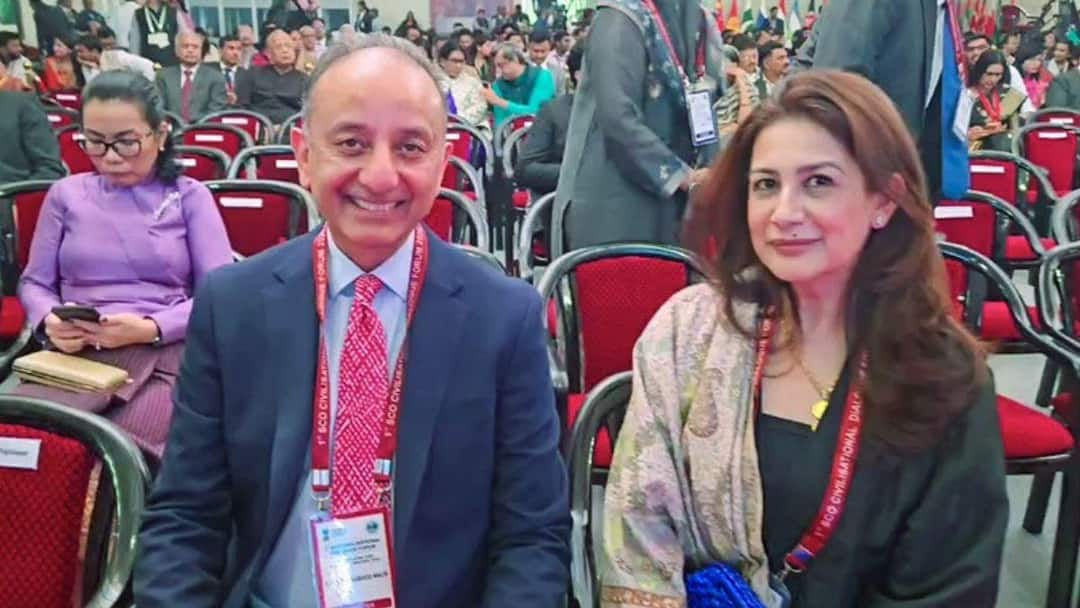
Malik arrived in New Delhi on Friday to lead Pakistan’s delegation at the SCO Civilisational Dialogue Forum, scheduled to be held from November 20 to 22.
Musadik Malik Deflects Questions On India-Pakistan Relations
Asked about his earlier comments on the Indus Waters Treaty, Malik avoided a direct response, saying discussions at the forum were taking place within a multilateral framework.
“I have already stated and I reiterate that all our discussions here are taking place within a multilateral framework. Let us focus on that,” he told ANI.
VIDEO | Delhi: At the SCO Civilisational Forum, Pakistan Minister Musadik Masood Malik says, “Culture plays a very important role. The role of culture is not limited to relations between just two countries; it is regional in nature. Our ideas, our way of thinking and our way of life are all things we need to understand about one another. Unless we understand each other, we cannot move forward. Through dialogue, we gain each other’s perspectives and develop mutual understanding, which enables the entire region to progress.” When asked whether relations between India and Pakistan would improve, he says, “We will discuss that. For now, the first thing is that this forum itself is multilateral. You should engage in multilateral discussions. Even the questions you have asked today have not been bilateral in nature; everything here is happening in a multilateral context. We have also come here for multilateral discussions, so you should ask us multilateral questions as well. Over the next day or two, when we have discussions, we will speak to you afterwards.” (Full video available on PTI Videos – https://t.co/bIyFWTfmBd)
— Press Trust of India (@PTI_News) November 20, 2026
He also sidestepped a question on whether his visit could help improve India-Pakistan relations, reiterating that the forum was centred on multilateral engagement.
“We will discuss that. For now, the first thing is that this forum itself is multilateral. You should engage in multilateral discussions,” he told PTI, adding that he would speak to the media after discussions over the next one or two days.
Earlier, Malik had called the forum a “tremendous opportunity” for multilateral engagement and expressed hope that it would strengthen ties among SCO member countries.
#WATCH | Delhi: “Mujhe ummeed hai ki dobara aap gila nahi karenge aur hamara aana jaana rahega…” says Pakistan Minister Musadik Masood Malik as he participated in the first SCO Civilisational Dialogue Forum in Delhi https://t.co/JWHvUlkZwV
— ANI (@ANI) November 20, 2026
“I think all of our relationships will improve. The region is in flux, as you know. The plates underneath geopolitics are shifting very fast,” he told ANI.
Asked about visiting India after a long gap, Malik said, “I hope you won’t have any complaints again and that visits between us will continue.”
BJP Says No Bilateral Dialogue With Pakistan
On Monday, BJP leader Nalin Kohli said India could not engage in bilateral talks with Pakistan as long as terrorism against the country continued. He also maintained that Pakistan had not received any special invitation and that the government’s position on bilateral relations remained unchanged.
“India did not extend any special invitation to Pakistan. Our bilateral relations remain exactly as they were. The PM Modi-led government has made this clear. There can be no dialogue as long as terrorism is directed against us. This is a multilateral forum,” Kohli said.
He also criticised the Congress for questioning the government’s Pakistan policy, asking the party to examine the foreign policy pursued during the tenures of former prime ministers Jawaharlal Nehru and Indira Gandhi.
Congress Questions Centre’s Pakistan Policy
Malik’s participation in the SCO forum has triggered a political row, with Congress leader and former external affairs minister Salman Khurshid questioning the Centre’s approach towards Pakistan.
Khurshid alleged that the government’s position on Islamabad lacked consistency and called for greater clarity.
“The government’s policy is never clear. Sometimes they say one thing, sometimes another. What kind of policy is this? Whatever they intend to show, do, or say, they should at least make it clear. That way, we can formulate our response once we have a clear understanding of their position,” he told ANI.
Why Is Pakistan’s Musadik Malik Visiting India?
Pakistan nominated Malik to lead its delegation at the SCO Civilisational Dialogue Forum in New Delhi. India had invited all 10 SCO member states, including Pakistan, to the multilateral event, which aims to promote cultural understanding, civilisational exchanges and dialogue among participating countries.
Malik is the first Pakistani minister to visit India in more than three years. His visit also comes after the military confrontation between the two countries in May 2025, following India’s Operation Sindoor. The operation involved strikes on terrorist infrastructure in Pakistan and Pakistan-occupied Kashmir in response to the Pahalgam terror attack.
Disclaimer : This story is auto aggregated by a computer programme and has not been created or edited by DOWNTHENEWS. Publisher: abplive.com