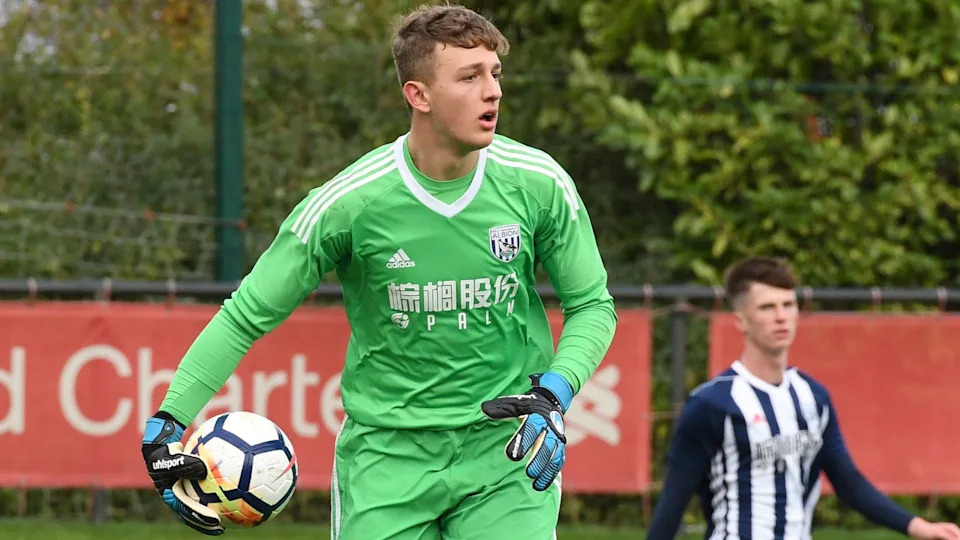
In the latest instalment of GOAL’s ‘Brits Abroad’ series, a man that played for England schoolboys alongside Phil Foden talks waiting on a contract offer in Bali, dogs on the pitch and what to do in Cambodia
There was a time not all that long ago when British footballers plying their trade abroad were rarer than hen’s teeth. Individual reluctance to leave geographical comfort zones led to collective wings being clipped.
Advertisement
This is, however, a brave new world, with cultural advancement meaning that no corner of the planet should be considered too far-flung. Flying the nest and enjoying a different way of life is now an experience to be embraced, rather than feared.
Of course there are challenges – professional and personal hurdles that need to be cleared on the way – but why not embrace those instead of shying away from them? More and more players are adopting that mindset.
Taking that into account, and as we are forever told that travel broadens the mind, GOAL will be helping to tell the story of some of intrepid explorers that have broken down barriers and found themselves in a position to impart both sporting and holidaying wisdom.
Next up is Adam Przybek, a man who has taken the scenic route from Nuneaton in the West Midlands to the Takeo Province of Cambodia via Poland, Wales and Indonesia…
Advertisement
Catching eyes across the West Midlands
West Brom, Coventry and Birmingham all offered academy opportunities
“I started out with my local team from the Midlands, a small town called Atherstone. One of my friends at school, I basically played for his dad’s team. I played there for three years, ended up joining West Brom Academy when I was seven and was there then for 12 years until I was 19. I was spotted by West Brom playing local tournaments. I played for Atherstone and then I went to Coventry, Birmingham, Villa and West Brom, and it was only Villa that didn’t offer a contract at seven or eight. So for me at the time, West Brom was the best. The goalkeeper coach was really good, he’s actually now at Villa, so he’s done well for himself as well.”
Goalkeeping genes skipped a generation

Life as a shot-stopper made possible by reaching 6ft 4in in height
“I had started playing outfield, but only for a few weeks. At the age of four, one weekend they needed a keeper and they asked who wanted to play in goal. I didn’t really know what I was putting myself up for, but I just said ‘yeah, me’. Luckily there was a guy there coaching, he was a semi-pro goalkeeper, so he took me under his wing and taught me the basics. I guess he helped to put me on a good level to get into an academy.
Advertisement
“When I signed for West Brom, height was a massive thing. The scout there, Steve Hopcroft, he’s actually just passed away, he was always looking at the parents. He was like, ‘you judge a goalkeeper’s height by the parents’, and funnily enough my parents aren’t massive! I think I’ve skipped a generation and got my grandparents’ height. It’s a risk that you take, but luckily I was tall.”
Future superstars in the England youth ranks

Manchester City playmaker Foden was a team-mate with the Young Lions
“When I was training with those guys, you could see at that age, the names that I played with – Phil Foden, Jadon Sancho, Callum Hudson-Odoi, Ethan Ampadu, who plays for Leeds, Ryan Sessegnon, Emile Smith Rowe, it’s endless, Marc Guehi. I sometimes look at the photo when I made my debut for England at U15, playing against Italy, and I look at the squad photo and think, ‘I was part of that team’. It’s funny how careers go in different directions.
Advertisement
“I remember playing against other academies. I remember playing against Man City, and Phil Foden and Jadon Sancho ran the show. It was ridiculous what they were doing at that age, so you knew they would do something. I don’t think you could predict the careers they’ve had, saying that you’ve played with lads that played in the World Cup, you don’t quite expect that.”
Frustration fuelled first adventure in Poland

Przybek spent time (including loans) with seven clubs between 2019 and 2023
“In the English system, you end up just as a goalkeeper. If you don’t get that break early on, you’re kind of just knocking around, you end up going around the leagues. I had a little bit of bad luck, should have signed a new deal at Ipswich, Paul Lambert got sacked, Paul Cook came in, released everyone. I went to Wycombe as a number two, for whatever reason they didn’t offer a new contract there. Then I was going to Stevenage, went to Walsall, and I was just a number two, I wasn’t really getting my break. And after my spell at Stevenage, I’d always said to my agent at the time that I want to try something more. To me football’s about more than just playing football, there’s life and you can travel the world with it, which is what I’ve really done now.
Advertisement
“The opportunity came up to go to Poland. The agent that took me there made me realise that agents are not always trustworthy. He promised me ‘you’re number one, you’re going to be playing half a season here, you’ll be in the top league in Poland after six months’. Signed my contract there, and then the goalkeeper that had been there for the previous year signed a new deal two days after. So I called him and said, ‘what’s happening here?’ But anyway, it was just the case of wanting to experience something new. Obviously, I’ve got Polish roots. And to be honest the whole experience off the pitch was amazing. I remember coming home and meeting friends and they said, ‘you’re not the same person that you were when you left’. And I said, ‘well, of course not’. You rock up in a small town on the east side of Poland and you make things work. You’ve just got a suitcase, you have to find an apartment. I learned the language.
“So that gave me a taste. There was other stuff that happened. They stopped paying salaries. So by January, I was still waiting for my October salary. In the end, I just said, ‘look, I can’t stay here’. Ended up coming back to play for Penybont. But once I had that taste, I was like, ‘I need to go abroad again’. I think there’s more to life than just knocking around the English system.”
Making the leap from South Wales to Indonesia

Penybont swapped for Persib Bandung when moving halfway across the world
“I was looking for an agent that could get me abroad. So in the February, March time of my last season in Wales, I connected with a guy from the Netherlands and my plan wasn’t Asia. It was to try and go back into Europe. Come the summer, I went to Bali with a friend on holiday. I said to the agent, ‘if there’s ever any opportunity in Asia, then I’d love it, please just let me know’. There wasn’t really anything. Penybont offered a new contract and I said no to that. I was just sitting, waiting.
Advertisement
“And then one day the agent called me and said, ‘I’ve got a contact, basically another agent, but he’s my friend and he’s strong in Indonesia’. He said there’s a chance that a team are interested. So then it was about a week of just waiting. In the end they offered a contract and I went to the champions of Indonesia, which was ridiculous.”
Adjusting to the demands of life in Asia

Fanatical supporters in Indonesia made Przybek feel like a superstar
“It was a culture shock. Luckily I’d been to Bali because if I hadn’t experienced that two weeks there, I would have rocked up and been like, ‘what is going on?’ I’m quite open-minded anyway but when I got there, firstly, obviously the weather is so different. I don’t miss the English weather. That’s one reason why I try and stay in Asia. And just the way the people are, you have to deal with that. In Indonesia, their view on personal space is a lot different to the UK and in Europe. That was one thing, especially there.
Advertisement
“The team I signed for has got millions of fans. I became, which sounds a bit weird, but in their eyes, in that city, you’re a superstar. I went from just playing in Wales to going out for dinner and you can’t go anywhere without getting stopped in that city. It was amazing. I really enjoyed it.
“The team made it really easy because it’s a really professional set-up that had all European staff, the technical director was Malaysian, but they had that real professionalism. I had a driver. He’s more than a driver now, we’re really good friends. Because I was alone, I was single, we’d spend any spare minutes together. When you finish training, going to a restaurant, if you’re not with the team-mates, he’d come with you. You go out for dinner in the evening, he’d come with you. And he’s more than just a driver. If I needed something, if I needed to go to a bank, he would help me with that. So luckily, that was a real help as well.”
Contending with sweltering heat and thunderous storms

The weather in Southeast Asia can take some getting used to
“Bandung, luckily, the city is a few degrees cooler than the rest of Indonesia. I think it’s to do with the mountain structure around the city. So it rarely got above 30. Most days it was about 28, 29, which was still tough to train in at times. Then you play away games in Bali or you go to Borneo, which is 33, 34 [degrees Celsius]. So that was a shock. But I loved it because you could go to a cafe at night and you’re sitting outside and you’re talking to your friends back in England in December. And you know what it’s like there! So that was good. And then I’ve come to Cambodia and it’s even hotter.
Advertisement
“In Indonesia, it was a weird one because everyone kept saying, ‘it’s rainy season, it’s coming’. But it wasn’t really a consistent rainy season. It would just rain intermittently, even when it should be the hot season. Whereas I’ve come to Cambodia now and it’s rainy season and every day it’s ridiculous – the lightning, and the roads are flooded within minutes. But then it’s dry again once it stops.”
Playing the contract waiting game in paradise

Idyllic surroundings in Bali helped to fill the gap between two deals
“When my contract finished last year [with Indonesian side Persib Bandung], I said to my family, ‘I want to stay in Asia’. Firstly, my friend came from England, so we spent a month together in Bali. We did the islands. And then I still hadn’t had an offer, but I was so determined to stay in Asia. I just booked another month. I was like, ‘what’s the point in going back to England? There’s nothing for me in the UK?’. So I just decided to stay in Indonesia. It’s paradise. You can do what you want there. Indonesia is a very free place. There’s no rules and it’s cheap as well.”
Advertisement
How life in Cambodia is different to that in Indonesia

Afternoon training sessions allow for chilled mornings to be enjoyed
“The biggest difference is in Indonesia, we trained really early. I would wake up about 5:45, get in for about seven-ish. By eight o’clock, you’re on the grass. So by 11 o’clock, I was home. Whereas here in Cambodia [with Cambodian Premier League side Kirivong Sok Sen Chey], we train at three in the afternoon. It’s just a manager’s preference. There’s other Cambodian teams that also train in the morning. But here, we train in the afternoon. So mornings are quite chilled.
“This team, I actually live in Phnom Penh, the capital, but then travel down to training because when I rocked up the guesthouse they wanted us to stay in was inadequate, to be honest, for a foreign player. It’s been difficult because to adapt from the set-up we had last year, where they really catered for foreign players, to come into here where you’re basically expected to just adapt and behave like a local, is impossible.
Advertisement
“Touching more on why I made this move, it was a step down from last year. I had a frustrating season. I got injured. I didn’t end up playing many games, so I needed to play games and I wanted to stay in Asia. So when this opportunity came up, I thought I’ll take it and try. If you have a good season, who knows, you can go back to a club like Persib. But I didn’t expect the challenges I face now.”
Local wildlife, cuisine and humble mentality

Cows around the stadium and dogs on the pitch have become part of the norm
“You go down to the province called Takeo and it’s wild. We’ve got cows around the stadium and dogs on the pitch. The local boys, some of the stuff that you see them eating, they’re like, ‘do you want it?’ I’m like, ‘no, I’m alright, thank you’. I’ve already had the stomach sickness when I moved to Indonesia, so I’m really careful now. Luckily in Phnom Penh you’ve got every western restaurant you could think of, so it’s good for me. But it’s a real difference, especially in these rural places.
Advertisement
“Their way of life and their ambition is different as well. I don’t know what the local lads are earning, but I wouldn’t say it’s more than $500 a month for a few of them. But that’s enough for them. They’re happy to just stay with their families. It’s a very relaxed way of life – eat from the side of the street, so it is different. Whereas last year, even some of the local lads, they’d be earning good money, but they’d also not change their ways in terms of they’d still go to the same street stall to eat their food and you’re thinking, ‘you’ve got money now, go and eat somewhere nice’. But it’s the culture and they don’t want to change.”
Surreal experiences of snakes, spiders and motorbikes

Przybek encountered a dangerous snake in Bali and huntsman spider at Cambodian hotel
“When I was in Bali, actually on the beach in summer, I saw my first half-decent sized snake. It was a sea snake and they’re actually really dangerous – the black and white banded snake. It washed up on the beach. Obviously everyone was going crazy! That was quite interesting. You see the lizards, the amount of weird insects that I had on my balcony last year. But slowly you adapt.
Advertisement
“I remember the first night in Cambodia, I booked this hotel room after there was a bit of a disaster. So I left that guest house, went to this hotel room and there was a huge huntsman. And it was like three in the morning. I’d been traveling all day and I called my dad. I said, ‘what am I doing?’ I’m trying to kill it. It took me about an hour to kill this huntsman. I was sweating! So slowly you adapt. But I think for us westerners, you never really truly get used to some of the things that you can see.
“After I’d had my family over, if you ask my dad about what he remembers most about the time in Bandung it wasn’t the hotels and the nice meals we had, it was learning how to cross a road Asian style! There are no lanes, it is just a complete free for all. There are probably 10 motorbikes to every car. It’s ridiculous. Basically, you just go. You’re in the middle of the road and they’ll go around you. You look at the motorbike, make eye contact with them, and guess that he’s going to go behind you and you go forward. It works. That’s the beauty of Asia, there are no rules and it’s so free. The motorbikes coming the wrong way! Just embrace it.”
Learning the hard way when it comes to Asian food

Street stalls are part of the culture and can be found across the region
“I’ve not really added anything to my diet. When I first came, I was almost too open. I’ll try everything. I learned a lesson from that! But I love stuff like nasi goreng and fried rice, satay chicken that they have in Indonesia. Then you come to Cambodia, it’s more of a Thai kind of style food. I really love Cambodian food. But I eat it from reputable places, good restaurants.”
Advertisement
How the cost of living compares to life in the UK

Phnom Penh is the capital and most populous city of Cambodia
“Phnom Penh is more expensive than Bandung. I went for a three course dinner there, it cost $17. So in England, that’s probably about £12. If you went for a three course meal in England, it’s nowhere near that. It’s probably going to be £30 plus. So that’s a benefit as well because you can almost live like a king. I love to eat. So especially after training, it’s really ideal.
“The cost is very similar across the region. Phnom Penh is more expensive because there’s a lot more westerners. Indonesia is a strange one because even in Jakarta, you go there and you don’t really see many westerners. However, here, there’s westerners everywhere you look. So I think the prices are hiked up a little bit.”
Advertisement
How to get the true Cambodia and Southeast Asia experience

Visitors to a stunning part of the world are encouraged to step off the tourist trail
“I was lucky last year, I got the opportunity to go to Singapore, went to Bangkok three or four times. One or two days off, you could get to Bali. I’ve definitely got love for Bali. It’s just a magical place where the people are so friendly – not just Bali, Indonesian people, but Bali’s got a real energy when you arrive, you can feel it. And the Indonesian people just make it. Lombok as well, I’d add that. Some of the best beaches I’ve seen. I’d say embrace the local food for sure. Don’t come and just eat in western restaurants. But also use your brain a little bit and go somewhere that’s busy. If you can see the meat is just sitting out uncovered or whatever, then give it a miss.
“Each city that I’ve been to, Kuala Lumpur has got something for it. Singapore is the Dubai of Asia. It’s a very plastic world. Everything is really efficient. The streets are spotless. So in each little place that you get to visit, you get a different experience and a completely different culture, especially in Indonesia. Most of Indonesia is Muslim. However, Bali is Hindu. So especially when you go from a Muslim part to Bali, you can feel a real culture difference.
Advertisement
“But don’t come to these parts of the world and close off to the local people. Go and integrate, speak to the locals. And if you see something that they’re doing that looks interesting, then do it yourself, because I think people say, ‘oh, I’ve been travelling’, and you’ve not really travelled. That’s why I feel lucky that I’ve lived in these parts of the world, because I’ve done things and seen things that your average person that’s travelled hasn’t done. And they go to western restaurants, they go and stay in top hotels, and it’s not really a true experience of this part of the world.”
Why more players should spread their professional wings

Nothing to lose when it comes to gaining priceless life experience
“Without a doubt I would encourage players to move abroad. I think I got to a stage where I realised that you can get stuck in the English system, and also there’s more to life than just staying in England. And I think the state of the country as well now in the UK is not great. I will never regret this. If I came here and football didn’t work out at all, I’m richer in life because of the experiences that I’ve had. So for anyone that ever got the opportunity, not just Asia, I’d also look to go and play in the Middle East. Even if you got the opportunity to go to South America or something, you’re never going to lose from the experience. There’s always something to gain.
Advertisement
“The day before our games, we would have full stadiums with flares, chanting, for the full two hours. They are football crazy here. Unless you actually look into football in Asia, you think Asian football isn’t great. But the other thing I would say is, there is some good money to be made if you are at a good team with a professional set-up. The salaries are as good as, or better, than what you could earn in slightly lower leagues in England.
“I think taking the first step is the most important thing. However, I think it can be difficult if somebody does take a step and doesn’t go to quite the right place where they have an environment where it can help a foreign player. I was really lucky last year. Everything was catered for foreign players. We all had a top place to live. There were good restaurants. However, if you rock up in the back end of Indonesia or some small rural country like this town, for instance, if I didn’t know Asia and how it worked, I probably would have been on the next flight home. So yeah, you need a little bit of luck.”
Future plans: Putting down roots or a new adventure

Przybek would be happy to remain where he is, but the Middle East also appeals
“In football, you don’t know what can happen tomorrow, let alone in a few years. I definitely know now that I could make somewhere like this home. You’ve obviously got the bigger cities in Thailand, Vietnam was amazing. Da Nang was one amazing place that I went to. It’s like Miami, but in Asia. When you arrive, you wouldn’t believe that it actually exists! So there’s places that you could for sure make a really good life, even if you weren’t playing football.
Advertisement
“I just met a girl, and she lives in Dubai, but she’s from Colombia. So this is why now maybe I’d like to go to the Middle East. The one thing I know for sure, and I say to my family all the time, is that I don’t ever see myself living back in the UK. The weather’s no good. The state of the country, the state of affairs, it’s really in a mess.”
LIVABILITY INDEX

How life in Cambodia ranks across five important areas
Weather: 6/10. “It can be really hot and it can be uncomfortable to train.”
Food: 8/10
People: 10/10. “I actually said to my family, and this is one thing I’d like to put out there, that Phnom Penh has got such a bad reputation for Southeast Asia as being one of the unsafest cities. I’ve had no problems personally. One of my team-mates did get his phone almost snatched from a motorbike going past him. It didn’t happen, luckily. But that can happen in Europe, anywhere. I actually would say that Cambodian people are potentially even friendlier than Indonesian people, which I didn’t think I could find.”
Advertisement
Things to do: 8/10. “You’ve got the islands you can go to. Now is not the season, but the islands are like paradise. Phnom Penh has got everything, there’s western restaurants, there’s history. You’re a short flight away from Thailand, Vietnam. Now it’s a bit difficult to go to Thailand because they’ve got the situation, they’re fighting over some land, but Vietnam you can go to on a bus. Bali is a three-hour flight. Singapore’s two hours, Malaysia’s two hours. So you’ve got Air Asia and it’s like easyJet of Asia. And if you get a few days, it’s really convenient.”
Cost of living: 9/10. “What we’re used to paying in the UK, then you come here! I had a funeral to attend back in February so I came home. I went to Manchester for a weekend. I said to my family, ‘the money I’ve just spent, I wouldn’t spend in a month in Indonesia’.”
Total: 41/50
Access to Adam was provided courtesy of AFFG.
Advertisement
Catch up on the Brits Abroad series

Read more about the experiences of British players playing abroad via the links below
|
Player |
Country |
Livability score |
|
|
1 |
Brunei |
44/50 |
|
|
2 |
Adam Przybek |
Cambodia |
41/50 |
|
3 |
Croatia |
40.5/50 |
|
|
4 |
Belgium |
39/50 |
|
|
5 |
Singapore |
36/50 |
|
|
6 |
Finland |
29/50 |
|
|
7 |
Switzerland |
29/50 |
Disclaimer : This story is auto aggregated by a computer programme and has not been created or edited by DOWNTHENEWS. Publisher: Sports.yahoo.com