For fans of the Afghan Whigs, the first half of 2026 has been a glorious time. The beloved Cincinnati-born band is celebrating its 40th anniversary with a tour spanning its entire career, including two new singles the band released earlier this year.
The tour wraps up in Southern California this week with a string of shows — the Bellwether on Wednesday, the Observatory in Santa Ana on Friday and Pappy & Harriet’s in the desert Sunday.
If ever there was a band that deserved this celebratory victory lap, it is the Whigs. Having started with iconic label Sub Pop, then becoming alternative heroes in the ‘90s with an insane sting of albums, including the cult classic “Gentlemen,” as well as “Black Love” and “1965,” the group broke up before reuniting for good in 2011 for an equally impressive second act.
The Times spoke with frontman Greg Dulli about keeping the band together for four decades, Muhammad Ali, how the Cincinnati Reds inspired his desire to come to L.A., ‘90s nostalgia and more. This interview has been edited for length and clarity.
It’s rare for artists to get to look back. I know this happened during COVID, when artists finally had time to do so. But once in a while, it’s fun to just appreciate everything you’ve accomplished. So how much fun are you having on this tour?
Yes, the first couple of shows we played we came out with eight songs off eight different albums and that was really fun to do. That we have that many different records and still want to play those songs, it’s a gift.
What’s funny when you go back to them too, of course you and I have talked about this so many times over the years, your relationship with the songs changes. Are there ones right now that you’re really appreciating in a different way, or you realize how often songs start out to be prophetic?
I don’t know about prophetic, but I will say that playing songs from 1990 and 1992 and ’93 and still getting off on them, it’s a great feeling. And watching people still getting off on them and respond, it’s a great feeling. We’re playing both eras, it’s basically half and half. But mixing them up and it’s still a cohesive piece; it’s amazing to be a part of.
You say you’re playing from both eras; do they feel different to you at this point or is it something where they feel part of the same journey?
Yeah, it’s a journey and I consider the Twilight Singers and the Gutter Twins part of that journey. The music that I did in the interim between the two eras of the Whigs is equally important to where I am today, if I would have just hung it up for 12 or 13 years, I don’t think this would have the same resonance. But I stayed sharp and I stayed touring and I stayed hungry to put on good shows, so that is just the continuing evolution of my love for rock and roll.
I’ve talked to so many artists about this and when you have a break that is not forced it allows you to rediscover your love for whatever you were doing before. Do you feel like now that you look back at it, that time was so pivotal to the Whigs coming back because it gave you space to breathe and appreciate everything you had done with it?
It did, and it was great. When we finished the reunion tour, that was it. We had no plans to continue and then we got the Usher call and that’s when we went and played with him in Austin [at SXSW]. John [Curley] and I had dinner that night and we’re like, “Hey, maybe we could make another Whigs record.” Because that was the only way we were going to continue to do shows too, if we had new music. We had no interest in being a legacy act or whatever they call people who don’t make records anymore and tour behind what they used to do. And by the way, if that’s cool with you, then that’s cool. It just would not work for me. So our ability and the people who listen to our music continuing on and digging into what we started doing, now, 12 years ago, it’s a cool place to be. And being able to go out and play a show that is nine of the 10 albums, is pretty fantastic.
My friend was at the show in Denver, and I know you’ve been playing new songs.
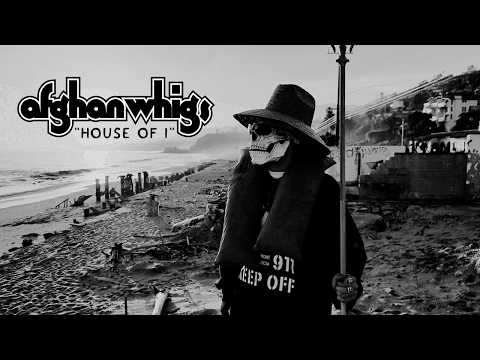
We’ve released two singles, “House of I” and “Duvateen,” and we’re playing them in the show. So we play two new songs every night.
There was this whole ‘90s nostalgia going around because in hindsight the ‘90s right now seems like a much simpler time.
Think about it. When we were kids, nostalgia happened in the ’70s: “American Graffiti,” “Happy Days,” “Laverne & Shirley,” all that stuff. That was their simpler time, there’s always a simpler time and people will always look back and long for something that’s not there. And cool, just as long as you visit and don’t stay there.
I agree with you, but you made music in the ‘90s. Obviously, we were all alive then; it’s interesting to see now that sense of nostalgia because what I’m asking is, are you seeing it on tour when you guys play? Are you seeing younger fans come who love those albums, who weren’t even around during that time?
Absolutely, yes. In particular in Denver, by the way. There were a bunch of young people and a bunch of young people on the rail in the front row. So it was cool seeing them singing along and then singing to the new ones too.
When you get to see these songs through new eyes, are you surprised by the ones that really hold up?
Well, a lot of times they’re the ones that we gravitate towards as well. “Bulletproof” we don’t play but love the song. But “Summer’s Kiss” we do play and that is definitely a big song for a lot of people. In regards to playing the catalog so to speak, returning back to the fact there are sort of two eras of the band and intermingling them, which is what we’ve done since we did “Do to the Beast.” Every time we made a new record it entered the set list. So now we’re able to calibrate between the two eras and mix them, which is exciting. We’re in an interesting space because we’ve been together now longer than we were the first time.
You’ve always been very collaborative. Where do you think that appreciation for collaboration comes from? Is that something that was just ingrained in you from a young age?
I played sports when I was a kid and being on a team, playing your role, being a leader if you needed to be, and being part of a team helped me in bands. I understood you can’t do it alone. Maybe Prince can, but he still needed people to go play live. Also, I was a kid singer when I was 13 and wrote songs with other people then. Then I didn’t start playing guitar or piano until late teens. By the time I was playing with people, they had been playing a lot longer than me and I learned to lean on them and learn from them and appreciate their great talent, which was beyond what I could do. But I could orchestrate it with songwriting and that was my part. So I felt that helped me become a good producer and it helped me in life, owning bars with people. I don’t own them alone; it’s teamwork with other people who are great at what they do.

Are there athletes who inspired you at a young age?
My heroes when I was a kid were Dr. J and Muhammad Ali; those were my two heroes. I was fascinated by both of them and incredibly impressed by their athletic ability. So those two guys and the Reds, of course. The Reds were so fun to watch growing up and the Dodgers were their biggest rival. So staying up late and watching the Reds play the Dodgers in L.A., I was like, “F—, I want to go there, I want to see palm trees.”
I’ve been doing this Miles Davis piece for his 100th birthday and talking with people like Ron Carter and Carlos Santana, who knew him, but then also younger people like Nas and Wyclef who were influenced by him. Muhammad Ali was the same way as Miles, so uncompromising. Obviously I feel like that’s very reflective of your music career. Do you see that uncompromising attitude coming from watching people do that as a kid?
I don’t think you consciously do it, but I think you unconsciously absorb things and watching people and the way they behave and the affect it has on other people, you can’t not watch that and be influenced by it in the most subtle of ways.
More to Read
Disclaimer : This story is auto aggregated by a computer programme and has not been created or edited by DOWNTHENEWS. Publisher: latimes.com