

The loss of two daughters in four months has taken Cheryl Webber from Dubbo to the NSW Supreme Court – and placed a spotlight on the medical service caring for them. Warning: This story contains the name and images of Indigenous people who have died.
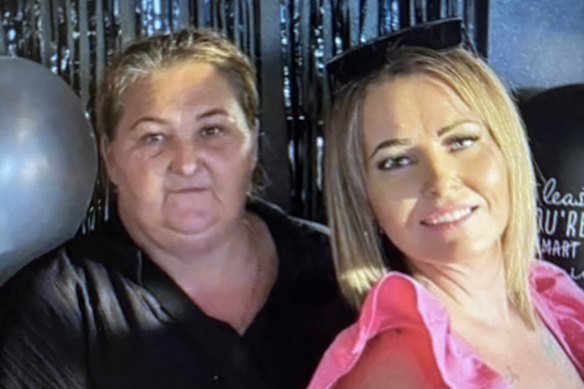
Jessica and Caroline Hangan were as close as sisters come. Growing up in Dubbo in the NSW Central West, Caroline – who was 12 years the senior – would spoil her sister with treats and Barbie stickers for her room.
When Caroline gave birth to her first child, Jessica took her baby niece to school show-and-tell. Later, they would help each other raise children, organise birthday parties and navigate relationship breakdowns.
“I can’t even begin to tell you the closeness they had,” says their mother, Cheryl Webber, from a living room filled with family photos and mementos.
“Some parents never have what I had with my two girls.”
Now the sisters are buried just metres from each other after twin tragedies that have rocked the tight-knit family and left Webber’s nine grandchildren without their mothers.
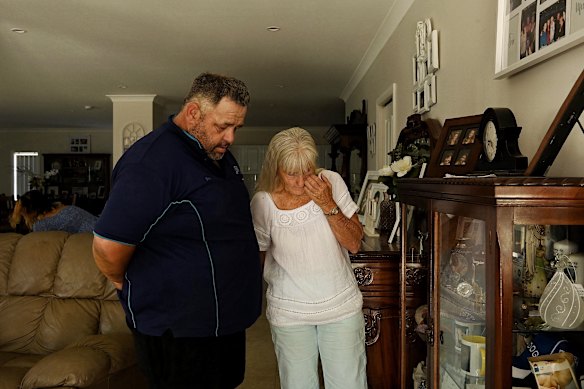
Webber’s search for answers has taken her from Dubbo to Sydney’s Supreme Court. On Tuesday, her lawyers will begin their fight to gain access to her daughters’ medical records held by the Dubbo Aboriginal Medical Service (AMS).
Their deaths place the spotlight back on the service following resourcing concerns raised by this masthead last year.
‘I just said, “Not another daughter. I can’t lose another daughter”.’Cheryl Webber
A federal government audit of the service’s finances was completed in November. The Department of Health, Disability and Ageing is still probing its findings.
“We’re not sure how long it [will] take,” assistant secretary Ben Barratt told budget estimates in February.
This masthead’s application to inspect the final report under freedom-of-information laws was rejected on the grounds its disclosure may prejudice an investigation into a possible breach or failure to comply with the law.
In a statement, the department said it was unable to comment on the audit or whether it was further investigating the service.
‘I can’t lose another daughter’
When Caroline, 47, died of a heart attack last March, the loss gave Jessica a wake-up call.
“She said, ‘Mum, I need to go and have a check-up because I have four children, and I want to live to look after my kids’,” Cheryl recalls.
She had been suffering chronic, unexplained headaches, which Webber said she raised with her doctor, Amy-Lea Perrin.
Perrin ordered an MRI, which found an arterial aneurysm in her brain.
The radiologist’s report, seen by this masthead, recommended the GP refer her to a neurosurgical specialist.
Jessica never saw a specialist.
Referrals are not mandatory, and it is ultimately up to a GP as to how they wish to manage and advise their patient in their specific circumstances.
The 35-year-old carried on with her life, but Caroline’s death took its toll.
“She was drinking nearly every night, I think because she couldn’t kill the pain in her,” Webber says. “Had she have known that she had this aneurysm, she wouldn’t have drunk at all, and she would have gone out of her way to have it repaired.”
On July 30, three months after the aneurysm was identified by MRI, Jessica collapsed at Dubbo’s Western Star Hotel while celebrating her father’s birthday.
“She just dropped. No warning, nothing,” Webber says. “When I got there and saw them working on her … I just said, ‘Not another daughter. I can’t lose another daughter’.”
Paramedics treated Jessica for seizures and vomiting before transporting her to Dubbo Base Hospital.
Radiology scans confirmed that Jessica had suffered a ruptured aneurysm, leading to a large stroke, which had caused the seizures.
“[There is a] possibility that Jessica may not survive, or that if she does, she may have significant disability,” her doctor wrote.
Doctors made arrangements to transfer Jessica to Sydney’s Royal Prince Alfred (RPA), but the hospital’s intensive care unit was full and bad weather meant an air retrieval was unlikely, they noted in her record.
When Jessica’s condition worsened, her doctors decided the transfer would be futile. At 9.30am on July 31, Webber allowed doctors to turn off her daughter’s life support. She died surrounded by family.
“Our family will never be the same,” Webber says. “I don’t go looking for anybody’s sympathy, and I never will. But I am after the truth.”
After Jessica’s death, Webber says she went to Dubbo AMS to retrieve her daughter’s medical record and follow up on the results of the MRI three months earlier.
Jessica’s family secured her MRI results through the company that performed the scan, but the Dubbo AMS has refused Webber access to both Jessica and Caroline’s medical records.
Webber is launching legal action in the NSW Supreme Court to gain access to the documents and determine whether Jessica ever received a specialist referral as recommended by her radiology report.
Perrin directed questions about Jessica Hangan’s treatment to Coonamble Aboriginal Health Service, which operates the Dubbo clinic.
Chairman Brendon Harris said the service was unable to answer questions about Webber’s legal case, or the deaths of Jessica and Caroline.
Aneurysms are weak spots in the walls of arteries that can bulge and form pockets as blood flows through the brain. They often appear at branching points where a big artery separates into multiple smaller branches.
Unruptured aneurysms are symptomless and relatively common, occurring in anywhere between 1 and 5 per cent of the population. Many discover the condition only while undergoing imaging for an unrelated condition, such as head trauma or unexplained headaches.
Dr Johnny Wong, a neurosurgeon specialising in aneurysms at Sydney’s North Shore Private, said there was no way of predicting if and when a rupture could occur.
Wong, who was not involved in Jessica’s treatment but reviewed her case at this masthead’s request, said the radiology’s recommendation was not binding.
“What it comes down to is whether individual GPs are happy to give advice on [the aneurysm],” he said. “If they’re not, referring to a specialist would be very appropriate.”
Lifestyle factors such as smoking and high blood pressure, sometimes linked to excessive alcohol use, can increase the risk of aneurysms rupturing.
But even if Jessica had been referred, Wong said the outcome might not have changed.
The aneurysm was relatively small, meaning a specialist was likely to have recommended regular observation rather than more invasive surgical options.
“Usually, it’s less than a 1 per cent chance per year that you would have an aneurysm rupture,” he said. “This was a very unlucky case.”
‘The world needs to know’
In March, Webber’s lawyers notified the AMS they would seek a Supreme Court order for the service to hand over the documents.
Dubbo AMS did not send a representative to a Supreme Court hearing on April 7, and the matter was adjourned for two weeks.
Webber said she was seeking to obtain the documents because she wanted answers for her nine grandchildren.
“They go to the cemetery and sit in the middle of the night because they miss them [Jessica and Caroline],” Webber said.
“The world needs to know my daughters.”
The Morning Edition newsletter is our guide to the day’s most important and interesting stories, analysis and insights. Sign up here.
Disclaimer : This story is auto aggregated by a computer programme and has not been created or edited by DOWNTHENEWS. Publisher: www.smh.com.au


