MADRID – More than eight months have passed since Trump and Netanyahu launched their war on Iran, a war Trump thought would be over within days. Where does it stand today?
The United States has failed to achieve any of its stated objectives. All of its military bases in the Persian Gulf have been destroyed or critically damaged. The Strait of Hormuz remains under Iranian control. Iran has endured 40 days of attacks, but the state has survived. And, above all, Iran’s nuclear program, the main stated justification for the war, remains, for now, outside the scope of negotiations.
The war also brought the assassination of the former Leader, Ayatollah Seyyed Ali Khamenei, who had long opposed the development of nuclear weapons. During his tenure, the debate was practically closed to public discussion because of a fatwa, an Islamic legal opinion, issued in 2003 that categorically prohibited the production and use of nuclear and biological weapons. The legal and political weight of this fatwa was such that, in 2021, the then Intelligence Minister, Mahmoud Alavi, drew harsh criticism from Islamic jurists after suggesting that, if cornered, Iran should consider possessing nuclear weapons to defend itself.
His assassination, and the subsequent rise of Ayatollah Mojtaba Khamenei to leadership, may bring a change in the Islamic Republic’s strategic calculations. This does not mean the decision rests in the hands of a single individual. What it means is that Iran has gone through a direct war with the United States and Israel, and that this experience has changed the country’s calculus as a whole, not only that of the Leader.
For years, Washington and Tel Aviv relied on the threat of military intervention to try to deter Iran from crossing the nuclear threshold. While that threat remained hypothetical, Tehran had, at the very least, to contemplate the possibility that moving toward the manufacture of nuclear weapons could provoke an overwhelming military response. Once the United States moved from threat to action, the calculation changed.
In the wake of recent events, the debate over the nuclear program has gained new momentum. In this context, a growing number of Iranian political figures argue that a change in nuclear doctrine could strengthen the country’s deterrence.
For years, those inside Iran who opposed building nuclear weapons could argue that crossing the threshold would bring a devastating attack from the United States or Israel. But that attack has now happened, even though Iran has no nuclear weapons. Hence the argument that restraint protects Iran from war is now much harder to sustain, and, for those who favor change, only effective deterrence would have prevented the attack.
Thus, over the past few weeks, several Iranian political figures, of greater or lesser standing, have made statements about a possible revision. Major General Mohsen Rezaei, the secretary of the Supreme National Security Council, said in an interview that, although no decision has been taken, the possibility of a change is being debated. Another example is Mohammad Javad Haj Ali Akbari, Friday prayer Imam in Tehran, who described a review of the doctrine as a national demand.
This does not mean Tehran has decided to cross the nuclear threshold. But it does mean that the strategic case for doing so may now be stronger than at any previous moment. The increasingly open public statements of Iranian officials and figures reinforce this assessment.
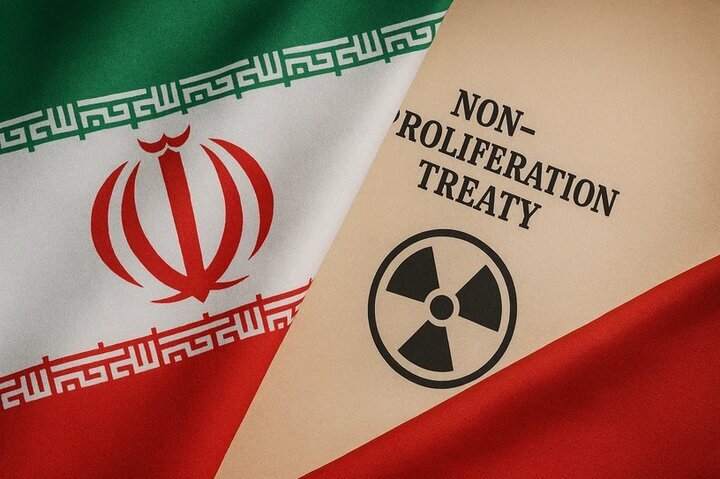
On another front, Iran complains that both the international treaties, specifically the Treaty on the Non-Proliferation of Nuclear Weapons, signed in 1968, and the competent body in the field, the International Atomic Energy Agency (IAEA), have failed to keep their side of the bargain: they have neither guaranteed protection against attacks by nuclear powers such as the United States and Israel, nor safeguarded Iran’s nuclear facilities.
In various sectors of Iran’s political and analytical circles, the IAEA is commonly seen as operating within a broader structure of alliances led by the United States; it is regarded as neither reliable nor strictly technical, but as a political instrument.
This distrust, combined with the war, makes a comprehensive nuclear agreement far harder and costlier to reach. Before the war, negotiations could focus mainly on enrichment, the lifting of sanctions, inspections, and verification mechanisms. Today, any serious agreement must also address the consequences of the war itself.
Iran is unlikely to accept significant concessions on nuclear matters without effective guarantees against new military attacks, access to its frozen funds, the ability to export oil, and an acceptable arrangement on the Strait of Hormuz.
The irony is that a war whose pretext was Iran’s nuclear program may end up contributing to a change in its doctrine.
Disclaimer : This story is auto aggregated by a computer programme and has not been created or edited by DOWNTHENEWS. Publisher: tehrantimes.com