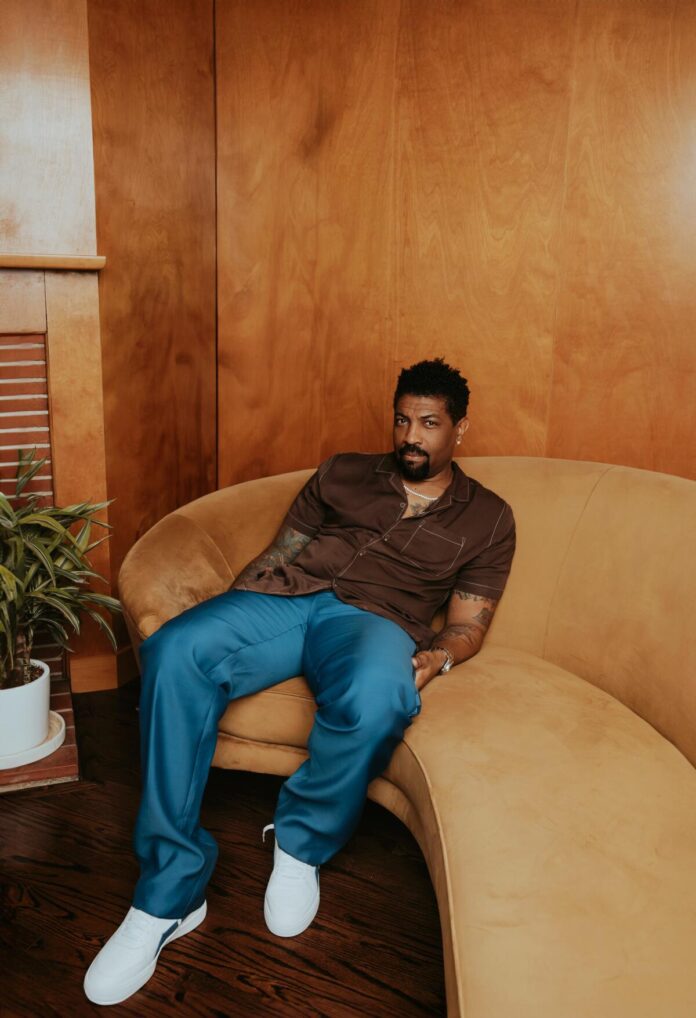
Deon Cole will tell anyone plainly: Not every comic wants to talk about their audience members.
The longtime stand-up comedian will do some crowd work if he must. But he would much rather tell you the jokes he wrote. It’s the nature of a changing audience that is now more likely to stumble upon comedians they haven’t seen before through short social media clips, rather than an impromptu night at a comedy club.
“[The audience] feel like, ‘Hey, we came to improv, we came to have fun’ and it’s like, no, you know how long it took me to write these jokes?” Cole said with a laugh. “I don’t need you coming here screaming at me, and then I spend five minutes talking about you and your mom and your kids, and then I forgot what I was doing, and now the tone of the show is messed up.”
The Chicago-born comedian, actor and writer has long juggled multiple projects. This includes writing for “The Tonight Show With Conan O’Brien” and acting in films such as “The Color Purple” and “The Harder They Fall” as well as television shows like “black-ish.” Cole has also taped multiple comedy specials with Netflix over the years including “Cole Hearted” in 2019, “Charleen’s Boy” in 2022, and “Ok, Mister” in 2024. He has also been excited about the launch of his YouTube show “Funny Knowing You” where he gets to interview fellow comics and celebrities as they talk about their life stories.
But as he considers his legacy and comedic craft, Cole said he is proud he is still himself after all of this time in the industry.
“There’s a lot of people who look in the mirror every morning and go out in the world and become something else, when the thing that’s going to make them rich and successful is in the mirror,” Cole said. “ I think that whoever that person is in the mirror you need to take that person with you and apply that person to everything that you do, and that’s gonna make the difference in your life.”
Now, as part of the Netflix Is a Joke comedy festival, Cole is looking forward to doing a set for Altadena residents to raise money for ongoing relief in the aftermath of the 2025 wildfires that decimated much of the area. The Times spoke with Cole about how he’s thinking about his craft, crowd work and the importance of comedians revealing themselves.
What’s felt different this time in preparation for this particular show compared with your other ones?
This isn’t just a regular comedy show, like at some city, you know, these people really went through something, and they are still devastated by it. And so it’s not just a regular “we’re going to do a show.” We’re trying to raise as much money as possible for this community to help people in need so that’s a big difference. I don’t do that every weekend. It’s a big difference. And then having the people we want to show up and come get down and perform, seeing all of them on the same show, it’s going to be surreal as well.
Cole prioritizes written material and personal storytelling over crowd work, believing audiences should get to know comedians as individuals rather than hearing disconnected jokes.
(Cécile Boko)
How has your preparation changed over the years of you doing stand up compared with when you started?
I’m more confident. You know, back in the day, it might be a 30-60 chance that the joke will work: 30 meaning it will work, 60 that it won’t. And now I’m at a point where I can think of something, and there’s an 85% chance that it will work, there’s a 15% chance that it won’t. So my preparation, as far as thinking of something and then going to execute it, being able to execute it, is another difference. Back in the day I would have to ask for stage time. Now I can think of something and just go to a club and go right up.
What does improving your craft look like at this point in your career?
Just being more confident in my choice of what is funny and what’s not. I can hear something now and go, that’s funny, and then go, do it, and it becomes funny. So it’s just having confidence to do that and not question myself as much. That’s basically the difference, to be honest with you. Other than that, my drive, my thought pattern, everything is still the same. It’s heightened to the point where I’m paying attention more because I have a lot more free time to to pay attention. It gets to a point where you can pay a lot of people to do a lot of stuff for you, and the more time you got free, the more time you got to think about other things. So I try to pay everybody to do everything so I can go create. And so it’s been good to be in that space, to not worry about a lot of stuff and stay creative. When a lot of people that’s been doing it this long can’t and to still be relevant after all this time, and still be funny and still pack out shows… that means a lot to me.
How do you incorporate crowd work into your shows then?
If something happens while I’m doing my stuff, then fine but I’m not going to create a crowd work environment. If it happens, it happens, but I’m not going to purposely create it. And I mean to each his own that do it. And there’s some people who are very funny at it, and there’s some people that’s like, what are you doing? And for a lot of audience members, I feel like they’re being tricked a lot of times, because a lot of comedians, and I ain’t going to say a lot of comedians, but a few. Not every comic that does crowd work does this. There’s some great crowd work comedians that I really love and admire and respect. But there are some comedians that get up there and they’re doing a meet and greet. It’s downstage, “Hey, what’s your name?,” “What do you do for a living?,” “Hey, so how many kids do you got?,” “So, hey, where do you where you work at?,” “Oh, who are you?” Do that at the meet and greet. What are you standing up here for 45 minutes, getting to know everybody for? Where’s your jokes at? If people like it, you know, what can you do about it? But I’m old school with the craft. I like written comedy. I like storytelling. I like hearing something I never heard before. I like that. That’s just my preference. I don’t like sitting in the audience laughing at somebody’s name or what they do for a living, or who they with. My brain ain’t learning that way.
Do you think that sense of audience participation is coming from people watching social media clips?
I mean people love it, and it’s a younger audience that I think they really love it. Even though older people love it, don’t get me wrong. But the majority, I think, it’s a younger audience. And granted, there’s an audience for that. It really is and have at it. I think everybody should go out there, get their money, do what they do. My personal preference, which I am entitled to have, I think that it’s all about balance, like it is with everything in life. I don’t think you should eat candy all day. I think you should eat some vegetables. I don’t think you should eat vegetables all day. I think you should eat some protein. It’s all about balance. You can give me crowd work, but let’s hear about you. Who are you? What happened to you today? That’s what’s funny. How do you feel about this and that? Can I get that? And then you can go back to your crowd work. But if people keep going up to these shows and they like all the crowd work, and that’s it, me personally, I think you’re not getting your money’s worth when you leave there and you don’t even know if the comic was married, [have] kids, if they’re happy, sad. You just leave there going, “did you hear what he said about the girl in the fourth row?” “Oh, that was hilarious.” “Did you see the guy in the back with the toupe on?” “That was funny.” And it’s like, OK, well, who said that? Who’s the guy that said it? What about him? Do we know anything about him? Is he a racist? Is he a revolutionary? Who said this? Let me know who said this. I’m not just going to laugh at that.
Why do you think it’s important for a comic to reveal parts of themselves on stage?
That’s what the greats have done. Greats are that way. They have been that way. You get caught up into who these people are. It’s good to hear that. A lot of great comics got sitcoms. Why? Because you can listen to their jokes and see the show, and then they go create the show off of what they were talking about. You can see this. So when you have a comic, it’s a lot of comics that go on stage and they tell jokes, and then they leave, and then you go, who was that person? You can’t even remember the comic’s name. You know what I mean? I just think that you should let people know who you are, because that’s what makes you unique. Can’t just go up and tell joke after joke after joke. Anybody could tell jokes, [but it’s] who’s telling the joke that makes it great.
More to Read
Disclaimer : This story is auto aggregated by a computer programme and has not been created or edited by DOWNTHENEWS. Publisher: latimes.com