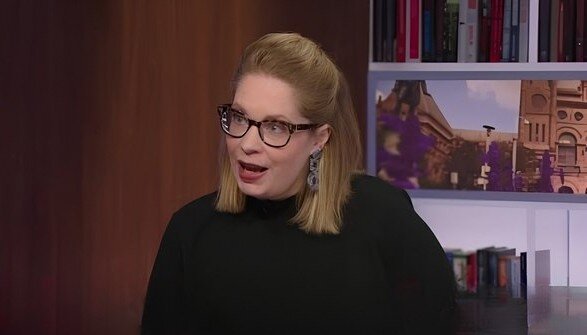
TEHRAN- Heidi Matthews, an assistant professor of law at Osgoode Hall Law School, York University, researches international criminal law, the law of war and the legal regulation of political violence.
Her work examines the implications of military operations for civilian protection and accountability under international law. As the US-Israeli war against Iran raises renewed questions about the limits of military force and the protection of civilians, Matthews spoke to the Tehran Times about the legality of the war, the lessons of Gaza, the erosion of international legal norms, and the responsibilities of states in preventing civilian harm.
Below is the full text of the interview:
You call the US-Israeli attack on Iran an unprovoked and unlawful war of aggression. What specifically makes it unlawful under international law?
This is a pretty clear answer. Under international law, within the UN Charter framework in place since 1945, states are permitted to resort to the use of force in only two scenarios. The first is where there has been specific authorization under Chapter VII of the United Nations Charter, which we clearly did not have in this case. The second is where there is a credible claim to legitimate self-defense, which we also did not have in this case. So it is very clearly, and unequivocally, an unlawful use of force. This is a position that many scholars of international law have taken, including many dozens in the United States, including the current president of the American Society of International Law. I think it is quite clear that this is an unlawful use of force.
The US and Israel have repeatedly framed their actions against Iran in terms of security and self-defense. At what point does self-defense cease to be a legal justification for the use of force?
I would say that the language and rhetoric the US has used to justify this war have actually not been rooted in self-defense. They sometimes use those words, but in international law, self-defense means that a state is either responding to an actual armed attack that has already occurred against it, or responding to the real threat of an imminent attack, in the sense that there is an overwhelming threat that leaves no choice of means and no moment for deliberation. That is the legal test. This is sometimes referred to as preemptive self-defense, and it is recognized as legitimate.
There is a distinction in the law on the use of force between preemptive self-defense and preventive self-defense. In this case, the United States, in its rhetoric, is drawing on preventive self-defense. That is not a recognized kind of self-defense under international law. All of the American justifications for launching this massive operation last February fell into the category of preventive self-defense. The attacks were allegedly designed to destroy Iran’s future nuclear capabilities, to destroy existing ballistic missile capabilities, and to protect freedom of shipping in the region.
Trump also made claims rooted in humanitarian intervention on the basis that the war would assist protesters. None of those arguments reflects a necessity of attack, and the language of preventive self-defense simply isn’t applicable in the law.
You have written about the Minab school attack and raised concerns about the lack of political and legal accountability. Who should be held accountable for what happened, and through which legal mechanisms?
There is very good reason to believe that this particular attack constitutes a war crime. The most obvious mechanism for accountability for war crimes would of course be the International Criminal Court. That is not currently an option here, because neither the United States nor Iran is a party to the Rome Statute. This means the Court has no jurisdiction over this specific attack, or over other alleged war crimes in the context of this war.
There are a few ways this could change. The Security Council is entitled, should it so choose, to refer a situation to the ICC, but given the US veto power this is highly unlikely. Another option is that Iran could accept the jurisdiction of the Court through an ad hoc declaration under the Statute for a defined period of time. That period could go back, for example, to the start of the war on February 28th, or perhaps even earlier, to the attacks in the summer of 2025. That would of course mean that not only US officials but also Iranian officials would become vulnerable to investigation and potentially prosecution by the Court. But it is the most obvious answer to the question of accountability.
There are some other options that people have put on the table. Some have proposed a special tribunal for Iran, modeled on the special tribunal now being set up in the context of the Council of Europe to deal with Russian aggression in Ukraine. There could also be an international, independent mechanism to comprehensively investigate alleged crimes committed in Iran. This would not allow for direct criminal responsibility, but it would allow for a detailed collection of evidence that could later support trials, including trials in national contexts. We see this now with the mechanism that was set up to investigate crimes in Syria.
In terms of political accountability, this really comes down to the willingness of states, specifically US-allied states and Western governments, to call out and name what they are seeing with respect to American action. The most obvious first step is their willingness to label the attacks as unlawful, in other words, as acts of aggression under international criminal law. Until now we have seen a complete political unwillingness to do that. Until Western governments are willing to use the applicable legal frameworks to talk about American conduct in Iran, I think we are not going to see meaningful political accountability regarding what happened, specifically in Minab.
You have expressed concern about the use of AI in military attacks. Should the use of AI in military targeting itself face new legal restrictions?
This is a really important question, of course, as we see AI growing at breakneck speed. Concerns about the use of artificial intelligence systems in targeting have been at the forefront of the minds of legal scholars who address the regulation of conduct in war. That is partly due to Israel’s use of these targeting systems in Gaza over the last three years, where the evidence points to a high degree of unjustified civilian harm. With the Minab strike, we have further evidence that the use of AI systems, both in gathering and filtering intelligence and in contributing to target identification, is very dangerous.
A lot of information, I will say, is still outstanding on this point. The report from the Human Rights Council body investigating the situation in Iran, which we had in September of this year, does not directly talk about the use of artificial intelligence, although reading between the lines it is present. We do have important reporting from places like Bloomberg News, which has talked to many US officials and people familiar with targeting decisions in this war. It gives concerning evidence about the role of artificial intelligence in shortening what is referred to as the ‘kill chain’.
What ordinarily would have taken a much longer period for target identification and verification has been compressed into a matter of mere minutes through the use of AI systems, specifically the Maven system. With respect to the Minab school strike, there is good reason to believe that whatever human element was involved in verifying the intelligence and taking the targeting decision may have been influenced by intelligence provided in part by artificial intelligence systems. I worry that the humans who ultimately authorized the strikes may have been predisposed to reflexively trust the reliability of the information being fed to them using AI, especially given that the school had been clearly identifiable as a school for about a decade. Again, much information is still to come, but solid reporting indicates very serious questions.
This doesn’t necessarily mean that we need a new international law on artificial intelligence. Existing norms of international humanitarian law can help us address the concrete question at stake, which is the military’s obligation to distinguish between civilians and combatants when targeting. When making those decisions, a military must take all feasible precautions to ensure that the target is actually a military target. For reasons including the use of AI in this case, it looks very much as though sufficient precautions were not taken. In that context, we can still pinpoint the responsibility of military leaders, including military superiors who knew or should have known that their subordinates were not in a position to take adequate precautions. So I am not sure we need new law. I think we can interpret existing law in ways that will get us the results we need around these questions.
You have connected the war against Iran to what you call the “Gaza playbook.” What aspects of the conduct seen in Gaza are being repeated in Iran, and which concern you most?
The Gaza playbook contains a few elements. I have done some work on this, and other scholars have as well. We have been looking at how certain patterns of conduct that have emerged over the last three years in Israel’s attacks on Gaza have been reproduced not only in Iran but also in Lebanon. I would highlight a few elements.
The first is the intentional undermining of the legal framework governing when states may lawfully use force at all. When we talk about this war being a war of aggression, and about states being very unwilling to name it as such, I think we are seeing an undermining of that framework.
About 25 years ago, around the time when the United States invaded Iraq, there was a lot of discussion about this particular framework. The United States tried, unsuccessfully, to argue that there was a legitimate case for intervention based on self-defense there. Again, today we just don’t have serious arguments around self-defense, and I think that in part this has been done intentionally in order to undermine the legal framework on the use of force.
The second element I would refer to as the normalization of indiscriminate attacks. These are attacks that either do not adequately distinguish between civilians and combatants, or are undertaken in circumstances where the harm to civilians is disproportionate in relation to the military advantage expected to be obtained. Indiscriminate attacks have been a hallmark of Israel’s military operations in Gaza, with the UN commission of inquiry finding that Israeli authorities have given the “blanket authorization” to target civilians “widely and indiscriminately.” We can see attacks by the United States that directly target civilian infrastructure, for example bridges, ports, energy facilities, electrical infrastructure and civilian airports. There are certainly other examples. These attacks on purported ‘dual use’ infrastructure may be disproportionate in that their destruction may not offer a sufficiently important military advantage to justify the attack. I would also say that Iran has conducted attacks in a similarly indiscriminate fashion. We have seen Iranian strikes on power plants, desalination plants and other kinds of civilian infrastructure such as airports and energy facilities, and sometimes residential areas have been targeted. Those strikes would also be unlawful under international humanitarian law, so it is important to point that out as well.
Thirdly, I would say there are attacks against civilian objects that are specially protected under the law, such as health care facilities. We see that being normalized across all of these conflicts.
Fourth, we see the weaponization of humanitarian assistance. This is particularly acute in Gaza, of course, but it also has elements in the other conflicts. In particular, attacks are undertaken in the knowledge that they will have very serious impacts on the civilian population’s ability to receive the essentials of life, including access to electricity and fuel, for example.
Lastly, I would focus on the quite open use of what many have characterized as genocidal discourse by American and Israeli leaders. This discourse is used, of course, to threaten and to obtain political advantage, perhaps as a negotiating tactic or as a way to instill fear in the respective civilian populations. President Trump, for example, has talked about eradicating an entire civilization when referring to Iran. I think that kind of open and repeated genocidal discourse is new, and it very much mirrors some of the discourse from Israeli officials with respect to the situation in Gaza.
Do the experiences of Gaza and Iran suggest that international humanitarian law no longer functions as a meaningful constraint on powerful states? If so, what is the alternative?
This is a really good question. At the outset, I think it is actually an open question whether international humanitarian law has ever acted as a meaningful constraint in warfare. One thing we tend to overlook when we talk about war crimes is that this body of law was put in place, in part, for the purpose of legalizing a huge amount of violence against civilians. When we talk about things like collateral damage to civilians, what we are really saying is that at some point there is a range of civilian damage that will make military activity unlawful, because the damage has become disproportionate in relation to the military advantage sought by the targeting actor. But the key thing is that anything that falls below that line is lawful, and there is no numerical formula for calculating it. In fact, over the last several decades we have seen an increasingly large acceptable quotient of civilian harm. Gaza has certainly contributed to the expansion of that acceptable quotient. Anything that falls below what we would consider disproportionate, which is a very big category and very malleable based on political priorities, is totally lawful.
So war itself is more or less able to happen these days, in part because of the way international lawyers and politicians are focused on war crimes rather than on criminalizing, or otherwise dealing with, unlawful uses of force in the first place. What we have today is a discourse that focuses on specific violations rather than on the wider goal of actually attaining peace in international affairs. Until we have a real political and legal commitment to the project of peace, we are going to be stuck in these discussions about whether this or that attack amounts to a war crime, all the while accepting a wide range of civilian harm, as well as harm to the natural environment, which should be noted as well.
How do you see the future of international law? Is the problem rooted in the structure of international law itself or in the political institutions responsible for enforcing it?
I think it is both. I should say that every generation tends to think of itself as being at a crucial turning point in history, so I would want to be wary of exceptionalizing the moment we are currently in. That being said, I do think that Western states are openly turning towards authoritarianism, in the case of the United States in particular, and other states are not reacting to that threat in any meaningful way. That is a real challenge for the West’s self-conception. Especially since the end of the Cold War, but really since the end of the Second World War, the West has thought of itself as aligned, in one way or another, primarily with human rights as a core part of its political priorities and of the foreign policy work it is doing. My own state, Canada, has certainly been at the forefront of cultivating—and marketing—that self-understanding.
What I think is new now is that Western states are faced with a question they haven’t faced before: at what point are we willing to break with our allies, states that used to be our friends, our main trading partners and our core partners in NATO and other efforts? How do we deal with the fact that they have now not only turned on the rest of the world but have turned on us as well? We can look, for example, at Trump’s trade war with many states around the world and his government’s sanctions against the International Criminal Court as evidence of this. So the question is really the extent to which international law is going to be able to provide a language that is useful for these states in confronting the threat posed by the United States and Israel. I don’t think we have evidence that this is going in the right direction so far, principally because many of these states are actively complicit in crimes against humanity, war crimes and genocide in Gaza and the rest of Palestine. We only have to look, for example, at the fact that Germany is the second-largest arms provider to Israel to see that it is not only the United States that is responsible for participating in these grave human rights violations and, ultimately, international crimes.
Until states are willing to name what is happening as criminal, whether that is aggression or genocide, and until they are willing to shift their own internal policies away from alliances with states who predicate their political autonomy on the ability to perpetrate these atrocities with impunity, we are not going to get very far. There is a lot to say about what states should be doing in that respect, but one really key piece is finding a way for states in the West to stop supplying arms, and really any other form of military or economic assistance, to Israel and to the United States, including through the various loopholes in trade arrangements that may exist. We have a bit of movement in that direction, with several European states as well as Canada committing to limit military assistance to Israel and to limit trade with Israeli firms in the occupied territories. But none of that has gone nearly far enough.
So we are in a moment where most Western states are doing two things. On the one hand, they are giving some indication that they are upset with the US and want to do something differently, in the name of international law. On the other hand, whether for fear of reprisal or a lack of political will to engage in self-reflection, they are not willing to go far enough.
There has been extensive discussion of accountability and international law since the wars in Gaza and Iran. What aspect of the war against Iran do you think international lawyers around the world are failing to pay sufficient attention to?
Really, I would say that ensuring respect for international law doesn’t fall on the shoulders of lawyers first. It falls on the shoulders of states. States themselves are the main subjects of international law. International lawyers certainly play a role: they represent the interests of states, and scholars like myself contribute to the public conversation with critical perspectives and suggest new avenues for the application and interpretation of law. But ultimately, international law and its effectiveness come down to the willingness of states to engage in meaningful ways. And at the end of the day, political will is generated by the demands of the citizenry.
I think there is good reason to believe that some states are taking that responsibility very seriously. South Africa, by bringing a genocide case against Israel for its military actions in Gaza, is very much at the forefront of trying to defend the existence of international law and its ability to respond. I mentioned Nicaragua earlier. Nicaragua has also taken Germany to the International Court of Justice, alleging a host of violations, including complicity in genocide. A few years ago, The Gambia also initiated proceedings at the ICJ against Myanmar for alleged genocide, and we are going to see a decision from the Court quite soon on that matter. On the other hand, we have the International Criminal Court investigating the situation in Palestine, and of course the outstanding arrest warrants against Prime Minister Netanyahu and the former defense minister Yoav Gallant. So there are institutions taking important steps.
But again, even the International Criminal Court, which is an independent court, is still made up of states. It exists only because states got together and consented to the creation of a treaty that gives the Court the authority to apply the law that it does. There is a serious question currently about whether that Court in particular is going to be able to withstand really serious, concerted attempts by the United States to dismantle it, which is the language US officials use, including through expansive sanctions. So there are states doing their part, but sadly those states are at the moment in the minority, and what we don’t have is powerful Western states taking on that responsibility.
Given the conflicts taking place around the world, including Russia’s war against Ukraine and the current situation in the Middle East, is there anything you would like to add that we have not covered?
I would just reinforce something we started with at the outset of the conversation: the necessity for states to take affirmative action to support the work of the various international courts and tribunals, if we want international law as it has been built up over the last 80 years to survive. I am thinking in particular of the International Criminal Court. I think it is unlikely, but it would be very meaningful, and would really shift the status quo of expectations and the balance of power, were a state like Iran to voluntarily accept the jurisdiction of the Court. It is clear that this would put the government in a vulnerable position. But it would also be a really effective way of showing the rest of the world that the government is willing to accept accountability for its alleged crimes, including the systematic violence used against civilian protesters, and to advance accountability for the actions of the United States in particular, even if that comes at a certain amount of personal cost.
I think this resonates with the grassroots civilian movements for various kinds of rights in the Iranian situation, including the protest movement. I think it would also signal something domestically to the Iranian population were the state to engage in a more wholehearted way with these international institutions, and it would very clearly expose the United States as the rogue state that is acting in total rejection of the most basic norms of international law that we have today. So when we talk about states supporting these international institutions, it is not just Western states that should do so. It is really all states, and I think there is an opportunity for that if the government were willing to take it on.
Disclaimer : This story is auto aggregated by a computer programme and has not been created or edited by DOWNTHENEWS. Publisher: tehrantimes.com