If “getting your veg in” feels beyond your midweek bandwidth, here are some simple ways to make it feel achievable – and tasty – again.
All cooking, particularly midweek, is based on a hierarchy of needs – and each household’s hierarchy hinges on their priorities. Some need more accessible ingredients, others have mobility needs, or are keen to save on washing up … and beyond all of that, time is a big priority for us all.
But if we’re always in a state of triage, when does what we eat, and how it helps us feel get a look-in? We all know we’re supposed to eat our five a day, but if “getting your veg in” feels beyond your bandwidth right now, here are my tips to make it feel achievable – and tasty again.
Start with the veg
Veg is delicious, so shed the dreaded “over-boiled, under-seasoned” defeatism of yesteryear and start building your meals around it.
Rather than buying your protein first, begin in the fresh produce aisle, guaranteed to be in season, and build your meal around that. Or better yet, subscribe to your local CSA (community-supported agriculture scheme) and supplement from your local independent grocer or market.
The best recipes from Australia’s leading chefs straight to your inbox.
Treat the meat and fish as though it’s the cherry on the top of the meal and think “quality over quantity”. You’ll be rewarded with sustained variety throughout the year, a cheaper food bill, and a more environmentally friendly footprint.
It also means that you’ll be loading up your diet with a rainbow of seasonally appropriate phytonutrients that vegetables are packed with. Each colour represents a multitude of health benefits including boosted immunity, a reduction in risk of chronic diseases, and a general sense of vim and vigour.
When time is of the essence, get on the tools
Like prime and secondary cuts, some veg just needs more time than midweek can ordinarily muster.
Fibrous, rooty things like sweet potato, carrot and parsnip, or big bulbous brooders like butternut and eggplant can sometimes feel like they’re out of reach on a busy Wednesday. But if you get clever with gadgets and deploy time-saving tech like convection, you can gain that time back in droves. Chopping, grating or pulsing veg breaks down the fibres before you start cooking, so that they’re already halfway to hallelujah before they even hit the pan.
Most veg can be undercooked, but not eggplant, which can feel like it’s biting your tongue back if it’s under! Salting then zapping the eggplant pieces helps to draw out moisture and break down the cell structure, preparing it for frying or roasting until golden.
Put the kettle on
One kitchen gadget deserves its own shout-out for how often it’s gotten me out of a midweek bind. The kettle! Kettle-blanching saves time, water and pots in the sink by bringing the water to the veg rather than the veg to the water.
Boiling a kettle’s worth of water, prepping the veg while you wait, then pouring over a colander of tender veg such as cauli florets, asparagus or snow peas is the perfect way to prep them for grilling, stir-frying or roasting, ensuring that you’ve “blanched” the rawness out, so you can concentrate on caramelisation without them drying out or overcooking.
Everything can be hurried along, except the onions
No matter how small you cut your onions, they’re still going to need time to schvitz. This is one job you know will take at least 6-8 minutes (a fine dice or slice will still gain you back a couple of minutes here) so wait for the sizzle, whack a lid on, set a timer and get on with other jobs.
This is one midweek veg you don’t want to take shortcuts on, particularly in recipes where you’re adding an acid, like a tomato-based sauce, which sets the texture of the onion like the wind changing on a grumpy face.
Use other peoples’ heavy lifting
Midweek veg is all about layering flavour as swiftly as possible, and leaning on other people’s heavy-lifting is a great way of lightening the load.
Reach for ferments such as kimchi or sauerkraut for funk and fizz in creamy colcannon or loaded fried rice, frozen veg like peas and/or corn for pops of colour and sweetness to soups, stews and stir fries, while tins of veg like cherry tomatoes, baby potatoes and baby corn can bulk out broths, noodles and pasta dishes.
On that front, a packet of fresh pasta or noodles is a time-saver that makes dinner feel fancier, so you can focus on the sauce. Pizza dough balls from the shops – or even your local pizzeria – can be transformed into veg-stuffed pan pies or pide, too.
Economise your time by prepping stuff for future you
Meet meal-prepping halfway and use the time you’re in the kitchen to get onto tomorrow’s dins as well. If the oven’s already on, chuck on an extra tray of veg to roast, boil twice the spuds you’ll need so you’re ready for tomorrow night’s roasties. If I’m feeling industrious, I’ll sweat several onions down at once, and cut 10 minutes from the next few nights’ prep without breaking a sweat.
Dinner doesn’t have to be a one-and-done either. Consider cooking up batchy things like soups, curries and stews, which only get better with time. Another benefit of veg as leftovers is that they last longer in the fridge, too.
Put little hands to work
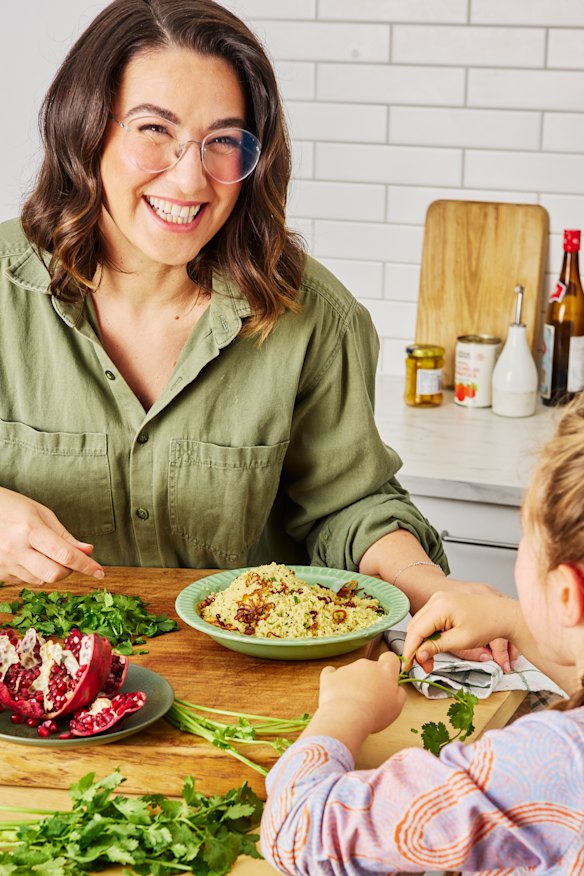
Let the kids help out with the kinds of odd jobs that are time-consuming and low-stakes – picking herbs, spinning leaves, peeling eggs and the like.
Make “mucking in” a part of your household’s routine, whether that’s loading or unloading the dishwasher, setting the table, or helping with the washing up. Including kids and grandkids in the meal-planning by leaving some sticky tabs by your favourite cookbook is a good way to give them a sense of agency and responsibility which means they’ll be more enthusiastic about trying it.
From our partners
Disclaimer : This story is auto aggregated by a computer programme and has not been created or edited by DOWNTHENEWS. Publisher: www.smh.com.au