- High Court questioned protest organisers on permissions, bond violations.
- Court advised activists to seek revision before lower court.
- Court questioned evolving protest objectives by the same organization.
- Activists withdrew plea, awaiting proceedings before SEM court.
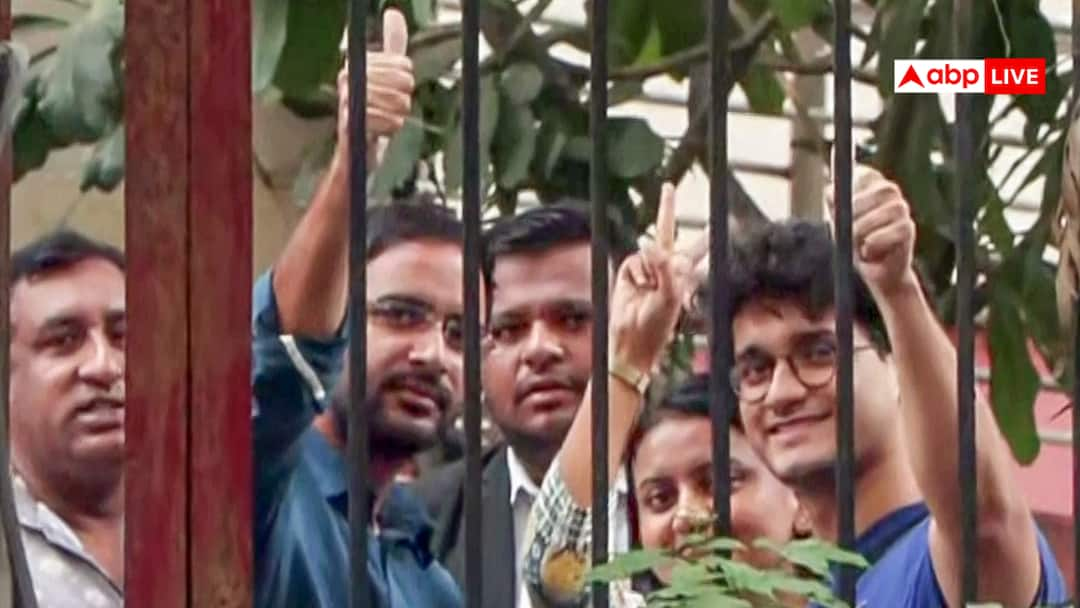
The Delhi High Court questioned the organisers of protests led by the Cockroach Janta Party (CJP) over police permission, alleged bond violations and the changing objectives of their demonstrations while hearing a plea by activists Saurav Das and Ashutosh Ranka against their continued custody. The court urged the petitioners to pursue the appropriate legal remedy, pointing out that a revision petition could be filed before the jurisdictional court. Their lawyers subsequently withdrew the plea, leaving the activists to await proceedings before the Special Executive Magistrate (SEM).
The hearing also saw the court examine the organisation’s role in mobilising protesters and the potential implications for public order.
‘Barricades Have A Purpose’
The Delhi High Court also questioned the CJP leaders over breaking barricades to enter Jantar Mantar, observing that such actions could encourage others to follow suit. “You are at the forefront (of the protest). When you break barricades, there are chances that more people may follow,” the court remarked.
‘Police Permission Required To Prevent Unwanted Elements’
One of the key observations concerned the need for police permission, even when a demonstration begins peacefully. The court said such permission could help prevent outsiders from joining a protest and damaging the organisers’ reputation.
“You may have started with what you describe as a peaceful protest, but police permission is required to prevent unwanted elements from joining and tarnishing your image,” Delhi High Court said.
The observation came amid the court’s discussion of the responsibility of protest organisers and the possibility that individuals beyond their control could join demonstrations.
ALSO READ: ‘Selective Targeting’: India Slams UN Criticism Over Police Response To Delhi Protests
‘Your Remedy Lies In Revision’: HC Questions Article 226 Plea
The High Court also questioned why the activists had approached it under Article 226 of the Constitution instead of seeking relief through a revision petition before the jurisdictional court.
“This is your second incident, and you have already breached a bond. Your remedy lies in revision. There is a distinction between maintainability and entertainability. I do not see why you have approached the High Court under Article 226 when the order is revisable and the jurisdictional court is only two kilometres away,” it said.
The bench referred to the alleged breach of bond conditions for a second time and pointed out that the lower court was located nearby. It suggested that the petitioners pursue the alternative legal remedy available to them.
‘Who You Are, What Your Association Stands For’
The court also examined how the nature of the protest had evolved since July. The court observed: “The July protest involved students and children, but the cause has now changed, while the people and organisation remain the same. The question is who you are, what your association stands for and its purpose.”
“When peace and tranquillity are at stake, these questions become important, particularly when the same organisation continues to mobilise people for different causes,” the HC said.
‘They Were Not From Gen Z’: Court Asks Activists’ Ages
During the hearing, Justice Subramonium Prasad asked about the ages of the two petitioners. Advocate Abhik Chimni informed the court that Saurav Das was 27 and Ashutosh Ranka was 32.
The court remarked that the two were not from Gen Z and asked what the term meant. After being told that Gen Z referred to people born after 1997, the bench reiterated that the activists did not fall within that category.
ALSO READ: Trump Says India-US Trade Deal ‘Pretty Close’, Hints At A Different Kind Of Pact
CJP Activists Withdraw Plea
Following the court’s observations, the bench suggested that the lawyers withdraw the petition and await the hearing before the SEM court. The counsel sought permission to withdraw the plea, which the High Court granted.
The proceedings ended without the High Court quashing the custody order. Das and Ranka were due to be produced before the SEM court, where the next stage of the proceedings was expected to take place.
Disclaimer : This story is auto aggregated by a computer programme and has not been created or edited by DOWNTHENEWS. Publisher: abplive.com