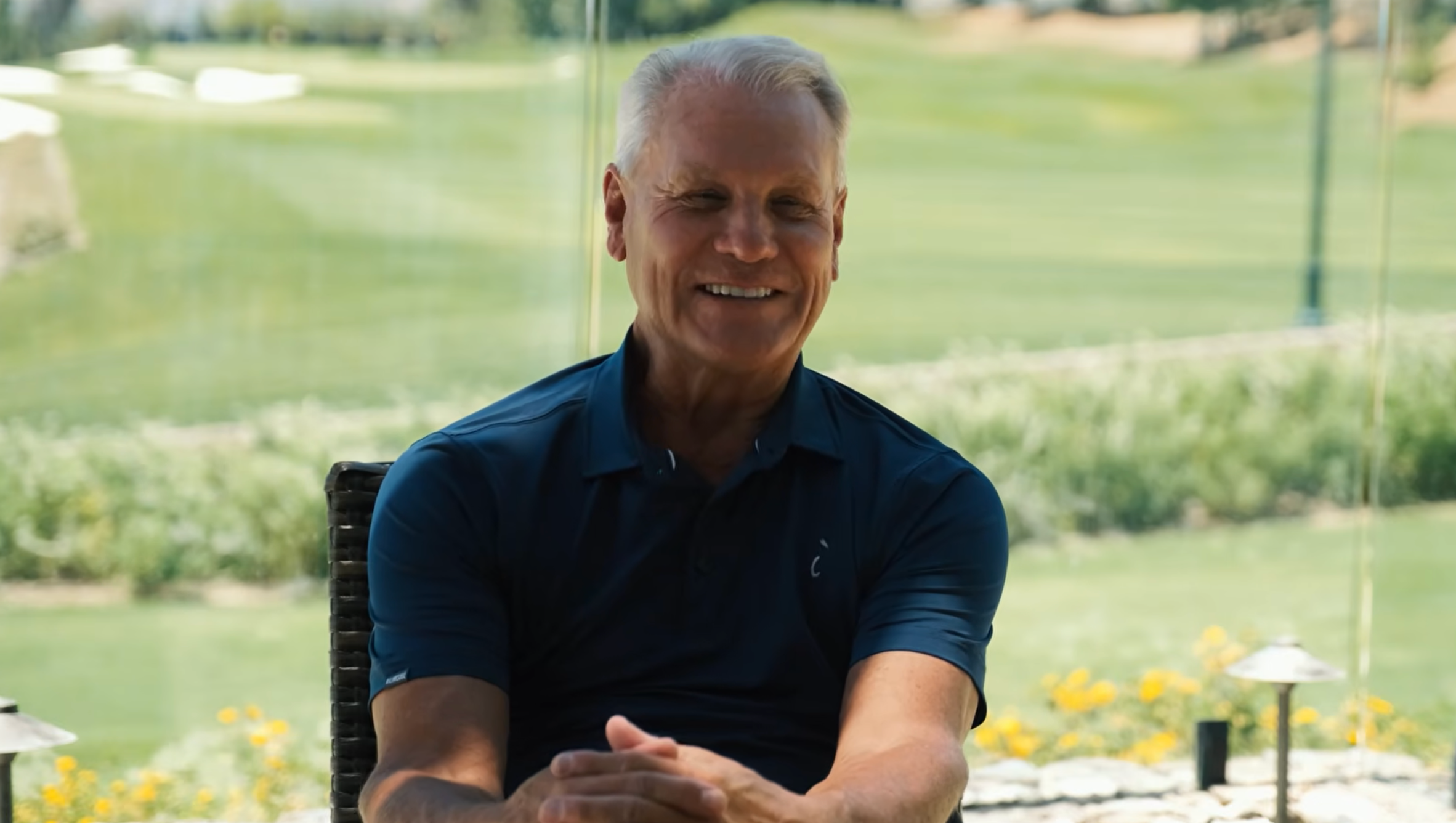
At 68, with white hair crowning a sun-ruddied face, Randy Fry has the tall, sturdy build of the tight end he once was and the self-assured mien of the executive he is. He has, for decades, steered clear of publicity. Before last month, he’d never spoken on the record about The Institute.
“To know me is to know that I don’t walk into a room and tell people who I am,” Fry said. “I just lay low. I listen. People ask me what I do, I say, ‘I’m semi-retired.’”
For much his career, he kept busy with Fry’s Electronics, the retail juggernaut he built with his brothers, John and David, using seed money from the sale of Fry’s Food and Drug, a supermarket chain their father co-founded and ran. From its birth in 1985 with a single store in Sunnyvale, Calif., Fry’s Electronics expanded to 36 locations in nine states, accounting, at their peak, for estimated annual sales of $3.2 billion. In the emergent digital age, the stores were fixtures of the zeitgeist, beloved by computer nerds and garage tinkerers, and promoted through near-ubiquitous radio ads whose tagline — “The best buys are always at Fry’s. Guaranteed!” punctuated by laser-gun fire — became a meme before “meme” entered the mainstream.
Gradually, then suddenly, business cratered. The rise of online shopping signaled trouble. Box-store sales sagged. In 2021, struggling in a retail landscape reshaped by Amazon, Fry’s Electronics folded and its outposts went dark.
But they left a grassy legacy behind.
Leo Sens/GOLF
ALONG WITH EARLY LESSONS in Business 101, the three Fry boys had received a childhood introduction to golf. Their father loved the game and sponsored the Tour pro Jackie Cupit, who would stay with the family when competitions brought him to Northern California.
“We grew up with golf all around us,” Randy said.
During college, at Santa Clara University, he mothballed his sticks, playing one year as a walk-on tight end before turning to crew. He picked up his clubs again after graduation but played only sporadically. Though he enjoyed the challenge and the recreation, he came to see another purpose for the game.
At many of the most exclusive golf clubs, deal-making is discouraged. Randy and his brothers flipped that script, setting out to build a course expressly for that purpose: a luxe retreat whose sole reason for existing was hosting clients. For that, they needed land, which they found in Morgan Hill, near San Jose, on a site once occupied by the Flying Lady, a giant aviation-themed restaurant, museum and resort with a modest nine-hole course beside it. When the Flying Lady went bankrupt in 1994, the Frys bought the property. Two years and $22 million later, The Institute welcomed its first rounds.
There was no ceremony, no ribbon-cutting. In wider industry circles, though, there were whispers. Jeff Sanchez, a Bay Area-born golf professional, first caught wind of them in the late 1990s, while working at a resort in the Carolinas.
“You heard about a handful of people that got to play,” said Sanchez, who now serves as The Institute’s club president and consigliere. “Stories about walking the fairways with caddies and these elegant meals after golf. You weren’t sure if they were real stories or if that was really happening.”
It was — on an extremely limited basis. The club’s policy was simple and restrictive. Aside from Randy, John and David Fry, eight top Fry’s executives were entitled to bring guests, but only if those guests were deemed important clients. Whether a candidate met the threshold was determined by the Frys. Without their sign-off, the answer was no — frequently delivered to people unaccustomed to hearing that word.
Leo Sens/GOLF
As for those who cleared the bar, they found that “yes” could be disorienting, too. Take the Panasonic CEO. Invited for a round in the years before the iPhone existed, he arrived to find an empty parking lot, a desolate locker room and a host who explained, matter-of-factly, that they would be the only group on the property. For a course that averaged roughly eight rounds a week, that was not unusual. Still, the CEO was gobsmacked. As Randy Fry relays the story, the executive surveyed the silent, immaculate grounds, then announced that he would have to leave immediately. “I have to go buy a camera,” he said. “No one is going to believe this.”
Adding to the mystique was the club’s non-golfy name, which hinted at its intended dual purpose: It was meant to double as the new headquarters of the American Institute of Mathematics, which John Fry established to further research and education in the field. Plans included designs for a 164,000-square-foot clubhouse called the Castle, patterned on the Alhambra in Spain, a 13th-century marvel of Moorish engineering. Work crews went so far as to dig a giant hole for an underground parking garage that would sit below the Castle, where, as the Frys envisioned it, golf operations would share space with brainiacs engaged in high-brow cogitation.
Construction stalled, though, in the wake of tragedy. In 2010, a pipeline explosion in the South Bay city of San Bruno killed eight people. Due to the nearby location of two major gas lines, PG&E filed a lawsuit to stop the project. The case was settled 12 years later with a mutual walkaway. The giant hole was filled in and The Institute built a par-3 course called the ‘little i’ instead.
That marked a change, but it wasn’t the club’s most significant shift. For years, Fry’s Electronics more than justified the existence of the course and the millions of dollars required to maintain it. Given the business sums at stake, the balance sheet fell heavily in the brothers’ favor.
“If we were doing, say, $400 million with a vendor, and we could shave off three percentage points, and you times that by 40 vendors, next thing you know, you’re way ahead of the game,” Randy said. “And they just can’t wait to come back the next year and make another deal.”
Nothing, however, lasts forever. The Frys weren’t blind to that. As early as 2011, they’d begun to contemplate a different future for The Institute, with functions that extended beyond business. There was talk of morphing into a members club and maybe staging a PGA Tour event, which would not have been a stretch. At the time, Fry’s was the title sponsor of the Frys.com Open, which, after stints in Las Vegas and Arizona, had moved to Cordevalle, a 10-minute drive across the valley from The Institute.
Ultimately, it was determined that the course wasn’t yet ready for the big stage; its tournament infrastructure needed work. But that was then. If all goes as planned, the club will soon be holding a coming-out party.
“I’m not nervous about exposing The Institute,” Randy said. “I think it’s time.”
Which invites the question: What is there to see?
Channing Benjamin
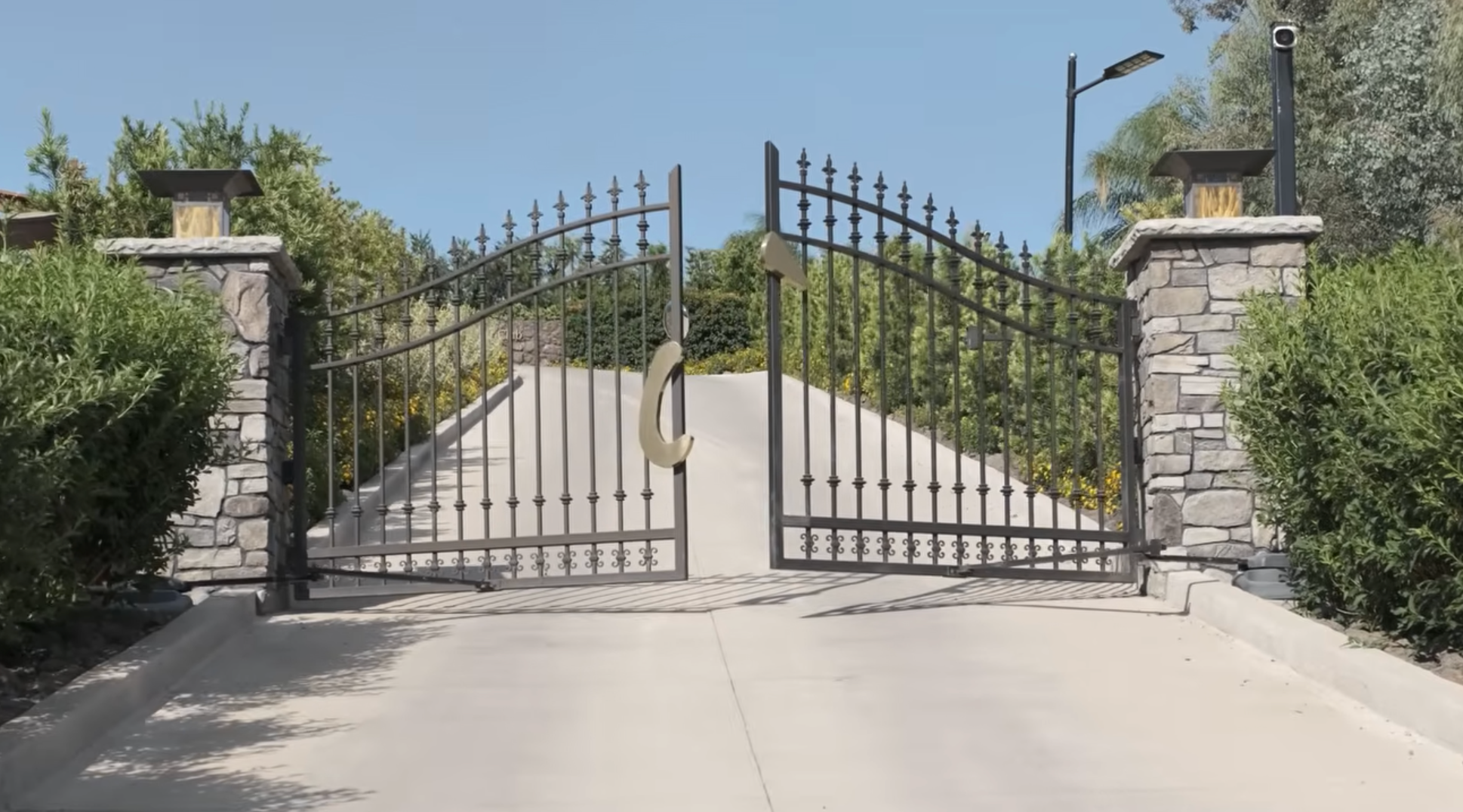
THE ENTRANCE TO THE INSTITUTE sits a few miles and several turns off Highway 101 in Morgan Hill, where a narrow road dead ends at a security gate. Affixed to it is the club logo — a curvy lower-case “i” of the kind used in mathematical notations. Enter an access code and you’re in, up a hill and around a corner to a parking lot beside a white building with green trim, a color scheme reminiscent of the one found at the end of Magnolia Lane.
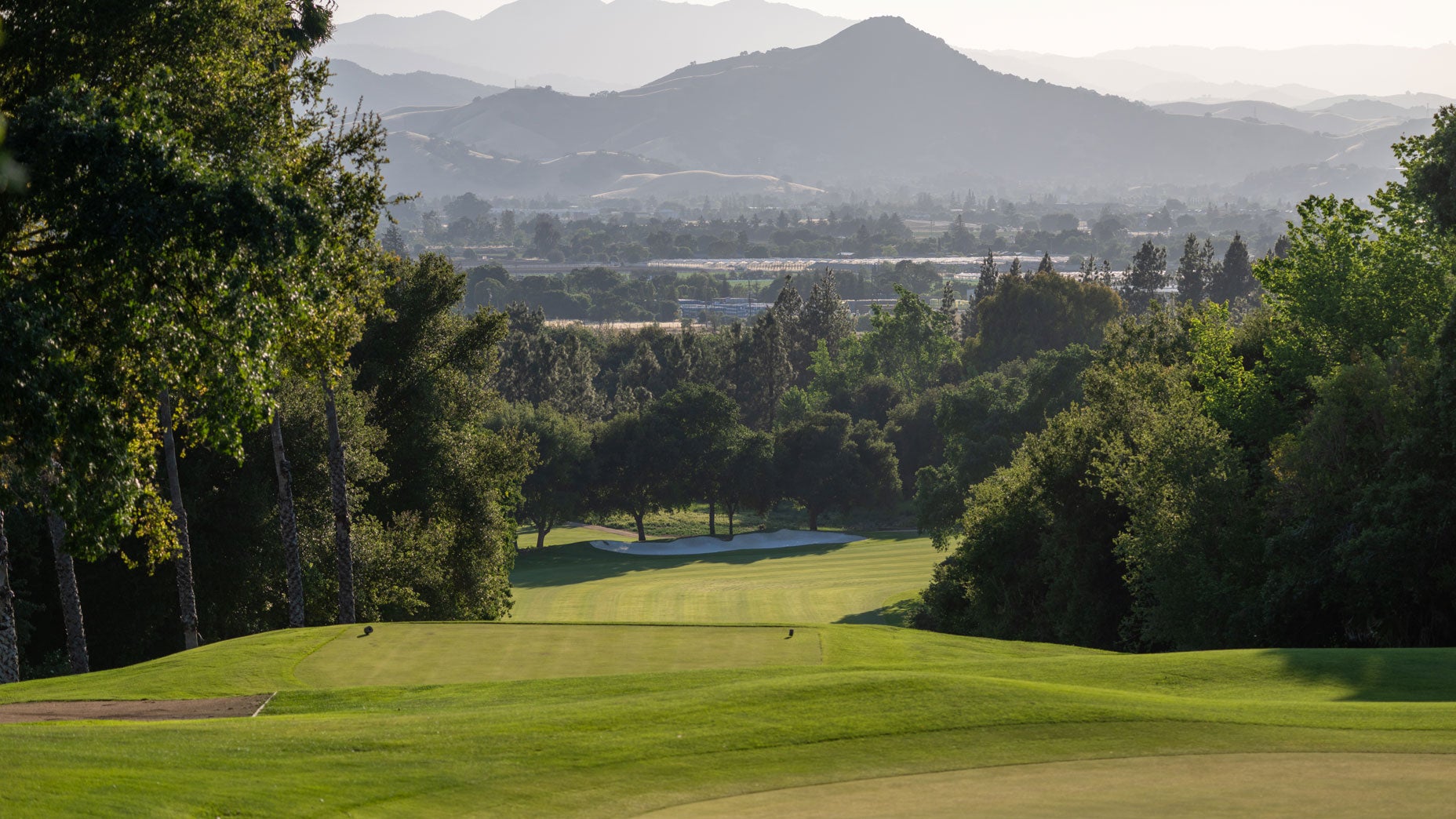
It’s one of multiple Augusta-like touches. The course itself spills across ample shifts in elevation, its layout ornamented with creeks and ponds and outsize alabaster bunkers. Pine tees line many holes — since its inception, the club has planted more than 25,000 trees — their lower branches trimmed to allow for swings, the ground beneath them strewn with pine straw brought in from Georgia. Conditioning, a point of pride from the start, has been taken to Masters-level refinement by Brad Owen, the former longtime Augusta National superintendent, who came aboard as a consultant in 2025, along with former USGA agronomist Adam Moeller.
Alister MacKenzie, who co-created Augusta with Bobby Jones, did not design The Institute. But neither did Robert Muir Graves nor Damian Pascuzzo, as online posts alternately assert. Those architects provided guidance, but, according to Randy Fry, the routing was dreamed up by his brother, John, and an associate, Steve Sorenson. In recent years, Bruce Charlton of Robert Trent Jones Jr.’s design firm, has been brought on to help with modifications.
“There is always something to do,” Randy said. “We will never really be finished.”
John Fry lived on property during construction and for years after, serving as a driving force behind the operation. But he has since relocated to Florida, closer to a golf project that the Frys are developing in the Bahamas. David Fry is an active Institute member but does not take part in club governance. Of the siblings, Randy is the most involved in the day to day. The head of the club’s three-person board, which includes John and a prominent Silicon Valley member, he drives down most mornings from San Francisco to tend to details large and small. He plays once or twice a week, shooting in the 80s when his form is right.
***
ON A RECENT JUNE AFTERNOON, Fry and a guest constituted the lone group on the course, joined by two caddies. Club policy calls for walking and for each golfer to have his own looper. Fry himself has a personal rule, which he cites as a refrain to guests.
“Whoever has the most fun wins,” he said. “That’s the game.”
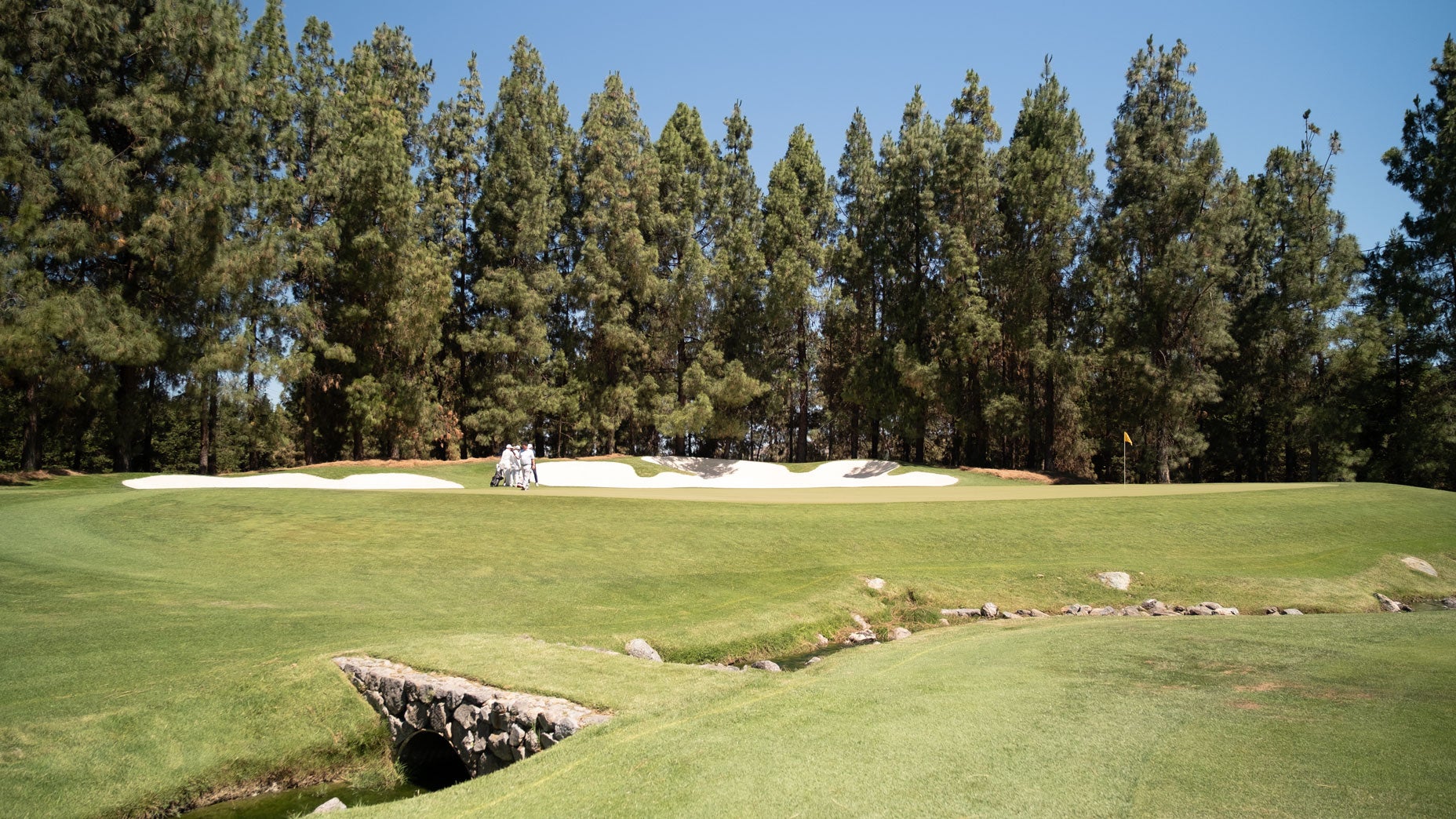
At 441 yards, with a yawning fairway bunker on the left, The Institute’s 1st hole is a formidable test and a fitting introduction to a gut-check opening stretch that asks a lot of the driver. The back nine poses a different sort of challenge with what Jeff Sanchez describes as “the television holes” — water-laden and rich in risk and reward. Highlights include a par-5 14th that emulates the 13th at Augusta with its dogleg bend and crossing creek. The par-3 that precedes it so closely resembles the 12th at Augusta that a prominent golf-industry figure requested that the front bunker be removed to keep the hole from looking too much like a clone. The Institute obliged.
Leo Sens/GOLF
For all its allusions to other layouts — the green on the downhill, dogleg-right 10th is long and hourglass-shaped like the 4th at Spyglass, though set at a different angle, while the approach to the par-4 15th has steep false front inspired by the 10th at Shinnecock — The Institute is not a replica course. It has a Northern California character of its own, stitched into a live-oak studded canvas along hills that go from emerald to gold as spring gives way to summer. Nor, though, is it of the minimalist style that sets the hearts of today’s architectural tastemakers aflutter, with its celebration of tawny turf and sandy wastes and rustic, jagged edges. It is not a likely candidate for the World Top 100. But it is a stand-alone experience.
Fry, for his part, does not seem overly concerned with rankings. He is, however, consumed with details. He speaks at length of trees the club has planted, drainage work beneath a fairway, bunker edges and green runoffs that took painstaking efforts to perfect, among other projects that occupy his days. He is equally attentive to the course’s stories. Along the left side of the 15th hole sits a ranch house where John Fry lived during the club’s early years and where Tiger Woods stayed when he played the 2011 Frys.com Open at nearby CordeValle. (The club currently has six bedrooms, with eight more to come). Beside the finishing hole, a multi-colored flower bed has been planted in the shape of the club’s “i” logo, an idea Randy borrowed after seeing a similar display at Valderrama.
As golfers make the turn, the club treats them to another flourish. Staff members set out a linen-covered table with a mid-round snack and drink — on this recent afternoon, tempura asparagus and a beet-and-ginger energy shot — part of a culinary program that the club considers a calling card on par with its conditioning and exclusivity. The cuisine keeps coming after the round with an elegant, multi-course lunch.
Disclaimer : This story is auto aggregated by a computer programme and has not been created or edited by DOWNTHENEWS. Publisher: golf.com