

These days, premium travel cards are packed with statement credits designed to offset sky-high annual fees. As someone focused on real-world value, I’m not interested in how many statement credits I can access — I want to know how many of them I’ll actually use.
The American Express Platinum Card® and the Chase Sapphire Reserve® (see rates and fees) each offer many statement credits, which often require effort to maximize.
Which top-tier card offers the most usable statement credits? Here’s how they compare.
Methodology
To evaluate the real-world value of the statement credits on the Amex Platinum and Sapphire Reserve, I focused on five key criteria:
- Potential dollar value: The maximum dollar value available through statement credits
- Ease of redemption: The amount of effort required to redeem the credit, including any enrollment or activation requirements
- Frequency: How often the credit is available, whether annually, biannually, quarterly or monthly
- Broad vs. niche merchants: How broadly applicable the credit is and how easy it is to find eligible merchants
- Natural fit: Whether I use the credit organically or have to change my spending habits to justify it
Related: 7 cards that can replace your Amex Platinum
Amex Platinum vs. Sapphire Reserve: Potential value chart
Before we dive into each benefit side by side, let’s take a look at the total potential value each card offers.
The table below breaks down each card’s statement credits by seven categories. If you’re interested in which card wins in practice, jump ahead to the category-by-category analysis.
| Statement credits | Amex Platinum | Sapphire Reserve |
|---|---|---|
|
|
|
|
|
|
|
|
|
|
Entertainment and shopping
|
|
|
|
Ride-hailing
|
|
|
|
Health and wellness
|
|
|
|
Trusted traveler programs
|
|
|
|
Total potential annual value
|
Up to $3,104 |
Up to $2,468 |
|
Annual fee
|
$795 |
Uber benefits are shown in both categories for comparison purposes, but are counted only once in the total value.

Daily Newsletter
Reward your inbox with the TPG Daily newsletter
Join over 700,000 readers for breaking news, in-depth guides and exclusive deals from TPG’s experts
By signing up, you will receive newsletters and promotional content and agree to our Terms of Use and acknowledge the data practices in our Privacy Policy. You may unsubscribe at any time.
At face value, the Amex Platinum provides $636 in additional statement credits when compared to the Sapphire Reserve. But the key here is analyzing how easy it is to actually redeem the Amex Platinum’s credits. That’s what we’ll dive into next.
*Enrollment is required.
#Add your qualifying Amex card to your Uber account and pay with any Amex card.
^Eligible charges vary by property.
Related: Credit cards that can get you $1,500 or more in first-year value
Travel
The Amex Platinum and Sapphire Reserve each provide a credit toward travel, but they differ in how they’re applied.
The Sapphire Reserve’s $300 annual travel credit may be the easiest benefit to use on this entire list. It automatically applies to a broad list of travel purchases, including flights, hotels and public transit.
I used my Sapphire Reserve’s annual travel credit throughout a recent trip to London, tapping in and out for (essentially) free tube rides the entire time.
Meanwhile, the Amex Platinum’s airline incidental credit earns up to $200 in statement credits per calendar year on incidental fees charged by your selected airline (enrollment required). Qualifying airlines include many of the most popular U.S. airlines, such as Delta Air Lines, Southwest Airlines and United Airlines.
Since I don’t have a cobranded airline card or airline elite status, I find this credit useful. This year, I chose American Airlines and used it on checked bag fees and an Admirals Club day pass during a four-hour layover at John F. Kennedy International Airport (JFK) in Terminal 8.
My verdict: I find both of these statement credits easy to use, but the Sapphire Reserve’s flexible travel credit certainly wins out. It’s simpler, broader and easier to use, while the Amex Platinum’s airline fee credit requires more planning and effort.
Related: My 5 top travel credit cards — and how they elevate my trips
Hotels
The Amex Platinum‘s hotel statement credit is split into two biannual up-to-$300 increments. You’re limited to using one half from January to June, then the other from July to December.
You can use your credit for a one-night stay through Amex Fine Hotels + Resorts, but you have to book at least two nights if you book through The Hotel Collection.
Meanwhile, the Sapphire Reserve splits its $500 annual hotel credit in half — but you can use your two $250 credits at any time; they just can’t be combined. You have to book at least two nights through The Edit. This adds timing flexibility that the Amex Platinum’s statement credit doesn’t provide.

My verdict: I prefer the Amex Platinum’s hotel statement credits because FHR and THC include more properties than The Edit. Plus, FHR allows one-night stays, which makes it easier for me to use the credit without spending as much cash. If you’re likely to book at least one eligible stay in each half of the year, I think the Amex Platinum’s credit offers more value. However, if you value the flexibility of accessing The Edit credits without a biannual restriction, that may be a better choice for you.
Related: 10 hotels where your Amex Platinum hotel credit covers half (or more) of your stay
Dining
The most prominent differences between the dining credits on the Amex Platinum and Sapphire Reserve are the frequency they’re received and the platforms they partner with.
Amex Platinum cardmembers receive up to $100 in quarterly statement credits for U.S. Resy purchases (enrollment required), while the Sapphire Reserve offers up to $150 from January to June and $150 from July to December for Sapphire Reserve Exclusive Tables through OpenTable.
Sapphire Reserve Exclusive Tables features a decent list of restaurants — especially in larger cities and popular vacation destinations — making this an excellent credit to stack with other benefits, like The Edit credit. However, its footprint isn’t as broad as Resy, in my experience.

Additionally, Amex Platinum provides easy-to-use perks with Uber (and thus, Uber Eats), while the Sapphire Reserve offers DoorDash credits that can be a bit more complicated. However, the best part of the Sapphire Reserve’s DoorDash benefit is receiving at least 12 months of DashPass for free (when you activate by Dec. 31, 2027).
My verdict: While the Sapphire Reserve offers higher potential value with its dining statement credits, I prefer the wider availability of restaurants with the Amex Platinum’s U.S. Resy statement credit. I also prefer the ease of the Amex Platinum’s U.S. Uber benefit, especially compared to the complexity of the Sapphire Reserve’s DoorDash credits.
Related: Use your Amex Resy credit at even more restaurants
Entertainment and shopping
Both the Amex Platinum and the Sapphire Reserve offer statement credits for shopping and entertainment, so the winner here really comes down to your individual spending habits.
The Amex Platinum offers up to $25 in monthly statement credits for select digital entertainment and streaming services (up to $300 each calendar year; enrollment required). You can use it on eligible purchases made directly with popular services, including Disney+, Hulu, Paramount+ and Peacock.
I use this statement credit on YouTube TV and get $25 back every month. This is one of the easiest credits to use, especially if you already subscribe to an eligible service.
The Amex Platinum also provides up to $75 in quarterly statement credits for U.S. Lululemon purchases (online and in-store, excluding outlets; enrollment required), which is obviously useful if you already shop there. Generally, it’s not hard for me to remember to use this credit each quarter for new workout gear or gifts.
Finally, Amex Platinum cardmembers receive up to $155 in annual statement credits for a recurring Walmart+ membership (enrollment required). If you shop at Walmart regularly, this benefit can be valuable. I’ve already saved more than $100 this year through fuel discounts and free delivery.

It’s easy for live-event fans like me to redeem the Sapphire Reserve’s up to $300 annual credit (split into two $150 biannual credits) for StubHub and Viagogo purchases (through Dec. 31, 2027). I’ve already bought tickets for a Sombr concert later this year, and I plan to use the next half of the credit toward tickets for a college football game in the fall.
The Sapphire Reserve also provides complimentary Apple TV and Apple Music subscriptions each year (one-time activation required for each service; subscriptions run through June 22, 2027), which are natural fits for those who already subscribe to these services.
My verdict: I enjoy the suite of entertainment and shopping credits on both cards, though the Sapphire Reserve’s credits may be easier for some to redeem since they’re received biannually and annually, while the Amex Platinum’s credits are mostly received monthly or quarterly.
Related: The best credit cards to maximize your entertainment spending
Ride-hailing
The Amex Platinum provides benefits with Uber, while the Sapphire Reserve partners with Lyft.
As mentioned in the dining section, Amex Platinum cardmembers receive Uber benefits (up to $200 each year) that can be used toward U.S. Uber rides (and Uber Eats orders). They also receive an Uber One membership (up to $120 each year; subject to auto-renewal). Just make sure your Platinum card is added to your Uber account, and from there you can redeem your Uber Cash with any Amex card.

Meanwhile, the Sapphire Reserve gives cardholders up to $10 in monthly in-app credit on Lyft rides, which is a solid monthly benefit as long as you can maximize it.
My verdict: I find both benefits useful, and your personal loyalty to Uber or Lyft may push one ahead of the other. However, thanks to the addition of the Uber One membership and the fact that Uber may be more widely available in some parts of the U.S., the Amex Platinum’s ride-hailing credits win here.
Related: 5 things to know before the next time you use a ride-hailing service at the airport
Health and wellness
The Amex Platinum provides up to $300 in annual statement credits for select Equinox memberships (enrollment required; subject to auto-renewal), including the app, and up to $200 in statement credits for hardware purchases with Oura Ring each calendar year (enrollment required).
Meanwhile, Sapphire Reserve cardmembers receive up to $120 each year on Peloton subscriptions ($10 monthly membership credit through Dec. 31, 2027).

When it comes to the Amex Platinum’s statement credits, you’re likely to get the most out of the Equinox benefit if you have a nearby location, even though the app is included in the benefit. Plus, the Oura Ring perk may be difficult to get ongoing annual value from unless you upgrade your ring each year, since it’s for hardware purchases only.
The Sapphire Reserve’s Peloton credit may be easier for those who already have a bike and use it regularly. For instance, TPG contributing editor Matt Moffitt values the credit highly since he’s been a subscriber for six years. So, he pays just $4 out of pocket per month for his subscription.
My verdict: Even though the Amex Platinum offers a higher total credit value, its credits are more niche. It’s also worth noting that the Sapphire Reserve’s Peloton credit may be easier only for existing Peloton users.
Related: 6 reasons why the Amex Platinum Card is the perfect card for fitness enthusiasts
Trusted traveler programs
Both the Amex Platinum and the Sapphire Reserve offer up to $120 in statement credits for Global Entry or TSA PreCheck every four years (enrollment required for the Amex Platinum).
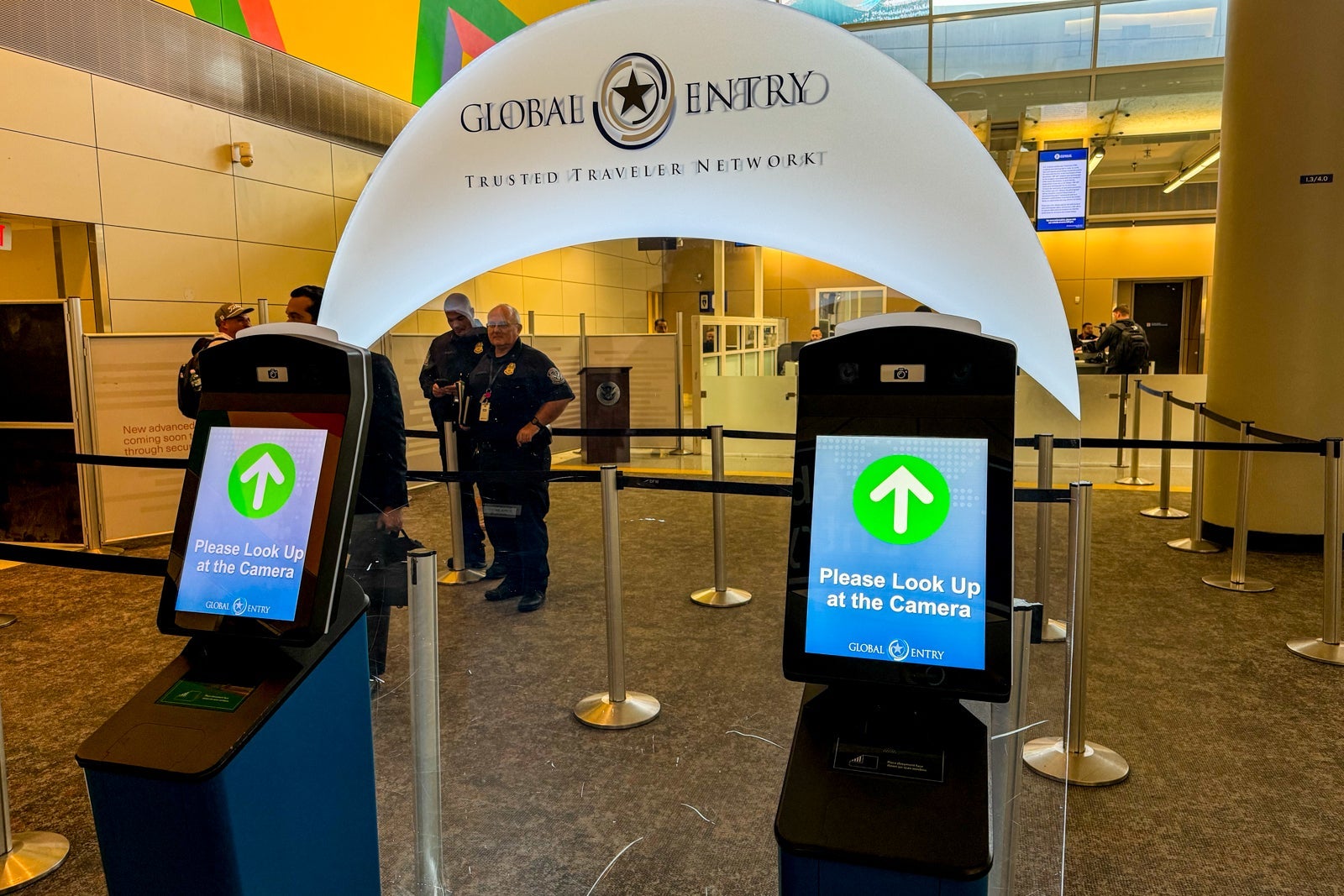
The Amex Platinum offers one additional statement credit, giving cardmembers up to $209 toward an annual Clear+ membership for expedited airport security (subject to auto-renewal; enrollment required).
My verdict: These statement credits are easy to use, and the Amex Platinum inches ahead of the Sapphire Reserve since it also offers Clear+.
Related: Can someone else use my Global Entry application credit?
Bottom line
The Amex Platinum’s statement credits offer greater potential value — but they generally require more active tracking and include more niche merchants.
Comparatively, Sapphire Reserve provides less potential value — but its credits are much easier to track and use.
If you’re interested in more value and more opportunities to redeem credits, then the Amex Platinum is the way to go. If you don’t want to put as much effort into maximizing your benefits, the Sapphire Reserve is a better option, even though it provides less value and fewer opportunities.
To learn more, read our full reviews of the Amex Platinum and Chase Sapphire Reserve.
Apply here: American Express Platinum
Apply here: Chase Sapphire Reserve
For rates and fees of the Amex Platinum, click here.
Disclaimer : This story is auto aggregated by a computer programme and has not been created or edited by DOWNTHENEWS. Publisher: thepointsguy.com



