
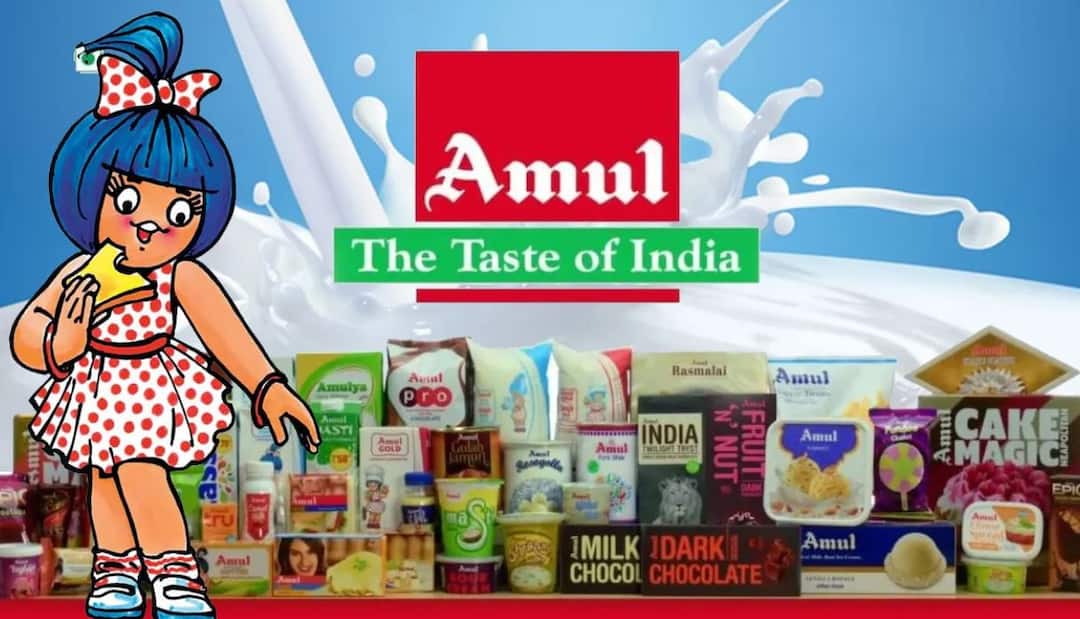
- Amul invests ₹600 crore in world’s largest curd facility.
- New plant will process 15 lakh litres of milk daily.
- Bengal’s fragmented market offers expansion opportunity for Amul.
Kolkata’s relationship with doi is legendary. Now, that affection for dairy products is at the centre of one of the biggest investments in India’s food processing sector.
Amul has announced plans to build what it describes as the world’s largest curd manufacturing facility in Howrah, a project that could reshape the dairy landscape of eastern India while strengthening the cooperative giant’s hold on one of the country’s fastest-growing consumer markets.
A Rs 600 Crore Dairy Bet On Bengal
The Gujarat Cooperative Milk Marketing Federation (GCMMF), which markets products under the Amul brand, has committed Rs 600 crore towards the project at Sankrail Food Park in Howrah, reported News18. The announcement was formalised at the Bengal Global Business Summit 2025, where Amul Managing Director Jayen Mehta confirmed plans for an integrated dairy complex rather than just a standalone curd unit.
The facility is expected to process 15 lakh litres of milk every day and manufacture a wide range of products, including dahi, mishti doi, yoghurt, lassi, buttermilk, ice cream, paneer, ghee, flavoured milk and UHT milk. At full capacity, the plant will be capable of producing 10 lakh kilograms of curd-based products daily.
The project is being developed in two phases by the Kaira District Cooperative Milk Producers’ Union, the Anand-based cooperative behind much of Amul’s manufacturing network.
Why Bengal Matters To Amul
While the announcement may appear like an ambitious expansion into a new market, Amul is far from an outsider in West Bengal.
The cooperative is already the largest fresh milk brand in the state, selling more than one million litres of milk daily. It has also built a procurement network spanning 14 districts and works with over 1.2 lakh women milk producers.
The attraction is clear. West Bengal’s dairy market was valued at nearly Rs 89,000 crore in 2024 and is projected to expand at more than 12 per cent annually through 2033. While organised dairy players such as Amul, Mother Dairy, Metro Dairy and Red Crow are already present, the curd segment remains relatively fragmented and underserved at scale.
Also Read : Chotu Cylinder Gets Costlier Again: 5-Kg LPG Price Hiked For Third Time Since West Asia Crisis
Does Bengal Have Its Own Nandini Moment?
The expansion inevitably draws comparisons with Karnataka, where Amul’s entry sparked a fierce political and cultural debate around Nandini, the dairy brand of the Karnataka Milk Federation.
Nandini commands a unique emotional connection with consumers in Karnataka and dominates large parts of the state’s dairy market. Campaigns such as #SaveNandini and public endorsements from political leaders turned what might have been a routine business expansion into a broader debate about regional identity and local enterprise.
West Bengal presents a very different picture.
The state’s dairy market is competitive but fragmented, with multiple established players and no single brand enjoying the overwhelming cultural dominance that Nandini has in Karnataka. Analysts believe this fragmented landscape may make expansion easier for Amul, which already enjoys a significant presence in the state.
Politics, White Revolution 2.0 And The Timing Of The Investment
The timing of the project has also generated discussion.
The investment was announced at the Bengal Global Business Summit 2025, organised under the previous Trinamool Congress government. However, it also aligns closely with the Centre’s White Revolution 2.0 programme, which aims to boost dairy production, expand procurement networks and strengthen rural livelihoods through cooperative models.
With the BJP now governing the state following the 2026 Assembly elections, the project has acquired additional political significance. Supporters of the new government have highlighted the investment as a sign of industrial confidence in Bengal, while also linking it to broader efforts to expand the dairy economy.
Also Read : Crude Oil Prices Jump Over 3% As Fresh US-Iran Strikes Renew Supply Fears
What It Means For Farmers And Jobs
Beyond consumers, the project is expected to have a substantial impact on rural livelihoods.
Amul’s cooperative structure means milk producers are integrated into the value chain rather than operating merely as suppliers. The company already works with more than 1.2 lakh women milk producers in Bengal, and industry observers expect procurement networks to expand further as the plant scales up operations.
The project is also expected to create direct and indirect employment opportunities across dairy collection, processing, logistics and distribution.
Before You Go
BREAKING NOW: Indore fire tragedy as EV short circuit triggers deadly explosions
Disclaimer : This story is auto aggregated by a computer programme and has not been created or edited by DOWNTHENEWS. Publisher: abplive.com



