
The freedom that followed Franco’s death also sparked an epidemic in Spain. Carla Simón’s Romería defies the silence that followed.
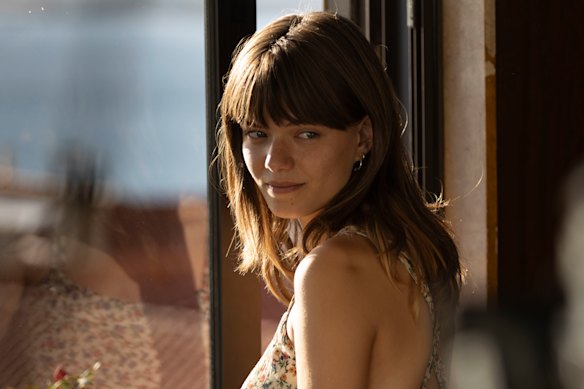
Carla Simón lost her mother to AIDS, a legacy of heroin use, when she was six. Her father had disappeared from her life years before, presumably also dead, so young Carla, raised in boho Barcelona, was taken in by family friends who worked a small farm in the mountains. It was a sharp dislocation for the motherless child but it was also joyful, bucolic and loving: an idyll of grief. Her experience became the subject of her first feature film, 2017’s wonderful Summer 1993, which immediately earned the director an international reputation.
It was the reaction to the film within Spain that took her by surprise, however. “At that point I had this website,” she says after the premiere of her new film Romeria, which also delves into her shadowed past. “The weekend after the release of Summer my email box was full of people saying, ‘You just told my story’. And I realised it was super big.” Spain had a heroin epidemic in the ’80s; it also had the highest number of AIDS deaths in Europe, a collective pain that was barely discussed. “We always talk in Spain about how badly we remember the Civil War,” Simón says. “But this is also a historic memory we needed to approach.”
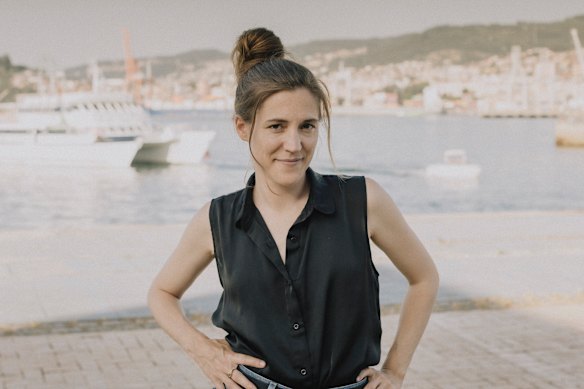
After Summer she had two possible next projects in mind. She chose to make Alcarras, a lively portrait of a family of tenant farmers about to be thrown off the orchard they have worked for generations. That story came from her extended adoptive family; it won her the Golden Bear in Berlin. Her other project, still on hold, was about her parents’ love. She wasn’t sure about it. She had just had her own child; her inclination was to look forward. She had to do it, however, not only for herself but for all those people who wrote to her. “Because it was not only my story but the story of a whole generation.”
That story began with the death of General Franco, who ruled as a dictator from 1939 to 1975. “It was really like a super Catholic place and young people were very repressed. Then Franco died and then there was this explosion of freedom,” Simón says. It was the cultural moment of La Movida Madrilena. It was also, less happily, a fiesta of substance abuse.
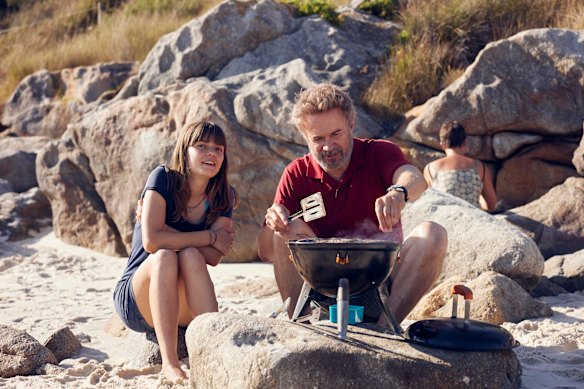
Simón’s father, the scion of a well-to-do family in Galicia on Spain’s northern coast, loved the sea. Much of the time he lived on the family yacht, which meant he was able to take heroin deliveries.
“Heroin came through Galicia, where the coast is difficult to control. The government didn’t do much to stop it,” says Simón. There was a view in some quarters, she says, that young people doing drugs would at least stay out of politics. “But it was about trying things out, freedom and living the moment. Then AIDS came.”
Growing up, she had nothing to do with her grandparents or their Galician clan. When she was 18 she visited for the first time; romeria means pilgrimage. In the film she fictionalises her own story to become that of a young film student called Marina (played by local Llucia Garcia, whom Simón spotted getting off a bus). Ostensibly, Marina crosses Spain to press her grandparents for a signed copy of her father’s death certificate, which will allow her to apply for a scholarship to film school. At heart, however, she is curious. Who are these people? Does she look like them?
“In order to understand who you are, you need to understand a little bit where you come from,” says Simón. “I know some people don’t have this need but, perhaps because I have a big family and I’m a filmmaker, I do.”
Most films about outcasts seeking their estranged families bristle with anger. “They are angry because they feel abandoned, because they have had a lack of love, but I didn’t have a lack of love. I was absolutely fine!” says Simón. It is clear that the family is hiding a truth; it is also clear that they are struggling to deal with it.
“It’s painful for them, so I also tried to tell the story of the family with empathy and understanding,” she says. Nor did she want to judge her parents. “It was such an important generation that broke with all these old values,” she says. “We are where we are only because they turned everything upside down.”
All Marina knows of her parents’ romance is in her mother’s diary, which was based on real letters to friends. It is honest and direct but she wants to see the places her mother names, visit their flat, walk on the beach where they ran around naked. The film shifts between vividly improvised, naturalistic scenes of the family to become a clearly fantasised film within the film, where Marina joins her parents on their balcony and is swept up in a surreal scene set in a dance club. Garcia doubles as her own mother, while rock musician Mitch Martin plays both Marina’s father and her favourite scallywag cousin, Nuno. The sequence wells up like a dream.
“For me there was something about the idea of spaces where people once passed and then, when you go back there, there is something spiritual that connects you with them,” says Simón. “But at the same time it’s frustrating because there is nothing to tell you if they were here or there, if they lived in this building or in this other one, you know. Marina’s looking for something but she doesn’t know if she will find it.” Even so, she finds images that illustrate the words in her mother’s diary, whether they’re accurate or not. “She can kind of leap that gap of imagination.”
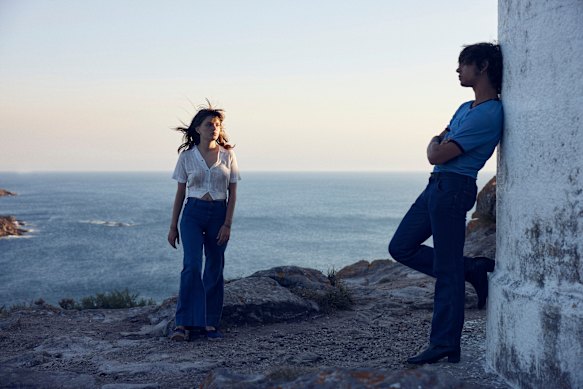
At the same time she discovers that her grandparents were looking after her dying father, keeping him in seclusion for years after she had believed he was dead. Nobody was allowed to see him; they were ashamed. Once again the story is essentially Simón’s own. Not all her crowd of uncles and cousins are happy, even now, that she is openly talking about her father’s cause of death. “Well, it’s painful for them,” she says. “So I also tried to tell the story of the family with empathy and understanding.”
Some of the facts had been kept from her but some memories had simply been muddied by time. Beyond the story of Simón’s parents and their generation, this is a film about the way memory works. “You try to put the pieces together but everyone tells you the stories in their own way,” she says. “Because they become the protagonists of the stories: ‘I told your mum this’, or ‘She did this because of me’.
“And at some point I realised that even if my parents were alive I still wouldn’t have the truth. Because the way we remember is that we remember the last time we remembered something.” Not the thing itself; it is the memory that becomes the truth. “So memories keep changing all the time; we kind of rebuild them for our own convenience. But then I realised that I have cinema to create my own way of seeing. To create a story, even if I don’t know if it’s true or not.” And now it is true, we point out, because she has made it into a new memory: a memory of her film. “Yes,” she agrees. “Now, this is true.”
Romeria opens in cinemas on July 9.
Want more movies? We’ve got you.
Disclaimer : This story is auto aggregated by a computer programme and has not been created or edited by DOWNTHENEWS. Publisher: www.smh.com.au






