Edited by: Darius Platt-Vowles
“You remember too much,
my mother said to me recently.
Why hold onto all that? And I said,
Where can I put it down?”
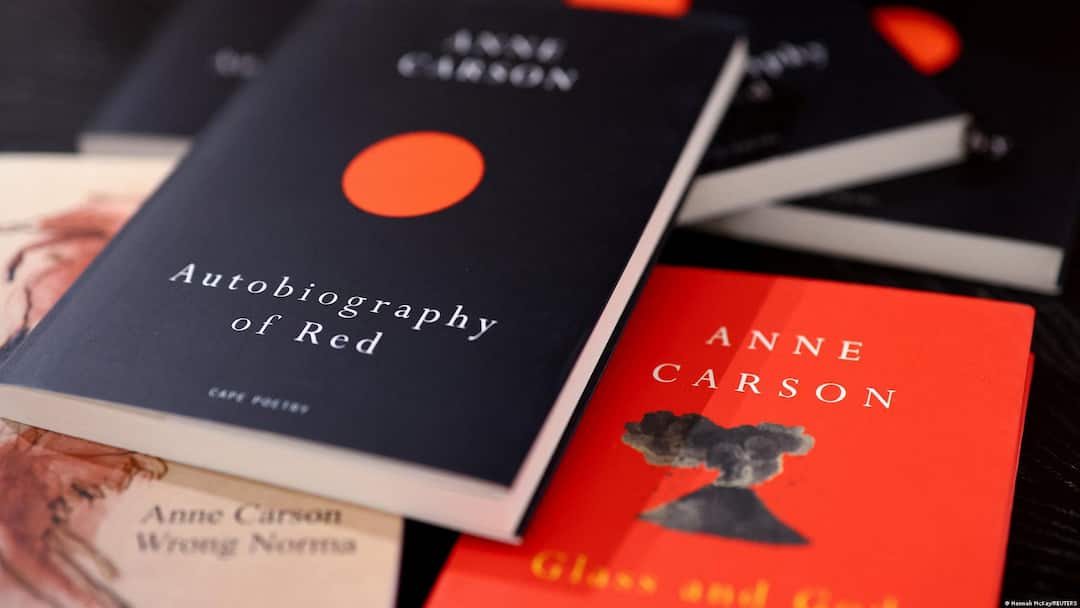
This quote is from the long, lyrical poem “The Glass Essay” published in Anne Carson’s 1995 collection “Glass, Irony and God” — an entry point into the works of the 2026 Nobel Prize for Literature laureate.
In the poem, the narrator explores the burden of memory and obsessive desire after a failed love affair, all while regularly reflecting on Emily Brontë — an author renowned for her intense literary depiction of destructive and passionate love in “Wuthering Heights.”
The poem brings several of Carson’s recurring obsessions together into one work. She has repeatedly written about desire, abandonment and jealousy, and has often used other literary figures as emotional doubles, as historical anchor points to her ideas.
In a way, “The Glass Essay” encapsulates Carson’s method; the Canadian poet, essayist, translator and classicist has often intellectualized emotional themes by intertwining her personal reflections with analysis, etymology, translation, literary history and philosophical thought.
Another trademark of her work is the genre fludity found in “The Glass Essay,” which — as the title indicates — is partly a literary criticism essay, even though it is also a poem due to its form.
“Almost all her literary production has centered upon the intersection between the philologist’s obsession with words and the poet’s desire for new meaning,” noted Anders Olsson, chair of the Nobel Committee, in his description of the Nobel laureate on October 8.
Finding Greek mythology in a shopping mall
Born in the Canadian city of Toronto, Carson first developed her fascination for ancient Greek myths as a teenager. She told literary journal The Brick that she spotted a bilingual edition of “Sappho” by Willis Barnstone in the display of a bookstore of a shopping mall in Ontario, and that had led her to ask a high school Latin teacher to teach her ancient Greek.
She went on to publish her doctoral thesis in Classics, entitled “Odi et Amo Ergo Sum” (I hate and I love, therefore I am).
Carson’s first book of criticism, “Eros the Bittersweet,” was published in 1986. It lays the foundation of her approach, as she draws on ancient Greek writers such as Sappho and Plato to examine how desire — and the obstacles between the lover and the beloved — creates emotional tension.
The book suggests that the ache of wanting is not separate from love; it is one of the things that makes desire so powerful.
A Greek myth turned into a queer coming-of-age story
Because “Eros the Bittersweet” moves between Greek poetry, philosophy and literary criticism and personal interpretations, it is not considered a conventionally easy read. A more immediately engaging work and good starting point to discover Carson is the verse novel “Autobiography of Red,” published in 1998.
“Autobiography of Red” was inspired by the ancient Greek myth of Heracles (or Hercules) and the red-winged monster Geryon, which the hero kills as his 10th task in his series of 12 monumental labors.
An otherwise minor figure from mythology, Geryon is turned into Heracles’ lover in Carson’s book. She reimagines the myth as a modern, queer coming-of-age story, with the monster experiencing love, jealousy, sexuality and heartbreak.
“We all feel we’re monsters most of the time,” explained Carson.
The work is accessible, funny and moving, and no deep knowledge of Greek mythology is required to enjoy it.
Pop culture meets classics
The key to reading Carson is not to expect every connection to be immediately clear. Her books reward curiosity rather than certainty, and her sprawling, non-linear web of knowledge can be compared to going down a hyperlinked rabbit hole of narrative ideas.
“Men in the Off Hours” (2000) is another intellectually playful collection of poems. Here Carson collides the modern with the ancient, with references to figures as diverse as Beethoven, Virginia Woolf, Emily Dickinson, Jean-Luc Godard, Sigmund Freud, Homer and Hokusai.
The poems bring together fragments of history, mythology and ordinary life, allowing unexpected emotional and intellectual connections to emerge.
In the spoken and sung performance piece “Norma Jeane Baker of Troy” (2019), Carson similarly brings together classical and pop culture, reimagining the story of Helen of Troy alongside the life and cultural image of Marilyn Monroe.
A tango with a deceiving beauty
How do people become the victims of desires they cannot control? This is a core theme Carson explores in “The Beauty of the Husband: A Fictional Essay in 29 Tangos,” published in 2001.
It features the Canadian author’s wry humor in a powerful and moving way, with erotic, painful and heartbreaking scenes from a doomed marriage: a 30-year obsession with a pathological liar whose singular redeeming quality is his sheer physical radiance.
The collection of poetry, which won her the T.S. Eliot Prize, is dedicated to the English Romantic poet John Keats, challenging his famous aphorism, “Beauty is truth.”
(Disclaimer: This report first appeared on Deutsche Welle, and has been republished on ABP Live as part of a special arrangement. Apart from the headline, no changes have been made in the report by ABP Live.)
Disclaimer : This story is auto aggregated by a computer programme and has not been created or edited by DOWNTHENEWS. Publisher: abplive.com