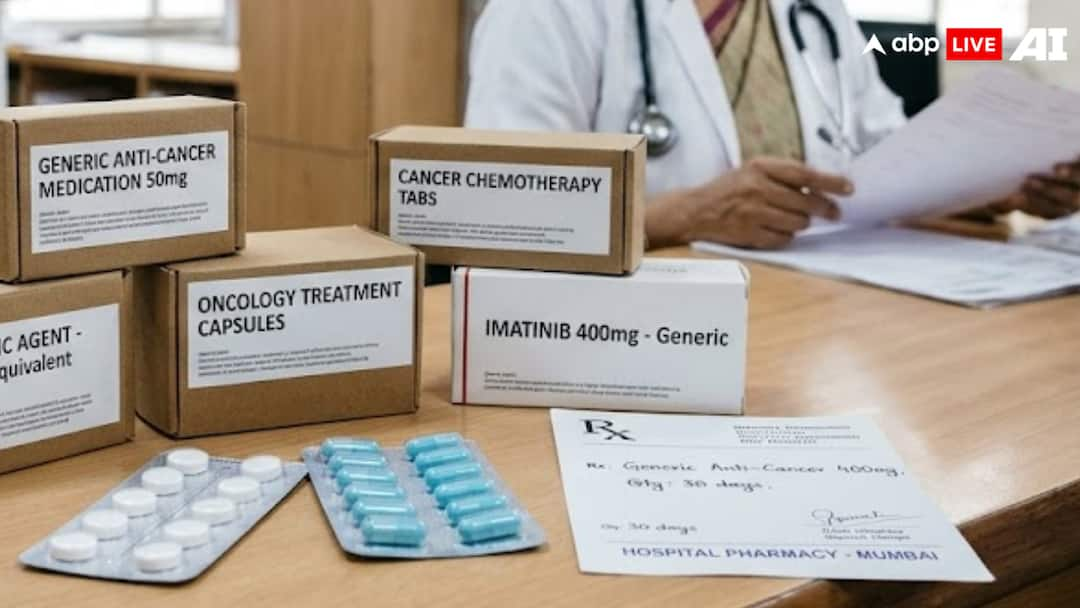
- Centre proposes 30% trade margin cap on cancer drugs.
- This measure aims to save patients ₹2,500 crore yearly.
- Expert committee identifies specific drugs for proposed cap.
- NPPA will review recommendations, issue revised price notifications.
Cancer treatment in India could become more affordable under a proposed government measure to regulate the prices of anti-cancer medicines. The Centre has told the Supreme Court that capping trade margins at 30% of the maximum retail price (MRP) could reduce medicine prices by 20-70% and save patients around Rs 2,500 crore annually.
ALSO READ: Rabies Can Be Prevented But Rarely Cured After Symptoms Begin: What To Know
Centre Proposes 30% Trade Margin Cap on Cancer Drugs
In an affidavit filed before the Supreme Court, the Department of Pharmaceuticals said the government had decided to rationalise trade margins on anti-cancer medicines following consultations with stakeholders and an assessment of the potential impact on affordability and availability.
The proposed cap aims to curb excessive mark-ups across the pharmaceutical supply chain while allowing distributors and retailers to retain reasonable margins.
The Ministry of Health and Family Welfare constituted an expert committee on October 9, under the chairmanship of the Director General of Health Services, to identify the medicines that would come under the proposed measure. The committee is expected to submit its report within 10 to 15 days.
“The trade margin is to be capped at 30 per cent of the MRP, on the same lines as was done in the TMR of 2019. The objective is to retain a reasonable trade margin while preventing excessive margins,” the affidavit stated.
The proposed list will cover cancer medicines, excluding inexpensive drugs, and may be updated periodically in response to market developments and public health needs.
NPPA To Review Recommendations, Issue Price Notifications
Once the expert committee submits its recommendations, the National Pharmaceutical Pricing Authority (NPPA) will consider them and issue appropriate directions. It will subsequently notify the revised prices and instruct manufacturers to ensure that the benefits reach patients.
According to the Centre, the proposed intervention could lower patients’ out-of-pocket expenditure, improve access to cancer medicines and bring greater transparency to the prices consumers actually pay.
The affidavit was submitted in response to a public interest litigation filed by Dr Sanjay Kulshrestha, which raises concerns about medicine pricing and the need for effective regulation of trade margins in the pharmaceutical industry.
Previous Anti-Cancer Drug Price Cap Saved Patients Rs 984 Crore
The Centre cited its 2019 intervention as a precedent for the proposed expansion of trade margin regulation. At the time, the NPPA imposed a 30% trade margin cap on 42 selected non-scheduled anti-cancer medicines.
According to the affidavit, the move reduced the MRP of 526 brands and generated estimated annual savings of around Rs 984 crore for patients, based on information supplied by pharmaceutical companies.
The government said this earlier measure offered a policy basis for extending trade margin rationalisation to a wider range of non-scheduled cancer medicines.
ALSO READ: WHO Confirms First Human Case Of Animal-Linked Shamonda Virus In France; Patient Dies
Centre Flags Need To Protect Medicine Availability
While emphasising affordability, the government acknowledged that imposing uniform trade margin restrictions requires careful consideration of their effects on manufacturers, distributors and retailers.
Industry associations have raised concerns that extending the cap could affect employment and medicine distribution in remote areas, where smaller pharmaceutical companies often depend on local traders and multiple distribution channels.
The Centre also pointed out that higher trade margins may sometimes be necessary for low-cost medicines, products requiring specialised storage or handling, fragile drugs and medicines with limited demand. Without sufficient margins, retailers may find it commercially difficult to stock these products.
“Implementation of Trade Margin Rationalisation (hereinafter TMR) affects different stakeholders differently and, hence, requires extensive consultation with all stakeholders and a well-calibrated approach,” the affidavit stated.
Other Government Measures To Improve Medicine Affordability
The Centre highlighted the existing regulatory framework, including the Drugs (Prices Control) Order, 2013, which provides mechanisms for regulating medicine prices.
It also referred to interventions under Paragraph 19 of the DPCO, 2013, covering certain diabetes and cardiovascular medicines, coronary stents, knee implants, oxygen concentrators and other medical devices during the Covid-19 pandemic.
Other initiatives include the Pradhan Mantri Bhartiya Janaushadhi Pariyojana, which supplies generic medicines through around 19,000 Jan Aushadhi Kendras, and AMRIT pharmacies, which offer discounts on essential and life-saving medicines.
Reiterating its approach, the Centre said it would continue to balance affordability and accessibility with the need to maintain an adequate supply of medicines.
“The Government has, in the public interest, been taking calibrated and consultative steps, including by invoking its extraordinary powers under Paragraph 19 of the DPCO, 2013, to curb excessive trade margins without compromising the availability of medicines,” it stated.
The proposed anti-cancer drug price cap is expected to be considered further after the expert committee submits its recommendations and the NPPA reviews them.
(With inputs from IANS)
Check out below Health Tools-
Calculate Your Body Mass Index ( BMI )
Calculate The Age Through Age Calculator
Disclaimer : This story is auto aggregated by a computer programme and has not been created or edited by DOWNTHENEWS. Publisher: abplive.com