The NRL, like most major professional sports, sits uncomfortably on the horns of a dilemma: increasing the entertainment or maintaining its integrity?
More specifically, is the dominant responsibility of a sporting administration to provide enjoyment for fans via a high-scoring, close contest which yields record crowd revenue and broadcasting income?
Or is it to ensure officials adhere strictly to the rules of the sport, no matter the match situation?
Todd Greenberg, a former NRL boss and now the chief executive of Cricket Australia, says, “All sports leaders continue to be challenged by the need to drive revenues that ultimately fuel their entire sport from top to bottom, whilst also ensuring the integrity of the sport is protected and remains true.
“It is a delicate balance that requires careful consideration and a long-term approach that recognises both history and legacy.”
It is an issue which has special relevance to the upcoming State of Origin series that starts in Sydney on Wednesday.
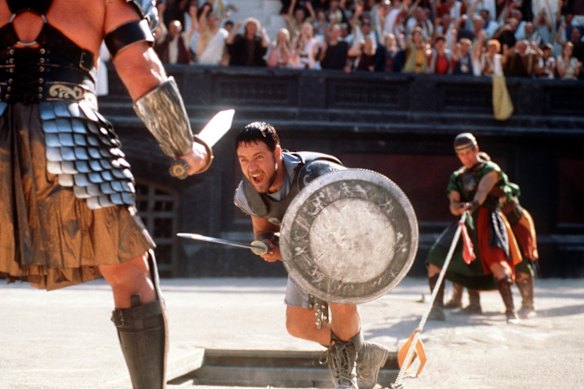
So often has Australian Rugby League Commission chair Peter V’landys declared that the game is primarily about entertainment that he could be channelling Russell Crowe in Gladiator, when Crowe, as Maximus, turns to the shocked and silent Roman crowd after defeating a team of warriors and asks, “Are you not entertained?”
Perhaps Blues officials expected a similar response from the NRL when they protested a first-half penalty blitz in the second Origin match in Perth last year. The match ended with a Queensland win and a big crowd for the decider in Sydney.
The last two Origin series have turned on the middle game. In 2024 at the MCG, the Blues’ first try came in the 11th minute, after five repeat sets, setting up a 34-0 half-time lead and an eventual 38-18 win, sending the series to a decider in Brisbane.
It is not that the repeat sets at the MCG, or the penalties in Perth, weren’t justified. It is the ones which aren’t blown that usually make the difference, with players losing composure at a perceived injustice.
Rugby League Central has run a campaign leading up to Origin, aiming to capture a TV audience of four million – an understandable strategy at a time the game is preparing to sell its broadcasting rights.
Asked to comment on the Entertainment v Integrity issue in the context of refereeing decisions in the contentious Origin matches and the drive to draw TV eyeballs, V’landys said, “Integrity is paramount and always No.1. Naturally, entertainment is crucial for a sport’s success to a mass audience. The two can live together. Implementing it is the challenge. I believe rugby league has been able to achieve the marriage between them.”
Referees and umpires are expected to regulate the action, not dictate it. However, referees from my time in the Sydney competition have subsequently admitted that officials would occasionally come to their room at halftime and hand them a cigarette packet. Written on the inside of the lid was the penalty count, just in case it needed an adjustment in the second half.
Some 40 years on, game equalisation has become normalised in the expectation of fans. Referees have even more power in the NRL where the territory for repeat sets has been expanded, and they are awarded without explanation.
The home team groans as a six-again is awarded to the visitors and a try follows to reduce the lead to 12-6, while their coach laments, “If we are good enough to get to 12-0, why does a 50-50 call stop us getting to 18-0?”
As a reader commented under a column I wrote recently on the influence of six-again calls: “Excitement is a peculiar emotion, credibility is a rock-solid condition.”
Rugby union prides itself on its pedantic application of the rules, and of all the football codes is the least susceptible to game manipulation. Last year’s second Test between the Wallabies and British and Irish Lions turned on a penalty which was not awarded.
Australia led 26-24 when the Lions scored a late try to steal a 2-0 series-winning lead. There was considerable debate over whether the referee should have penalised the Lions in the lead-up to the final try.
Colleague Peter FitzSimons, a former Wallaby, wrote an article for this masthead in which his delight at the huge crowd and interest in the match from Melbourne heavies, such as Eddie McGuire, was obvious.
FitzSimons quoted a text McGuire had sent him immediately after the match, congratulating him and his code on putting on a great show, but adding, “Not sure why we didn’t get the last penalty. Ref has no idea about setting up a huge result and a big final game. Another effing tax auditor ruining the game!”
Some would read this as the referee killing off the prospect of a deciding Test, without any implication that the referee did not understand he had a responsibility to create one.
The AFL is aware of its role in the entertainment industry. The new rules it introduced for the 2026 season are designed to increase action and lead to more goals, in the same way the NRL boasts its ball-in-play time is double that of rugby union and yields more tries. AFL fans call their fixture list “the fix.”
They have long been accustomed to a competition draw which forces the top teams to play each other twice to reduce the number of lopsided contests and generate higher TV ratings.
However, the cost of more entertainment, via constant action, leads to fatigue and a high injury toll, shorter playing careers and a fear the integrity of the game is being undermined.
Even cricket is not immune from the temptation to maximise commercial returns. Administrators usually place India and Pakistan in the same group for an ODI or Twenty20 World Cup, ensuring they play each other at least once. A T20 match between these two nations can yield $US300 million ($420m) in broadcast rights and an ODI match brings in $US250 million. The phrase “it’s not cricket” has come to mean something which is not fair, just or decent.
Greenberg has hinted his administration may have to adopt a more interventionist role in the preparation of wickets, after two Tests in last year’s Ashes series lasted two days. However, Greenberg is mindful of cricket’s reputation as the last bastion of fair sport, especially following the 2018 sandpaper scandal in South Africa.
“Test match cricket continues to innovate and evolve, but we are acutely aware of the need to protect the essence of the game and the rules and regulations that have made it so revered and loved by so many round the world,” Greenberg said.
 Roy Masters is a Sports Columnist for The Sydney Morning Herald.Connect via email.
From our partners
Disclaimer : This story is auto aggregated by a computer programme and has not been created or edited by DOWNTHENEWS. Publisher: www.smh.com.au