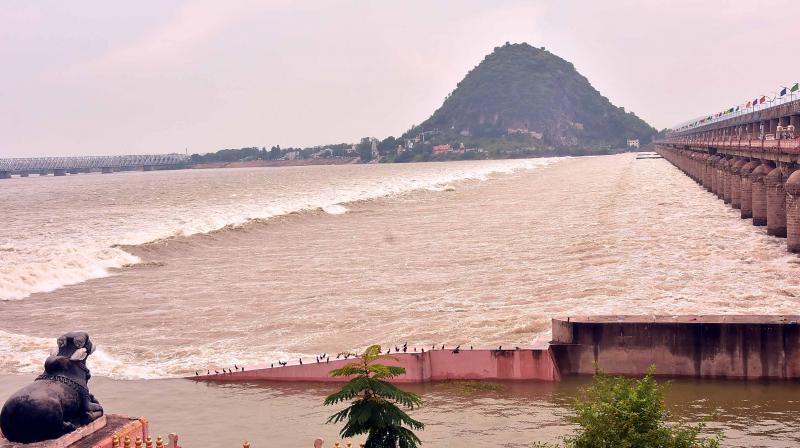
Torrential rain and cloudburst-like conditions in Arunachal Pradesh have triggered devastating flash floods and landslides, killing at least three people, damaging infrastructure and sending a surge of water into neighbouring Assam, where a section of a railway bridge collapsed in Dhemaji district.
The worst-hit areas in Arunachal include Yazali in Lower Subansiri district and Keyi Panyor district, where flash floods caused extensive damage. The NEEPCO colony in the Poosa-Yazali region was severely affected, with several residential quarters damaged or washed away. Landslides also disrupted road connectivity in multiple districts, leaving many travellers stranded.
The death toll in Arunachal rose to three on Monday after bodies were recovered from downstream areas in the Kimin circle of Papum Pare district. Rescue operations involving the State Disaster Response Force (SDRF), National Disaster Response Force (NDRF), Indian Air Force (IAF) and local teams continued amid difficult terrain and adverse weather conditions.
The floodwaters flowing from Arunachal’s upper catchments have significantly increased water levels in the Brahmaputra and its tributaries, prompting the Assam government to issue a high alert for districts including Dhemaji, Lakhimpur, Biswanath, Sonitpur and downstream areas up to Dhubri.
Union Home Minister Amit Shah on Monday spoke to Assam Chief Minister Himanta Biswa Sarma to review the flood situation after the first spell of flash floods in the region.
According to the Assam State Disaster Management Authority (ASDMA), 22,124 people have been affected across six districts—Dhemaji, Nalbari, Dibrugarh, Chirang, Lakhimpur and Kokrajhar.
Dhemaji remains the worst-affected district, with 15,483 people impacted. Floodwaters have inundated 96 villages and damaged nearly 1,690 hectares of agricultural land.
Meanwhile, a portion of a railway bridge between Archipathar and Simen Chapari stations in Dhemaji district collapsed, forcing the indefinite suspension of train services on the route.
In a statement, the Northeast Frontier Railway (NFR) said the bridge, originally built in 1965 and later converted to broad gauge, had been structurally sound. However, heavy rainfall washed away a large section of the riverbank, destabilising one of its piers.
The railway authorities confirmed that no train was on the bridge at the time of the collapse and no injuries were reported. Services on the low-traffic branch line had already been suspended due to rising river levels.
Disclaimer : This story is auto aggregated by a computer programme and has not been created or edited by DOWNTHENEWS. Publisher: deccanchronicle.com