
For many women, getting from one place to another is rarely just about reaching the destination.
A late-evening cab ride can mean sharing a live location with someone, checking the driver’s details twice, watching the route on a phone, or keeping an SOS button within reach. Even a short bike-taxi journey can come with the calculation of how safe it will feel to sit behind a stranger.
The concern has come into sharper focus in recent days, with women taking to the streets across cities to demand greater safety and accountability. On 6 October, the National Commission for Women also issued guidelines for app-based cabs, autos and bike taxis, calling for stronger driver verification, route monitoring, emergency support and safeguards around unsafe drop-offs.
The question is increasingly moving beyond what women can do to protect themselves. Can the systems they depend on for everyday mobility be made safer in the first place?
This is the gap that Gurugram-based Fery Rides set out to address.
Making safety part of the ride
The idea began with a disturbing incident witnessed by co-founder Ajay Kumar while he was studying engineering in Chandigarh.
A female friend arrived at their coaching centre shaken after a bike-taxi ride. According to Kumar, the driver had made her uncomfortable through unwanted physical contact and abrupt braking. She eventually got off midway and walked alone through a dark stretch.
The experience stayed with him.
Later, while pursuing his MBA in 2021, Kumar discussed the problem with batchmate Vindhya Mehrotra. Instead of immediately building an app, the two spent six months speaking to potential users, including nearly 6,000 students and more than 200 women at metro stations.
/filters:format(webp)/english-betterindia/media/media_files/2026/10/06/fery-ride-2026-10-06-14-53-04.webp)
The response was striking: 98% of the women they spoke to said they would feel more comfortable with a woman driver.
In 2023, Kumar, Mehrotra and Himanshu Chaubey founded Fery Rides around a simple premise: create a mobility service where women could ride with women drivers.
Building a different kind of mobility network
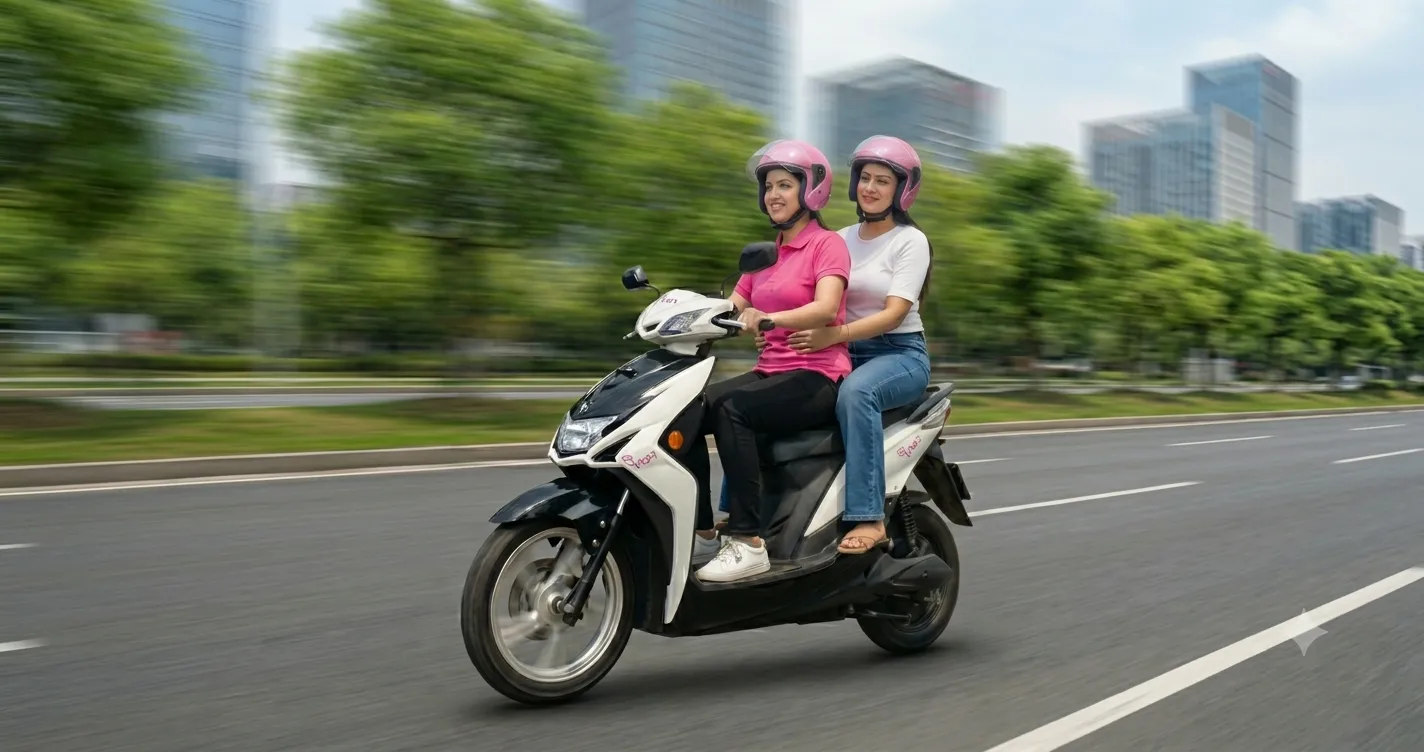
Today, Fery operates in Gurugram with women driving both electric bike taxis and cabs. Users can book on-demand rides, schedule them in advance, or rent vehicles for a period of time. The startup currently operates within a 10-km radius around its hub at Millennium City Centre Gurugram metro station.
The model also attempts to address some of the practical uncertainties that can make app-based rides stressful.
/filters:format(webp)/english-betterindia/media/media_files/2026/10/06/fery-ride-2026-10-06-15-02-23.webp)
Fery uses GPS-enabled electric vehicles, does not have surge pricing, and follows a directed ride system where assigned partners cannot cancel or refuse a ride. Scheduled bookings are intended for people who want more predictable daily commutes.
But the other half of the model is perhaps more significant: the women behind the wheel.
The women behind the rides
Fery recruits women as what it calls “sister partners”, including those who are new to professional driving.
Women who already know how to ride undergo supervised training and route familiarisation. Those who are new to riding can receive formal training, including road-safety instruction, before beginning work. The company also helps eligible women obtain a driving licence during onboarding.
For some partners, flexibility is an important part of the equation. Fery says mothers can structure their shifts around school drop-offs and pickups, while full-time partners receive a base salary and incentives linked to rides and performance. Medical insurance is also provided.
/filters:format(webp)/english-betterindia/media/media_files/2026/10/06/fery-ride-2026-10-06-15-05-16.png)
It means the conversation around safer mobility is not only about the passenger. It is also about who gets to participate in building that mobility network.
Can this model scale?
Fery has completed more than 80,000 rides in Gurugram since its launch in 2023. It currently has around 30 partners and plans to expand its network, while testing operations in Delhi and Noida.
The startup has also raised funding, including Rs 50 lakh through the Startup India Seed Fund and a Rs 2.075 crore seed round led by Indian Angel Network in 2025.
But perhaps the larger story is not how quickly Fery can scale; it is why services built around women’s safety are needed at all.
A woman should not have to plan every commute around the possibility of harassment, an unreliable driver, or an unsafe stretch of road. And while one startup cannot solve the larger problem of women’s safety, Fery Rides is attempting to change one everyday equation: making mobility something women can access without having to trade convenience for a little more confidence.
Sources:
‘How Fery Rides is Creating a Safer Mobility Ecosystem for Women in India’ by Indian Startup Times.
Feryrides
‘How Fery Rides is making commuting safer for women’ by Rashmi Khotlande for YourStory, Published on 13 January 2026.
Disclaimer : This story is auto aggregated by a computer programme and has not been created or edited by DOWNTHENEWS. Publisher: thebetterindia.com




