
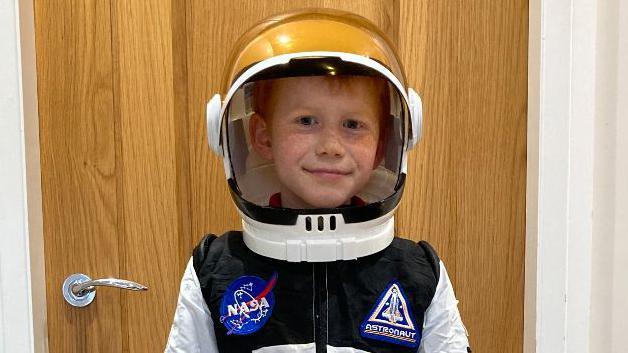
Astronomy superfan, 11, shares tips for watching solar eclipse
-
Published
Space superfan Efan Dafydd has loved astronomy since he was just two years old.
His mum, Lowri, gave him a Welsh-language book called Gofod, which means space.
The avid stargazer has warned people ahead of Wednesday’s partial solar eclipse not to rely on special glasses used during the total eclipse in 1999.
“[They] are not suitable because they could be scratched or damaged, which could make you lose your vision,” he said.
The budding astronaut has received tips on realising his dream from hero Tim Peake – and has even started learning Russian.
On Wednesday, the UK and parts of Europe will experience the most significant solar eclipse in almost three decades.
More than 90% of the Sun will be covered by the Moon for most of the UK, the largest solar eclipse visible until September 2090.
The event will begin at approximately 18:10 BST, although timings will vary depending on location.
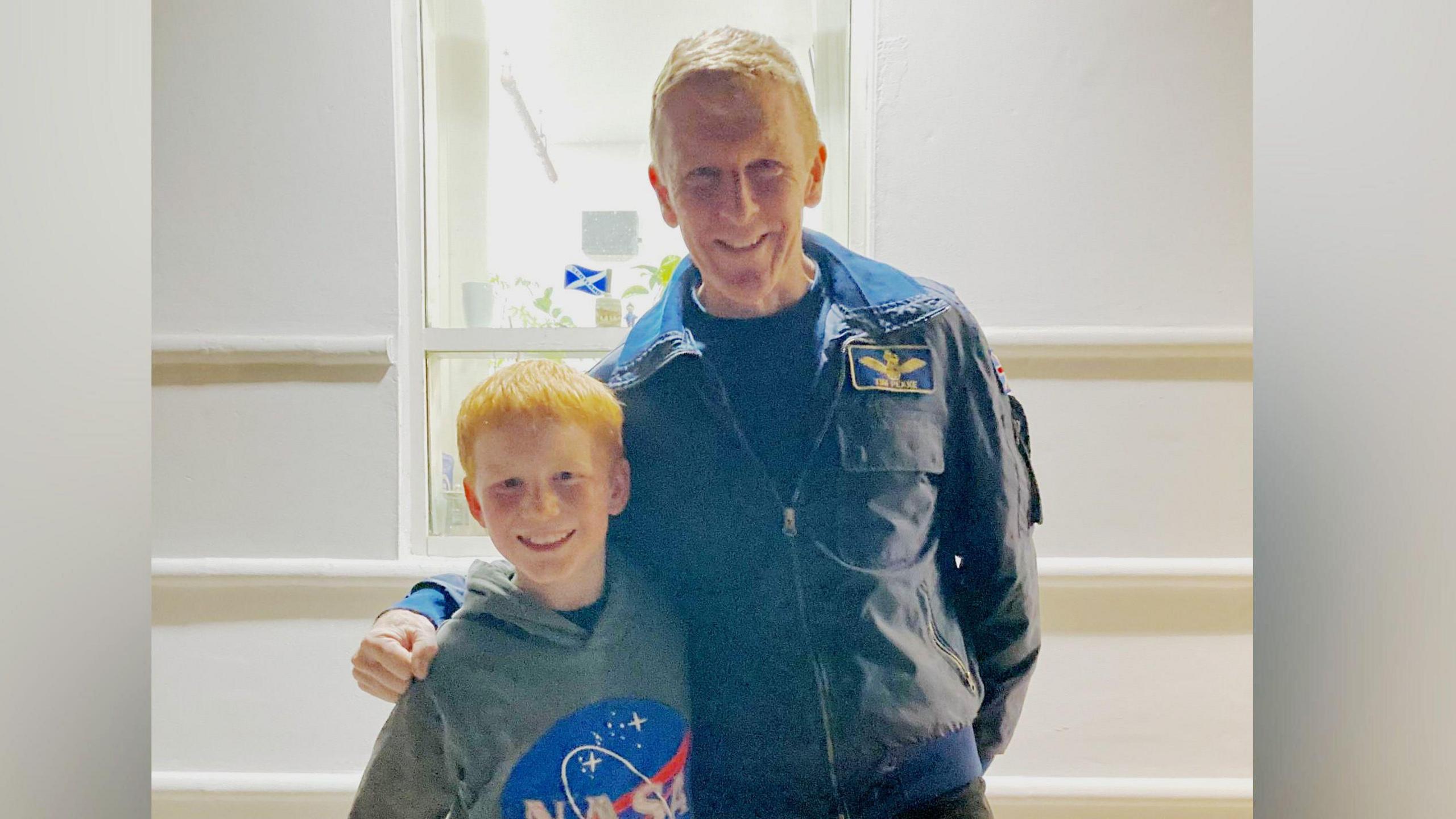 Image source, PA Media
Efan, a member of the Vale Stargazing Club, reminded people that “normal sunglasses won’t work” when it comes to watching the event, saying that special solar glasses are needed.
“And if you’re taking pictures with your phone or looking through a telescope or binoculars, you have to get a solar filter… because the UV light can destroy the lens,” he said.
Speaking about seeing his first solar eclipse, which he plans to view on the runway of a gliding club in Denbigh, Efan said he thought it might get “really cold” when it happens, but it was a “really exciting opportunity”.
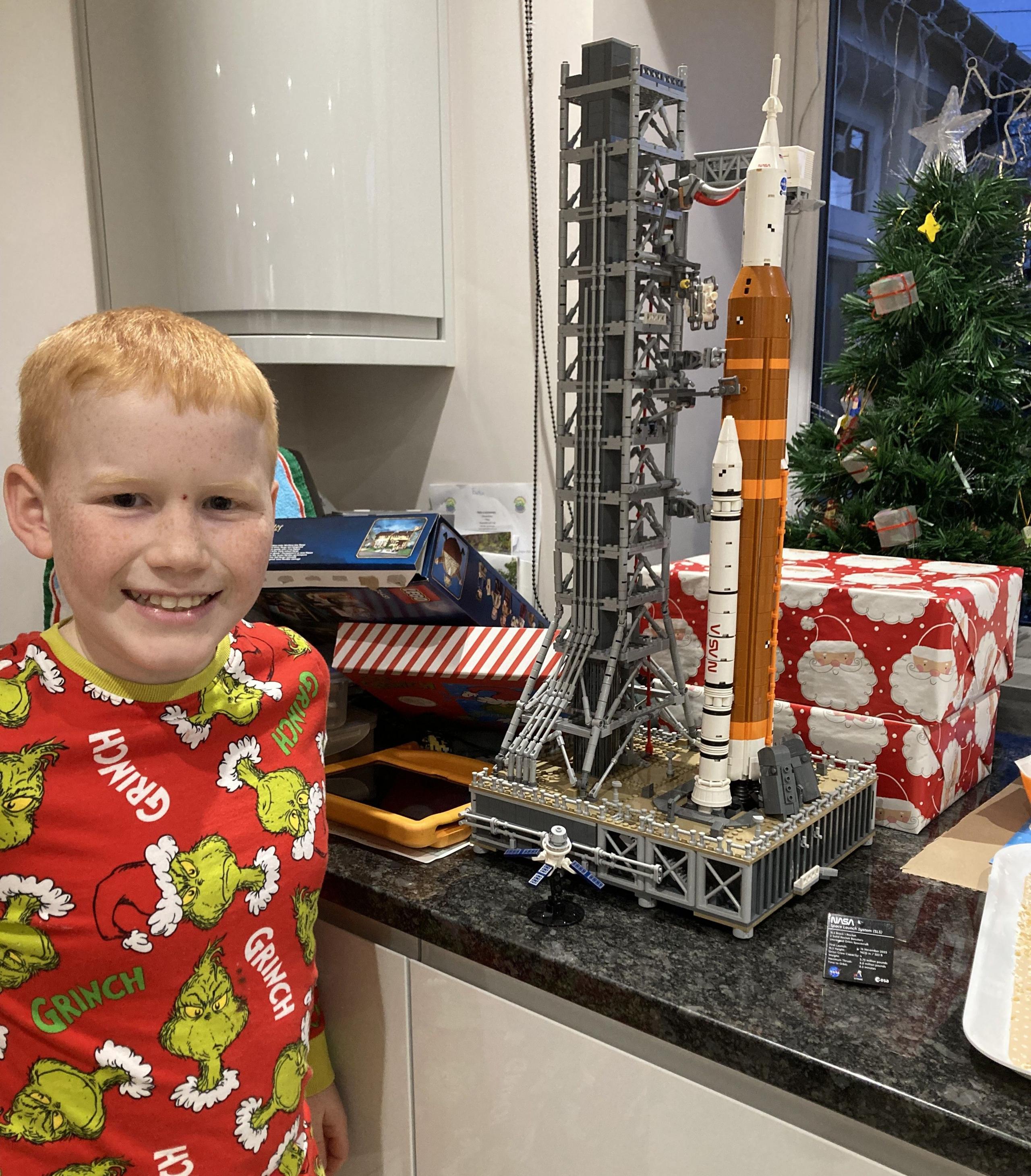 Image source, PA Media
Efan said the “coolest” thing he had seen while stargazing was Jupiter because “it was just so clear”, but that his favourite planet was Neptune because of its Great Dark Spot, a vast storm system roughly the size of Earth.
In October, Efan met his hero, retired British European Space Agency astronaut Peake, during a book tour event after waiting “outside on the backstage door”.
It was at this meeting that Peake told Efan the practical steps on how to achieve his dream of becoming an astronaut.
They included getting an engineering degree or a Royal Air Force route, but also to “do good in school” and “stay fit and healthy”.
To further increase his chances, Efan was advised to learn Russian because it can help facilitate training at the Gagarin Cosmonaut Training Center in Russia, according to The European Space Agency.
He is currently on an almost 300-day Duolingo streak, and has learnt to say greetings like “good morning”, familial relations and animals like dogs and cats.
More Top Stories
-
-
Published9 hours ago
-
-
-
Published21 hours ago
-
-
-
Published2 hours ago
-
Disclaimer : This story is auto aggregated by a computer programme and has not been created or edited by DOWNTHENEWS. Publisher: newsrss.bbc.co.uk





