At 5 am, before the city of Noida fully wakes up, Ekta Nahar steps quietly onto her balcony. Her mornings do not begin with bright sunshine or an alarm clock, but with something we rarely experience as city dwellers.
The chirping of birds.
At first, it is just a few chirps. Then come the flutters, and the sound of dozens of wings.
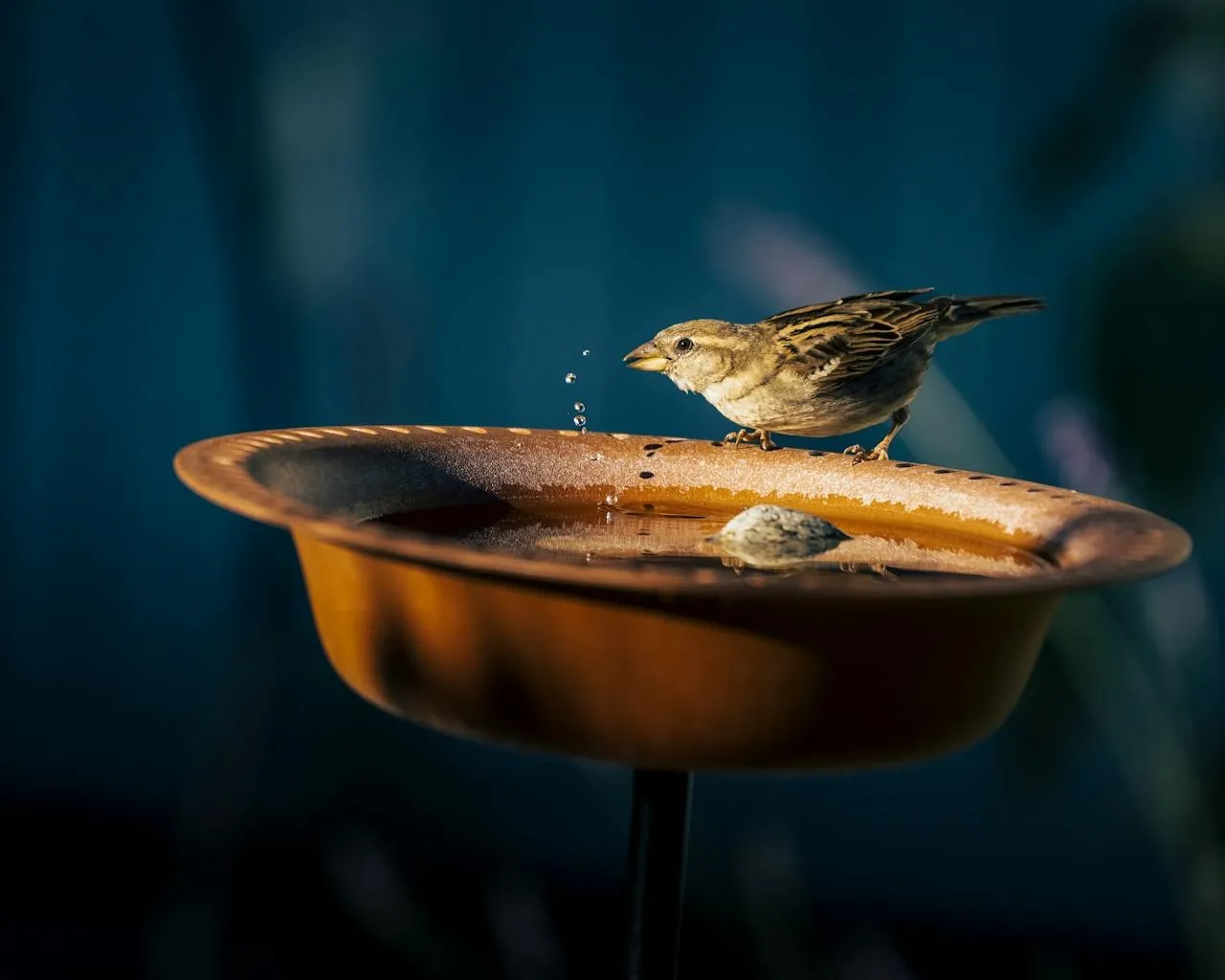
Within minutes, her balcony fills with birds: some perched on railings, some hopping between her 300 planters, some pecking gently at grains, and a few flying close enough to feed from her hand. The birds that visit her every morning include sparrows, hummingbirds, silverbills, Koel, parrots, and laughing doves.
Her high-rise apartment balcony in a concrete neighbourhood is now a thriving living ecosystem, visited by nearly 200 birds every day.
‘Birdsong followed me home’
Ekta, 35, has lived in Noida for over a decade. An artist by profession, her work focuses on mental health, often using art as a medium for healing and expression. At home, she shares her life with her husband and two rescued dogs. Over the years, she has cared for nine dogs and has also worked with animal welfare organisations such as People for Animals as a volunteer.
Animals were always part of her world. Birds, however, were not. That changed during a 2022 family trip to Mussorie, Uttarakhand, when birdsong filled the place where they were staying.
“We stayed at a place where we could hear birds all day,” she recalls. “It was peaceful in a way I hadn’t experienced in a long time.”
When she returned to Noida, the absence of birds felt sharp. “I couldn’t stop thinking about it,” she says. “And I kept asking myself — why should I wait until retirement to feel that kind of peace? Why can’t I create it now?”
Turning a balcony into a safe space
Back home, she began noticing what had been missing around her for years. “There was so much concrete everywhere, and hardly any space for birds,” she says.
/filters:format(webp)/english-betterindia/media/media_files/2026/07/01/ekta-balcony-2026-07-01-13-16-28.jpeg)
balcony into a space where birds might feel safe enough to visit.
So, in 2023, she decided to start small. She would turn her balcony into a space where birds might feel safe enough to visit.
She added plants, kept bowls of water, and placed different kinds of grains. Then, she waited.
For three to three-and-a-half months, no birds came. “Not a single bird,” she says. “I kept wondering what I was doing wrong.”
The first visitor
Then one morning, she heard a sound she had been waiting for. “I was asleep when I heard a faint chirping,” she says. “I stepped out, and there it was: a sparrow.”
It had been over a decade since she had seen one in her neighbourhood.
“That one sparrow meant everything,” she says.
One became three. Three became more.
Today, three-and-a-half years later, her balcony welcomes nearly 200 birds every day.
“They’re like family now,” she smiles. “They’re not afraid. They come close, they feed from my hand.”
Even her rescued dogs have adapted to the rhythm, coexisting peacefully alongside the birds. Watching this happen every day also changed the way Ekta looked at urban wildlife. She realised that birds were not coming only for food. They were coming because the space made them feel safe.
Birds need safety before food
Over time, Ekta began to understand urban birds differently.
“We always think feeding birds is enough,” she says. “But it’s not just about food. It’s about safety.”
Birds, she realised, are constantly assessing risk. “Is there a place to rest? Can they escape quickly if threatened? Are there hidden dangers? They need spaces where they feel protected — from predators, from noise, from sudden movement,” she explains.
Even small details matter.
“The kind of bowl you use, the height of feeders, whether they’re hanging — it all makes a difference,” she says. Hanging feeders, for instance, allows birds to fly away quickly if needed, making them feel more secure.
She also became more careful about the plants she brought home.
“Many plants we bring home have pesticides. That can harm birds,” she says.
Over time, her balcony became a carefully observed, bird-friendly habitat rather than a decorative garden.
A low-cost balcony built with care
As an artist, Ekta brought her creativity into the process. Instead of buying expensive setups, she built her own.
She made birdhouses from cardboard and leftover wood powder, painted planters by hand, and turned recycled materials into feeders and perches.
/filters:format(webp)/english-betterindia/media/media_files/2026/07/01/ekta-2026-07-01-13-19-17.jpg)
“DIY doesn’t have to be expensive,” she says. “The intention is to create a safe, green corner for birds and for yourself.”
Today, her balcony has over 50 varieties of plants, layered to give birds shelter and enough space to move.
Ekta now spends most of her mornings, and often her entire workday, when the weather allows, in her balcony. “It’s not just for them anymore,” she says. “It’s for me too.”
What began as an experiment has become a daily ritual, one that brings calm, connection, and a sense of shared space.
How to make your balcony bird-friendly
For those looking to do something similar, Ekta’s advice is simple:
-
Don’t aim for a “fancy” setup — keep it natural
-
Focus on creating a safe environment, not just feeding
-
Use plenty of plants to soften concrete surroundings
-
Be patient, because trust takes time
“When birds feel safe, they will come,” she says.
In cities where concrete often replaces canopy, it’s easy to assume that nature exists somewhere else — far from where we live.
Ekta’s balcony shows how even a small urban space can make room for birds again. With patience, observation, and care, a few simple changes can turn concrete into habitat. For her, it began with one sparrow, and now, nearly 200 birds return every day.
Disclaimer : This story is auto aggregated by a computer programme and has not been created or edited by DOWNTHENEWS. Publisher: thebetterindia.com