
Most people grow up hearing fairy tales and stories from their grandparents. Dr Nilima Kadambi (now 63) was no different.
But in her case, she says, it wasn’t fairy tales her grandmother, Dr Sarladevi Khot, would tell her to put her to bed. Instead, they were real-life stories of her own early life and medical adventures. One that Nilima would pester her to retell was of the time she gave birth to Nilima’s father.
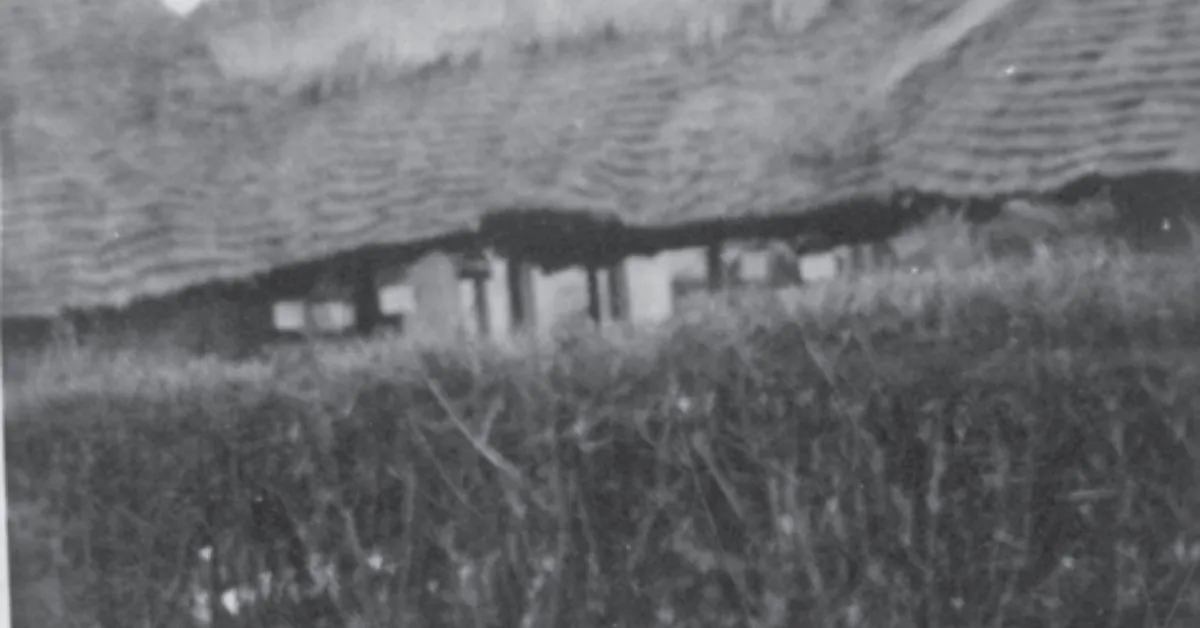
“In 1932, my grandparents were living in Maswa village in Tanzania, East Africa. My grandmother, pregnant with her second child, wasn’t due to deliver until 20 days later. When she went into labour early, my grandfather wasn’t around to help.”
Dr Gopalrao Khot would routinely travel to the nearby villages in Africa that were under his care. He helped the communities get timely treatment for malaria, gastroenteritis, kala-azar (visceral leishmaniasis), and sleeping sickness. Around the time that Dr Sarladevi went into labour, an epidemic of malaria caused Dr Gopalrao to stay back in one of the villages where he had to supervise the medication of the patients, monitor their conditions, and document the deaths for the hospital medical records.
“There was no way for my grandmother to inform my grandfather that she was in labour,” Nilima explains. “And so, she performed her own delivery. She instructed the 16-year-old girl (the African nanny to my father’s older sibling) to boil water, scissors for cutting the umbilical cord, and thread for securing it.”
Once she had delivered the baby, she gathered the placenta and afterbirth and buried it in a hole, so that the big cats in the jungle around their home wouldn’t be attracted by the smell of blood.
“When my grandfather returned home, he was the father of two – the 13-month-old daughter and a newborn son!” Nilima smiles.
/filters:format(webp)/english-betterindia/media/media_files/2026/04/08/homestays-1-2026-04-08-14-53-30.jpg)
As she shares this story, we’re seated at a Cafe in Bandra, Mumbai. We’re engulfed in the sounds that are typical of the hustle of a metropolis: traffic, honking, chatter, and construction. I time-travel to a different world when listening to Nilima’s stories about her grandmother, which makes it so easy to forget my surroundings until these mundane sounds snap me back to reality.
A walk down memory lane
As a fifth-generation doctor — Nilima is a paediatric surgeon — she credits her grandmother for instilling in her a love for medicine and humanitarian service.
“Even though she was short in stature, just 4’ 6” in height, for us, she was a towering figure because of all that she had done. It was almost like having a living legend in the family,” Nilima shares. Not wanting these stories to go undocumented, in 2011, Nilima decided to pen them down into a book, My Ajji and I, which traces her grandmother’s journey from being orphaned at two, being married off at the age of nine, to being widowed a year later and then going on to become a doctor in the 1920s.
/filters:format(webp)/english-betterindia/media/media_files/2026/04/08/dr-sarladevi-2026-04-08-14-55-35.jpg)
Born in 1897 to a family of farmers in Ajra Village, Kolhapur district of Maharashtra, Dr Sarladevi’s family saw her as “an additional mouth to feed”, one whose marriage would require putting together a hefty dowry(a payment such as land, property, money, livestock, or a commercial asset that is paid by the bride’s family to the groom).
Her grandfather arranged her wedding (child marriage was customary then) to the fifteen-year-old son of their neighbour, a widower with three sons who did not ask for any dowry.
“The only condition her wise grandfather put down was that his granddaughter would be allowed to pursue her studies as long as she wished to, even after she was married,” Nilima writes in her book.
This was in 1906 when India was battling its sixth cholera pandemic (1899-1923), which killed 8,00,000 Indians. Dr Sarladevi’s (first) husband was one of them. And so, at the age of 10, she was a child-widow.
Later on, in 1928, she would go on to remarry her classmate and fellow doctor.
Following in her grandparents’ footsteps
Every time Nilima would walk by the Burns Unit at Pune’s B J Medical College, Sassoon Hospital during her MBBS days, she would remember an anecdote she had grown up listening to, one involving her grandfather, Dr Gopalrao Khot (Dr Sarladevi’s second husband).
/filters:format(webp)/english-betterindia/media/media_files/2026/04/08/dr-sarladevi-2026-04-08-14-57-10.jpg)
In 1924, when Nilima’s grandfather, Gopalrao, was studying at B J Medical School and living in their boys’ hostel (which is now the Burns Unit of the hospital), a nurse came rushing to his room, urging him to lend the hurricane lamp he was using. The electricity had gone out, and there was an important patient in surgery.
The patient was none other than Gandhiji!
“Gandhiji, who was imprisoned for sedition by the British, was being held at the Aga Khan Palace in Pune in 1924. He developed acute appendicitis that night and was brought for treatment to Sassoon Hospital. The British surgeon, Colonel Maddock, undertook the surgery on this important prisoner,” Nilima writes in her book.
A storm had caused a power failure right in the middle of the surgery, plunging the operating theatre into pitch darkness.
/filters:format(webp)/english-betterindia/media/media_files/2026/04/08/homestays-4-2026-04-08-14-59-12.jpg)
“Gandhiji (who had refused anaesthesia and was conscious) calmly assured the surgeon that all would be well if he could procure a lamp to shed some light on the operating site to allow him to complete the procedure. A nurse ran about looking for a lamp when someone in the team had the bright idea of running across to the boys’ hostel opposite, where a lamp was shining from one of the windows, where a student was probably studying. This happened to be my dear grandfather!” Nilima writes.
And this is how the young student and his lamp got a chance to be a part of Gandhiji’s surgery.
A legacy left behind
Even beyond the B J Medical College, Pune city reminds Nilima of her grandparents’ legacy.
She particularly remembers her grandmother’s association with a social reformer, Maharshi Dhondu Keshav Karve, who set up the Hingne Stree Shikshan Sanstha in Pune in 1896 to provide a platform for destitute women and widows from all walks of life to get a good education. In fact, Dr Sarladevi was one such beneficiary of their centre.
But she always made sure to work part-time jobs to be able to repay Maharshi ji’s kindness. The more stories Nilima would hear while penning down the book, the more awe-struck she was by the lives her grandparents had led.
Her personal favourites are from the decade they spent in Africa, where they worked under British rule in their colony in Tanganyika (now Tanzania). While Dr Gopalrao’s work was centred around infectious diseases, Dr Sarladevi’s work was centred around maternal and child care.
/filters:format(webp)/english-betterindia/media/media_files/2026/04/08/screenshot-2026-04-08-121748-2026-04-08-15-01-32.png)
On their return to India in 1942, the couple trained their gaze on rural Karnataka’s Ranebennur, where Dr Sarladevi established a small maternity home alongside a general practice, providing affordable care to women from the town and surrounding villages. At a time when home births were the norm and often fraught with risk, Dr Sarladevi worked persistently to shift community attitudes toward safer, institutional deliveries.
She not only treated patients but also built trust among hesitant families and trained local midwives in safer delivery practices. In the early years, she travelled long distances, often by bullock cart and in difficult conditions, to assist with home births, ensuring better hygiene and professional care even in remote settings.
As Nilima writes, “At times she had to travel long distances in bad weather in a bullock cart. She did this willingly and used her medical knowledge to conduct the delivery with better asepsis and professional care. She provided on-the-job training and guidance to the local midwife. Usually, she was paid a token 25 paise, along with the gift of a coconut and a metre of cloth, called a ‘khaan’, the Marathi name for a blouse piece, for these medical professional services.”
Through perseverance and community engagement, Dr Sarladevi laid the foundation for safe motherhood practices, leaving a lasting legacy in maternal and child health.
Her courage and resilience were her best traits, which Nilima is proud to have inherited.
“I remember in my first year of MBBS, I got jaundice and missed six weeks of college. I recovered just two weeks before the exams. Everyone advised me to take a term’s break, as I would anyway fail the exams since I’d missed so much. But my grandmother said nothing doing. She was confident that I could do well if I applied myself and studied hard.” She believed in Nilima so much that the latter was forced to believe in herself. “I took the exams, and when the results were announced, I was one of only eight students (out of 210) who had passed in every subject in that term!” she shares.
This and many other instances in life taught her the power of being committed to one’s dreams. As Nilima puts it, “To us she [my grandmother] was and will always be a guiding light and our biggest inspiration.”
Buy the book here.
All pictures courtesy Dr Nilima
Sources
‘Cholera through history’, Published in Britannica on April 2, 2026.
Disclaimer : This story is auto aggregated by a computer programme and has not been created or edited by DOWNTHENEWS. Publisher: thebetterindia.com



