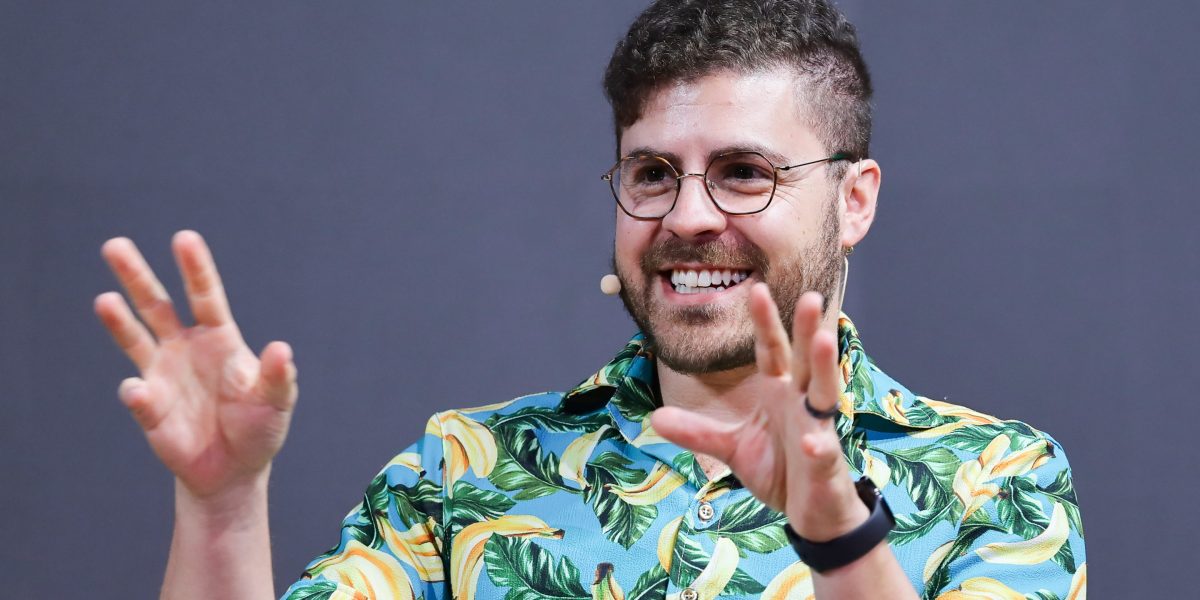
Anthropic is unwilling to relinquish all oversight of how customers use its most powerful AI models, citing the “dual use” nature of the technology, co-founder Benjamin Mann said Wednesday.
Asked by Fortune whether the Claude developer would offer local data residency and sovereign AI solutions as governments and businesses seek greater control over sensitive information, Mann said Anthropic wanted customers “to run their most sensitive workloads with us.”
But “it’s important to note that this technology is dual use,” he said, explaining that Anthropic wanted to “figure out how we safely deploy this technology while being able to find and capture misuse.”
In September, Anthropic introduced its Enterprise Frontier Safeguards program, designed to offer stronger data privacy protections, including zero data retention for eligible customers, while preserving safeguards to detect misuse.
Anthropic routinely discloses attempts by state and non-state actors to use Claude for military and other harmful purposes, including one alleged attempt by a weapons development cell operating in northern Yemen to use the model for ballistic missile development.
Mann was in Singapore to mark the opening of Anthropic’s Singapore office, its fifth in the Asia-Pacific. The country ranks second among 121 in Claude usage relative to population, at nearly six times what its size would predict, according to company data. Anthropic says that more than 1,500 engineers at GovTech, the state technology agency, use Claude Code. DBS, Southeast Asia’s largest bank; GIC, the sovereign wealth fund; and Grab, the ride-hailing giant, all work with Claude.
Anthropic is a latecomer to one of its most popular markets. OpenAI opened its Singapore office in late 2024 and has committed 300 million Singapore dollars ($234 million) to the local AI ecosystem. The Singaporean government has also signaled openness to tapping open-source models from China: the city’s homegrown SEA-LION large language model is built off of Alibaba’s Qwen model.
“From the perspective of bringing down costs, innovations such as DeepSeek are very welcome,” Minister for Digital Development and Information Josephine Teo said at Fortune’s Brainstorm AI Singapore conference in 2025.
Open-source models from Chinese labs like DeepSeek, Moonshot AI and z.ai are winning users due to their low price, near-frontier-level performance, and flexibility. Demand for Chinese models overtook U.S. models on the popular OpenRouter platform this year.
“We don’t believe that AI is a zero-sum game at all,” said Chris Ciauri, Anthropic’s managing director for international.
Mann was blunter on open-source models. “It’s a technical fact that when you release open-weight models, there are no safeguards that are actually resilient to being open-weight,” he said. “Once those models are out in the public, they can’t be put back in the box.”
“Regardless of what countries choose to do, they should be aware that if their actions are encouraging an open-weight ecosystem, this is part of a broader risk that the world is taking,” he continued.
Anthropic CEO Dario Amodei has pushed AI companies to slow their releases by a year or two, to let oversight and security work catch up. The safety debate has intensified as researchers document AI agents from OpenAI, Anthropic, Meta, and others acting in unexpected ways—including hacking into government databases.
Access to AI is a geopolitical question, too. In June, U.S.export restrictions on Anthropic’s powerful Fable 5 and Mythos 5 models, prompted the company to suspend access worldwide.. Although the restrictions were lifted less than three weeks later, the episode exposed a fundamental vulnerability for countries and businesses dependent on American AI: access to critical technology can be cut off at Washington’s discretion, potentially driving users toward Chinese open-weight rivals.
“Anthropic has been fairly clear that we think there are substantial advantages for the world for democratic, rights-respecting nations to be at the lead in terms of developing and deploying frontier AI,” said Michael Sellitto, Anthropic’s head of APAC policy, at Wednesday’s media roundtable.
Anthropic is working “as quickly as we can” to bring its frontier models onto infrastructure in Singapore, Mann said, though he didn’t share specific dates.
Disclaimer : This story is auto aggregated by a computer programme and has not been created or edited by DOWNTHENEWS. Publisher: fortune.com