
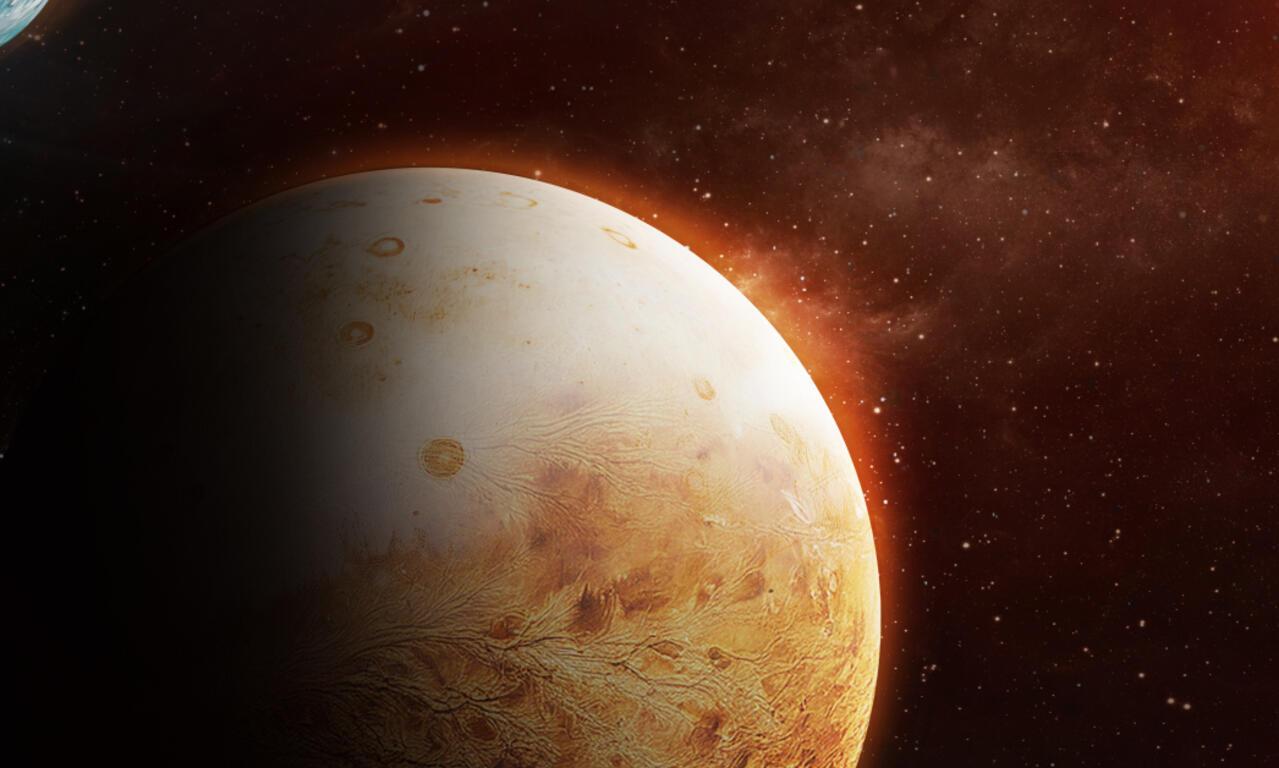
Scientists have detected an atmosphere around a rocky planet 49 light years from Earth, marking the first observationally confirmed atmosphere on a rocky planet in the habitable zone beyond the Solar System.
The discovery of LHS 1140b, a planet that could potentially support liquid water on its surface, has made it one of the most promising nearby worlds for studying habitability and the possibility of life beyond Earth.
“This is the first actually observationally confirmed atmosphere on a rocky planet in the habitable zone outside of our solar system,” said Dr Collin Cherubim, first author of the study published in Science.
The findings also mark the first direct identification of an atmospheric species on any rocky exoplanet, whether or not it lies in a habitable zone, Cherubim said.
LHS 1140b was discovered in 2017 and has a mass 5.6 times that of Earth and a radius 70 per cent larger. It orbits a small red dwarf in the constellation Cetus.
The planet is similar to Earth in some respects, including its broadly rocky composition and temperature. But it is also significantly different. LHS 1140b is tidally locked, may contain considerably more water and is likely to have a very different atmosphere.
Researchers say the planet has several key ingredients for a potentially habitable environment: a rocky surface, temperatures that could allow liquid water and an atmosphere that could help prevent water from escaping into space while shielding the surface from harmful radiation.
Its host star is also relatively quiet, with few flares.
“So it’s a really exciting place to keep looking, especially to look for signs of life,” Cherubim said.
The team found no atmosphere around LHS 1140c, another rocky planet orbiting the same star.
Researchers observed LHS 1140b as it passed in front of its star using an infrared spectrograph mounted on the Magellan Clay telescope at Las Campanas Observatory in Chile.
Observations made in 2024 revealed helium escaping from the planet into space. The team said it ruled out other possible explanations for the signal, including contamination from Earth’s atmosphere.
However, helium was not detected during observations in 2025. The unexpected result prompted the researchers to reanalyse the initial findings.
“Every false positive we could think of, we have confidently ruled out,” Cherubim said.
The discovery is particularly significant because planets orbiting small red dwarfs are among the most common targets in the search for habitable worlds. But such stars can also be highly active, with intense radiation capable of stripping atmospheres from the planets around them.
Jayne Birkby, professor of astrophysics at the University of Oxford, said the discovery was an important step towards understanding how rocky planets retain atmospheres while orbiting red dwarfs.
Dr Yamila Miguel of Leiden Observatory in the Netherlands said LHS 1140b was unusual because it was losing enough atmospheric gas for the process to be detected from Earth.
However, she cautioned that the observations concerned gas escaping from the planet’s upper atmosphere and did not directly reveal conditions near the surface.
“Therefore I do not think these results have any direct implications for detecting life on other planets,” she said.
Disclaimer : This story is auto aggregated by a computer programme and has not been created or edited by DOWNTHENEWS. Publisher: deccanchronicle.com