

If one building symbolises Australia, it’s the Sydney Opera House. We stick it on souvenirs, take endless photos of it (and with it) and adore it endlessly. But what are your next favourite in our wide, brown built land?
There are wondrous structures everywhere but, if you can’t get beyond Jørn Utzon’s world wonder, consider these favourites from experts who live and breathe architecture and design. Some of our eclectic panel’s choices – such as Melbourne’s NGV, Bundanon in regional NSW and Queensland’s State Library were nominated multiple times.
Then there are other selections – such as Cobar Sound Chapel in outback NSW and Canberra’s retro Red Hill restaurant – that are arguably more offbeat.
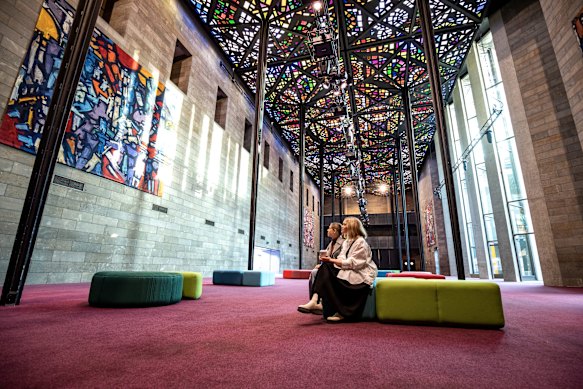
This list of 50 favourite buildings worth visiting (even if it means, in some instances, admiring them from the outside) includes fine homegrown examples of civic architecture, sacred spaces, swimming pools, urban precincts, hotels and resorts and more.
Put them on your must-see list – and read on for how to view them like an expert and perhaps see them in a brand-new light.
Sign up for the Traveller Deals newsletter
Get exclusive travel deals delivered straight to your inbox. Sign up now.
THE PANEL
Callum Fraser, architect
Founder of Fraser & Partners, whose projects include Melbourne’s The Queensbridge Building, incorporating Hannah St Hotel and the Mondrian Gold Coast. See fraserandpartners.com.au
Qianyi Lim, architect
Co-director of Sibling Architecture, a socially engaged architectural practice with offices in Melbourne and Sydney. Her work includes Bega’s award-winning SECCA (South East Centre for Contemporary Art). See siblingarchitecture.com
John Doyle, architecture academic
Associate dean and head of architecture at RMIT University’s School of Architecture and Urban Design. He is also a director of Common ADR, a Melbourne-based architecture firm. See rmit.edu.au
Katelin Butler, editorial director
Editorial director at Architecture Media, where her role includes custodianship of Architecture Australia and curation of the Design Speaks event series. See architectureau.com; architecturemedia.com
Julie Power, architecture writer
Senior writer at The Sydney Morning Herald, was awarded the Australian Institute of Architects’ 2025 NSW President’s Prize for her contribution to the public’s understanding of the built environment.
Alan McMahon, interior designer
Founder and creative director of MAC Design Studio, an interior design practice with projects including Osborn House and Ardour Milton Park in the NSW Southern Highlands. See macdesignstudio.com.au
Tim Ross, author and broadcaster
Sydney-based design enthusiast, author and broadcaster, spent last summer touring Australia and talking architecture with Grand Designs presenter Kevin McCloud. See modernisterbooks.com
Anthony Dennis, travel editor and writer
Editor of Traveller in The Age and The Sydney Morning Herald, writes regularly on architectural, design and heritage themes for this title.
MUSEUMS + GALLERIES
Heide II, Heide Museum of Modern Art, Melbourne, Vic
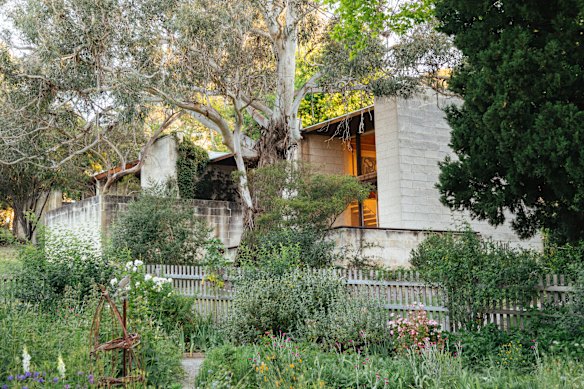
Designed by McGlashan Everist as a home for art patrons John and Sunday Reed in 1968, Heide II, says our panelist Katelin Butler, “exemplifies modernist domestic architecture with its open plan, concrete blockwork and cubic form”. “What makes it special is how naturally it connects to the surrounding garden, almost feeling like a sculpture placed within the landscape.” See heide.com.au
National Museum, Canberra, ACT
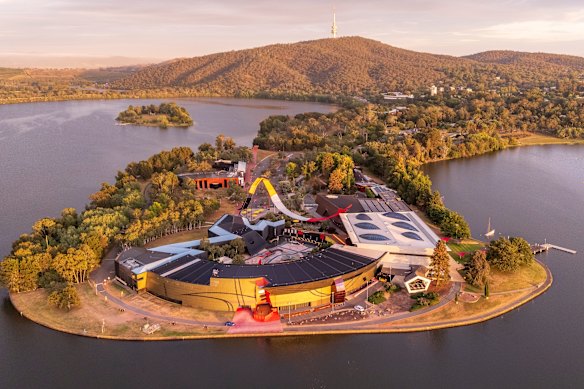
Design devotee Tim Ross, from Traveller’s panel of experts, is impressed with how ARM Architecture conceived the National Museum as “a collage of references, stories, bits of building all held together with this idea of a knotting device”. “There are many stories about this building, not least of all that it upset the sitting PM [John Howard] … famously, they stamped the word ‘sorry’ in Braille on it.” See nma.gov.au
National Gallery of Victoria, Melbourne, Vic
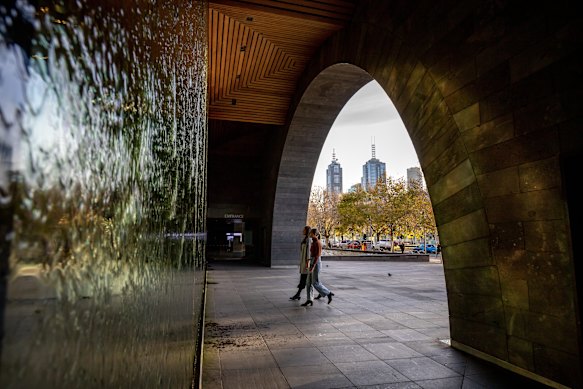
“The NGV walks the line between radiating importance while still being approachable,” says John Doyle from the Traveller panel. “It’s a massive building which, handled poorly, could be overbearing, but somehow it feels friendly. As a kid, you put your hand on the water wall, which feels magical.” See ngv.vic.gov.au
Mona, Hobart, Tas
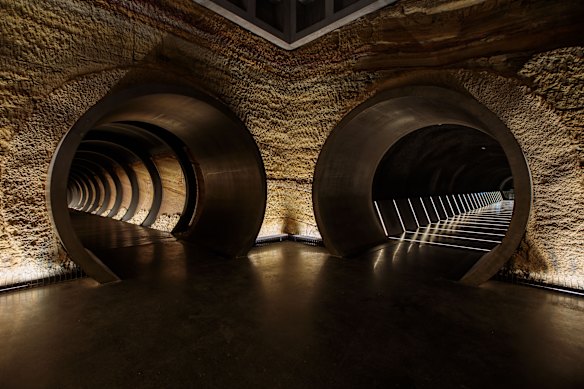
For designer Alan McMahon from our panel, the highlight of this “cultural precinct” that includes a winery and restaurants is the museum itself, which “offers an experience similar to exploring an underground world”. “Carved into sandstone along the River Derwent, visitors move through dimly lit spaces that reveal themselves gradually – this adventurous journey reflects the curated art within.” See mona.net.au
National Gallery of Australia, Canberra, ACT
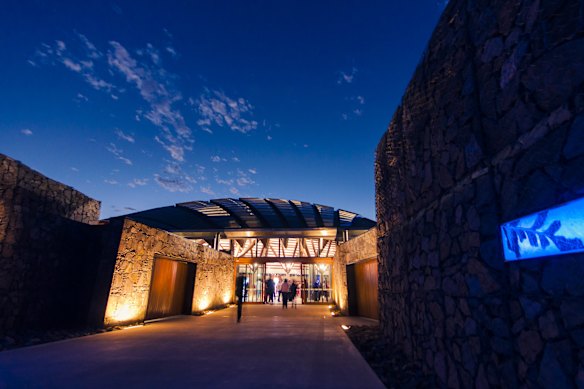
The brutalist building might be imposing but it “can breathe, and it’s got space with the gumtrees around it”, says Ross. “You can lose yourself in it and the narratives of the national art collection are extraordinary. It’s a beautiful expression of who we are and who we can be.” See nga.gov.au
Naala Badu, Art Gallery of NSW, Sydney, NSW
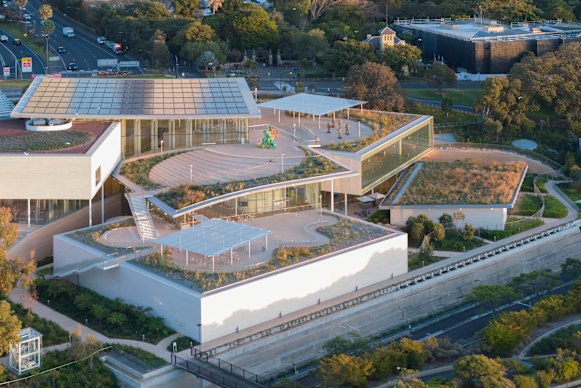
Fans of Japanese architecture should head to Naala Badu at the Art Gallery of NSW, says panelist Julie Power. “The first project in Australia by SANAA’s Kazuyo Sejima and Ryue Nishizawa, it won the 2023 Sulman Medal for Public Architecture.” In and around the light, bright, glass-walled building, find the underground Oil Tank Gallery, massive rammed-earth walls and the living artwork of gardens by Indigenous artist Jonathan Jones. See artgallery.nsw.gov.au
Bundanon Art Museum/Riversdale Boyd Education Centre, Illaroo, NSW
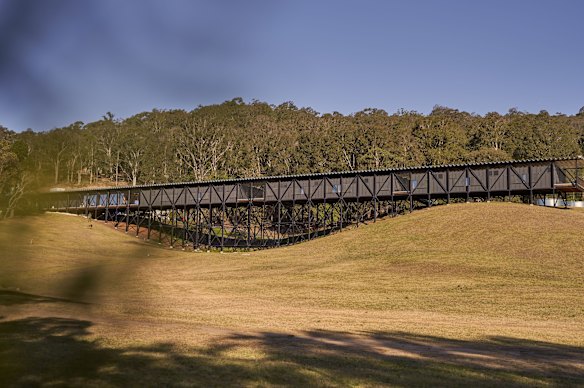
Visitors to late artists Arthur and Yvonne Boyd’s South Coast property can experience not one but two winners of the Australian Institute of Architects’ Sir Zelman Cowen Award for Public Buildings, Butler says. “The Boyd Education Centre by Glenn Murcutt, Wendy Lewin and Reg Lark was designed as a verandah between native bush and cultivated homestead landscape,” she says. Newer buildings, by a team led by Kerstin Thompson Architects, comprise the Bridge and a new art museum. See bundanon.com.au
MUSIC + THEATRE
Myer Music Bowl, Melbourne, Vic
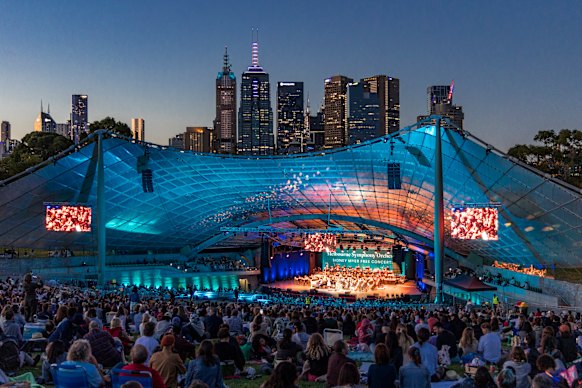
Callum Fraser from the Traveller panel says that according to those who knew architect Barry Patten, his design for the Myer Music Bowl was a cross-section through Satchmo’s trumpet. “He was obsessed with jazz and music and Louis Armstrong, and he loved that instrument. Sometimes architects just do these things that are so simple and so magical.” See artscentremelbourne.com.au
Marion Cultural Centre, Adelaide, SA
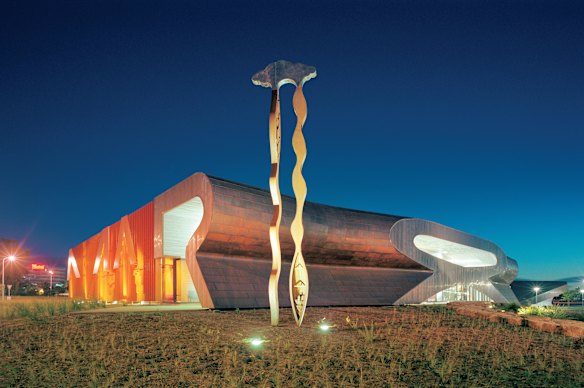
“This is a building that tries to have multiple viewpoints,” Doyle says, of the suburban hub incorporating a theatre and a library. “ARM Architecture is playing with pop, with the use of text. From a certain angle, it spells out ‘Marion’, but it’s not stuck on the building in the form of text.” See marion.sa.gov.au
Angel Place, Sydney, NSW
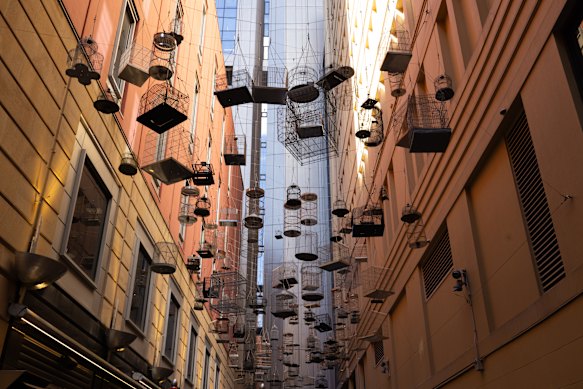
Power says the laneway, fronting City Recital Hall, was “used exclusively by service trucks until 15 years ago, when the art installation Forgotten Songs changed everything”. “Empty birdcages, suspended above the lane, are accompanied by the songs of 50 birds once heard in central Sydney before European settlement. The art brought people and restaurants to what’s now one of Sydney’s busiest lanes, and landed a range of urban and architecture prizes.” See cityofsydney.nsw.gov.au
The Capitol, Melbourne, Vic
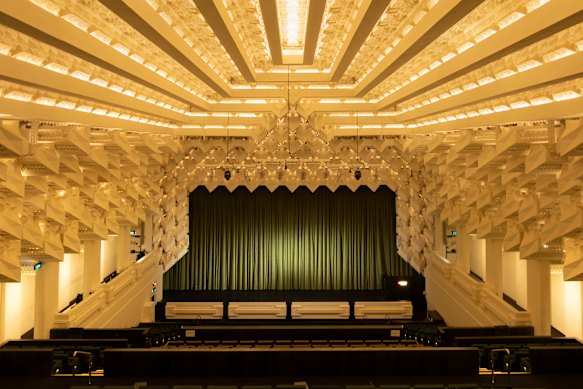
Doyle can’t help but think this is one of those projects that could not be repeated. “The geometry is complex and to think [Walter Burley Griffin and Marion Mahony Griffin] did that all with pen and paper? It’s like a Gaudi.” See rmit.edu.au
Arts Centre Melbourne, Vic
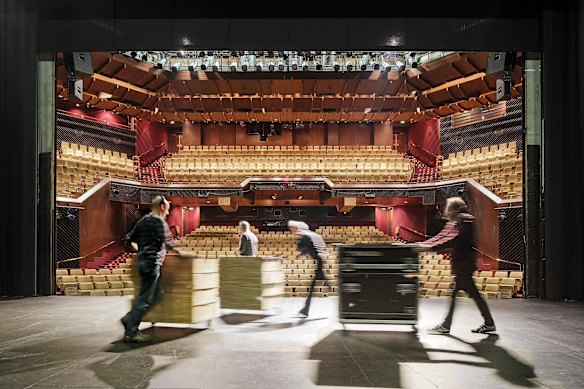
“It’s such a strange building because the public spaces are all underground,” says Ross. “The lush interiors are highly camp but highly beautiful with all these mirrors and brass fittings – [interior designer] John Truscott understood the power of theatre.” See artscentremelbourne.com.au
Cobar Sound Chapel, Cobar, NSW
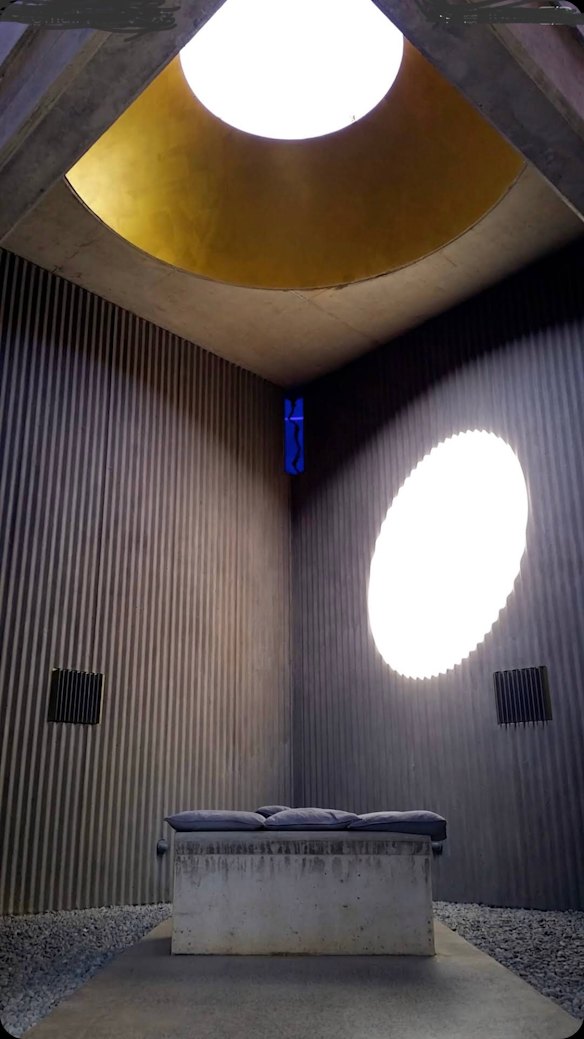
Housed in an old water tank outside Cobar in north-west NSW, this tiny chapel, chosen by Power, was designed by Glenn Murcutt, Australia’s only winner of the Pritzker Prize for Architecture. “It’s a stop for the soul, with music by Georges Lentz on a continuous loop. Call the tourist office for the key.” See cobarsoundchapel.com
State Theatre, Sydney, NSW
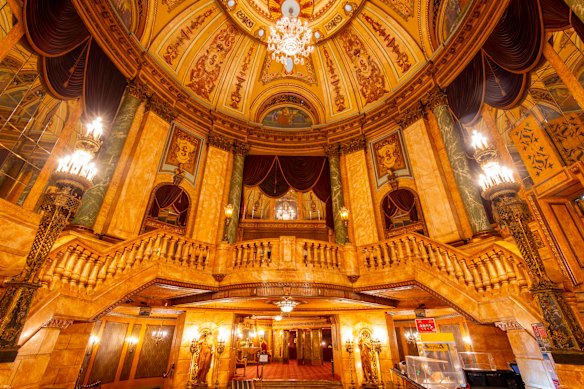
“With floors and walls covered with murals, art and tile work by the Melocco brothers, this heritage-listed building is a time capsule of when men were warriors and chiefs, and women were mere butterflies,” says Power. See statetheatre.com.au
RETAIL + HOSPITALITY
Fish Lane, South Brisbane, Qld
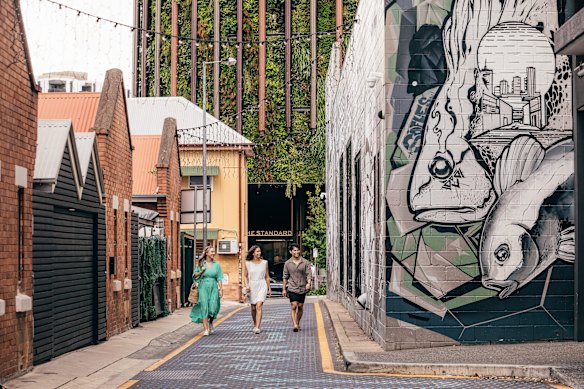
This once under-used urban space beneath an elevated railway line has been “incrementally transformed into a lush and active civic space”, says Traveller panelist Qianyi Lim. “Led by a private developer, the project demonstrates how collaboration between commercial interests, council and infrastructure stakeholders can create highly curated and enduring public realms,” she says. See explorefishlane.com.au
MACq 01 Hotel, Hobart, Tas
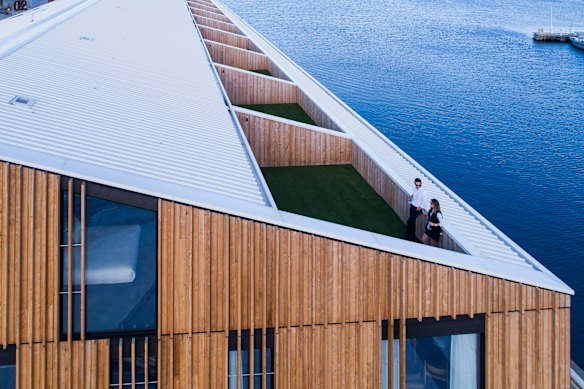
For McMahon, MACq 01 captures a “contemporary interpretation of Hobart’s historic wharf sheds”. “Timber cladding, warehouse proportions and balcony cut-outs reference maritime heritage while the interiors use storytelling, artefacts and layered materials to evoke narrative-driven spaces,” he says. See macq01.com.au
Strand Arcade, Sydney, NSW
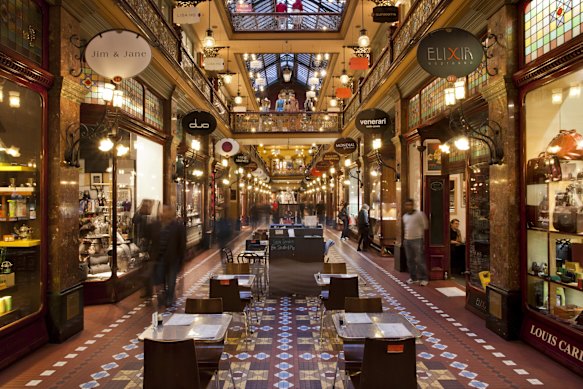
What the Strand’s always done is “elevate the experience of shopping”, says Ross. “There’s something so beautiful about being able to walk back in time and feel the energy of when people used to dress up to go to the city, and you would go to get your watch repaired. There’s something incredibly romantic about that.” See strandarcade.com.au
InterContinental Hayman Great Barrier Reef, Qld
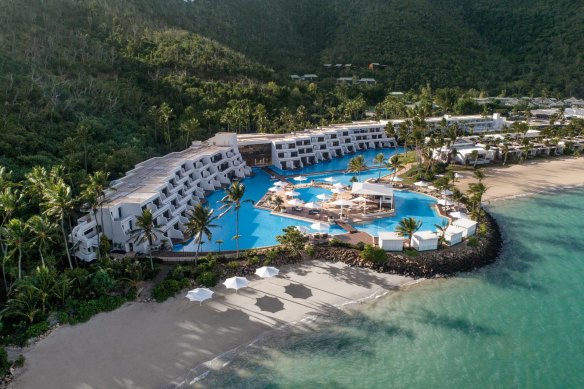
Fraser says when the late Guilford Bell designed this resort, originally “Royal Hayman”, he “seamlessly integrated the architecture into the landscape”. When Fraser first visited the resort he was “flabbergasted by the way [Bell’s] multi-storey concrete structures sit along the contour lines into the hills. It just made me relax instantly and that’s, like, a miracle.” See haymanisland.intercontinental.com
Lunetta, Red Hill, Canberra, ACT
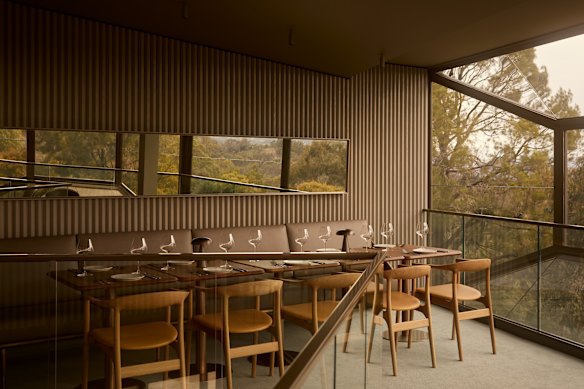
Formerly the Carousel Restaurant, this curious, dodecagon (12-sided) landmark – chosen by our panelist Anthony Dennis – commands the national capital’s 720-metre high Red Hill. A true product of Canberran multicultural creativity, it was commissioned in the early 1960s by Croatians, designed by a Czech and now operates as a lauded and brilliantly reimagined two-storey Italian restaurant. See lunetta.au
James Street precinct, Brisbane, Qld
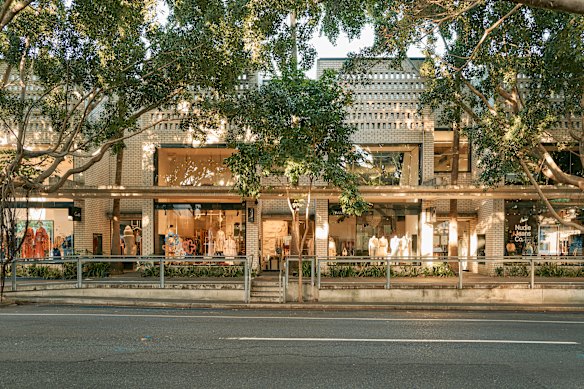
“Richards and Spence’s work on the [Fortitude Valley] precinct over almost 15 years demonstrates how architecture can come to define a place,” says Butler. “Primarily a retail area, vibrant public spaces have been created through private commissions – and civic generosity is at its peak here. Concrete and brick colonnades, canopied edges and pop-out windows are draped with verdant greenery, making moving in and around the shops a pleasurable experience.” See jamesst.com.au
The EVE Hotel, Sydney, NSW
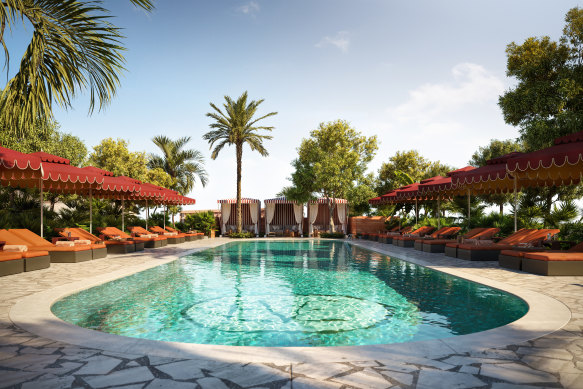
The EVE Hotel succeeds, says McMahon, in reflecting the character of its inner-city Redfern/Surry Hills location. “It’s a great example of urban renewal, transforming a former shopping centre site into a vibrant mixed-use destination,” he says. “The project thoughtfully integrates architecture, interiors, landscape and hospitality.” See theevehotel.com.au
Krakani lumi camp, north-east Tasmania
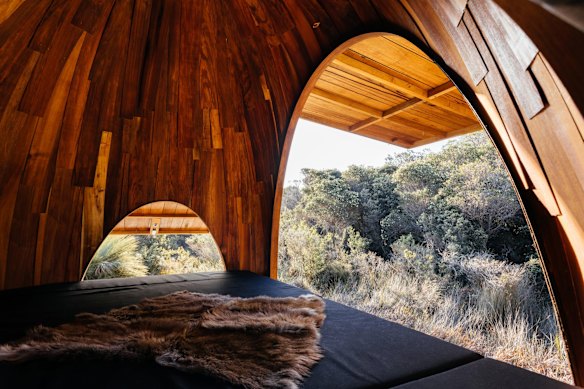
There’s only one way to experience the quiet beauty of this coastal campsite tourism venture – and that’s to do the four-day, Indigenous-owned and led wukalina Walk. Chosen by Butler, the krakani lumi standing camp, by Taylor + Hinds Architects, is where you’ll snuggle into Indigenous-inspired shelters featuring clever half-dome timber interiors. See wukalinawalk.com.au
PARKS + GARDENS
Fletcher Jones Factory and Gardens, Warrnambool, Vic
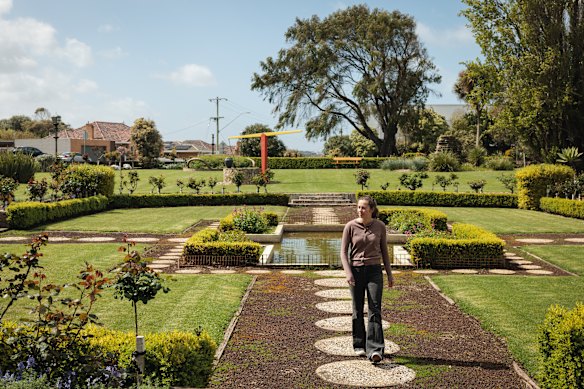
“The site is a throwback to when a town could be built around one industry and there was pride that would go with that,” says Ross of the former garment factory established in 1948. Today, visitors can browse onsite markets and stroll the heritage-listed gardens. See visitgreatoceanroad.org.au
Bowali Visitor Centre, Kakadu, NT
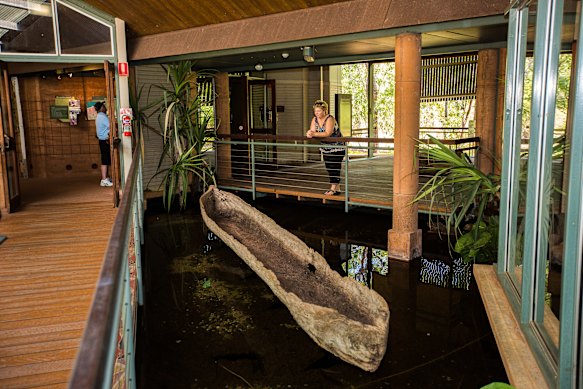
This gateway – one of Kakadu National Park’s two visitor centres – and proffered by Dennis, was designed by Glenn Murcutt, who worked closely with traditional owners. With rammed-earth walls, ironwood floors, stone features and a “billabong” to help catch monsoonal rains, the centre magically merges with the Top End landscape. See kakadu.gov.au
North Head viewing platforms, Sydney, NSW
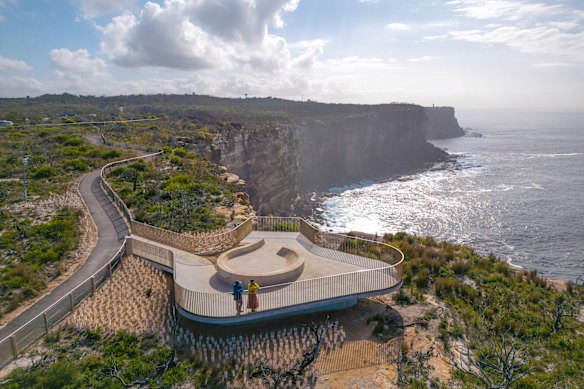
Power says during whale-watching season, “there’s nowhere more magical to be on land than the North Head viewing platforms – Burragula and Yiningma – in Sydney Harbour National Park”. “The words of the traditional call to the whales by the local Indigenous people are engraved on its northern lookout.” See nationalparks.nsw.gov.au
Uluru-Kata Tjuta Cultural Centre, NT
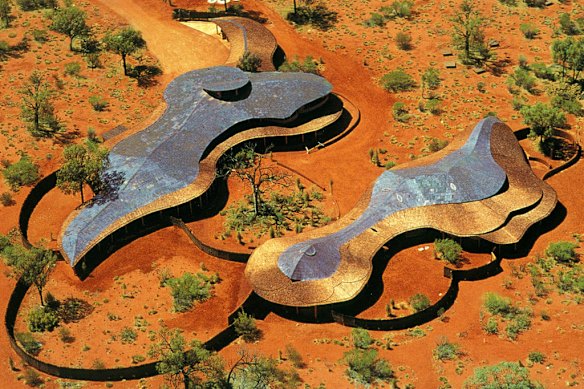
Doyle is a huge fan of architect Gregory Burgess’s work. “He’s non-Indigenous, but he’s really interested in how architecture might represent Indigenous stories and narratives,” Doyle says. Burgess’s cultural centre “builds upon aspects of the Western canon, but it’s just completely radical in terms of the conversation about relationship to Country”. See uluru.gov.au
Reservoir Gardens, Paddington, Sydney, NSW
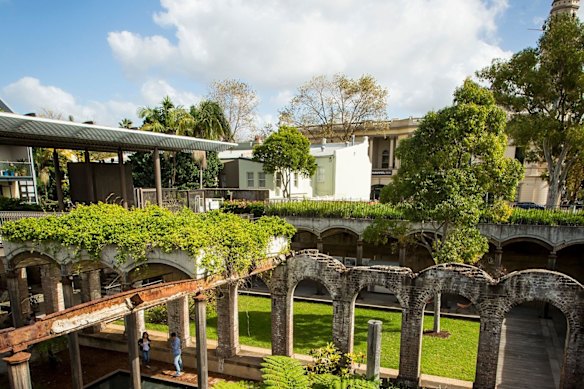
“Old sandstone walls and iron columns from a former reservoir frame sunken gardens open to the elements,” says McMahon. “Transforming this infrastructure into a calm, poetic space highlights the coexistence of history and nature. It offers a tranquil escape within Paddington and feels like an urban sanctuary.” See cityofsydney.nsw.gov.au
Phoenix Central Park, Chippendale, NSW
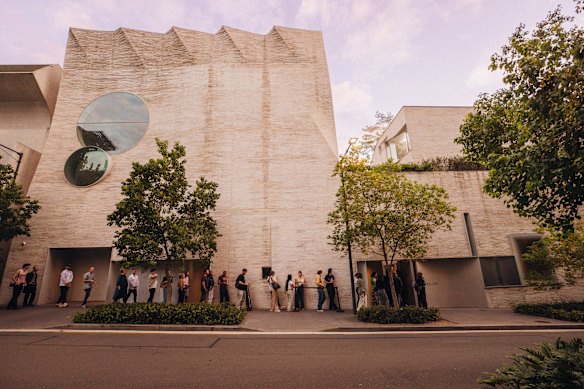
“Sculpted, curved spaces make this venue (Durbach Block Jaggers/John Wardle Architects) feel handcrafted and intentionally designed,” says McMahon, “creating an atmosphere that draws visitors into a thoughtfully staged environment. This is architecture that feels both theatrical and intimate.” See phoenixcentralpark.com.au
OFFICE + TERTIARY
140 William Street, Melbourne, Vic
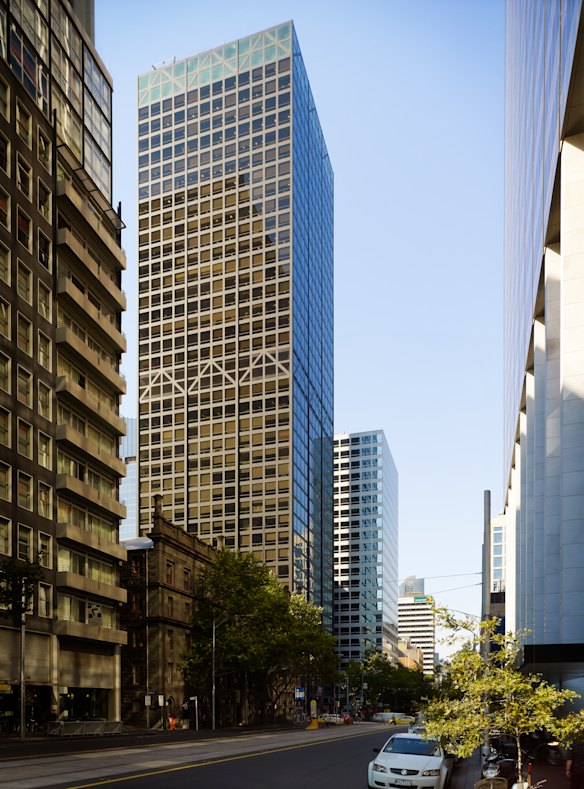
Fraser says the gridded facade of the former BHP House is “a perfect democratisation of space”. “[Its architect] Barry Patten is Australia’s most important modernist architect – I put him up alongside Harry Seidler.” See 140williams.com.au
Quay Quarter Tower, Sydney, NSW
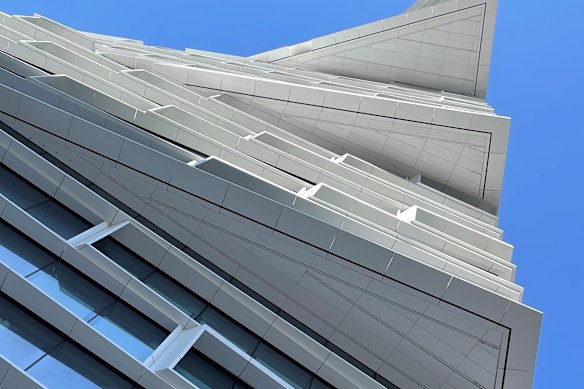
Thanks to clever upcycling by Danish architects 3XN with BVN (also designers of the new Sydney Fish Market), Circular Quay’s Quay Quarter Tower was named World Building of the Year in 2022 at the World Architecture Festival, due to its adaptive reuse of an existing 1976 building, says Power. While there, graze Quay Quarter Lanes at ground level. See quayquartersydney.com.au
Council House, Perth, WA
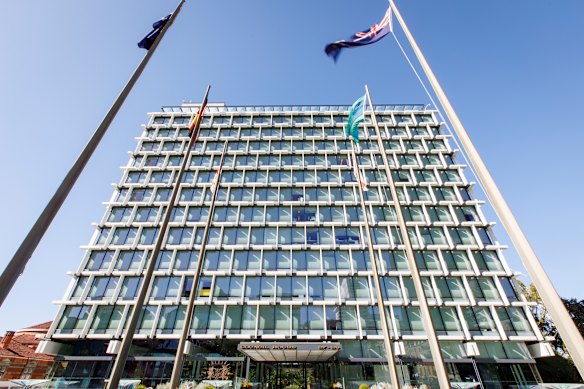
Ross says the City of Perth’s 13-storey administration hub, opened by Queen Elizabeth II in 1963, is “one of the finest modernist buildings in the country”. “It still looks as new and as exciting and as forward-thinking today as it did in the 1960s,” he says. “And there’s always something – like exhibitions – in the foyer that you can go inside and see. There are a few new fandangle lights on it [at night] to make it appealing.” See visitperth.com
Australia Square, Sydney, NSW
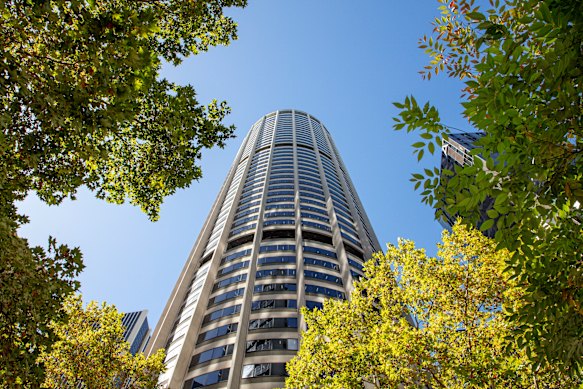
Lim admires Harry Seidler and Associates’ “modernist icon”. “At the time, it was the tallest lightweight concrete structure,” she says. “The circular tower form makes way for more public space on the ground, while the tapered structural fins and concrete ribbed geometry on the soffit [eaves] were hallmarks of engineering innovation.” And who can resist the allure of that rotating restaurant on the 47th floor? See obardining.com.au; australiasquare.com.au
UTS Business School, Ultimo, NSW
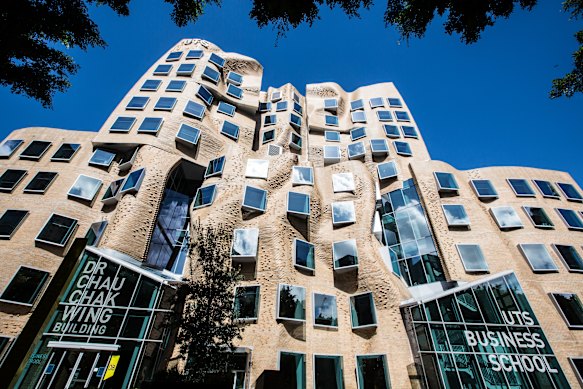
The late Pritzker Prize-winner Frank Gehry’s “crumpled” 12-storey UTS Business School (also known as the Dr Chau Chak Wing Building) is affectionately known as the “paper bag”. Power says he was inspired by the idea of a treehouse – a growing, learning organism with many branches of thought. See uts.edu.au
Royal Melbourne Institute of Technology, Melbourne, Vic
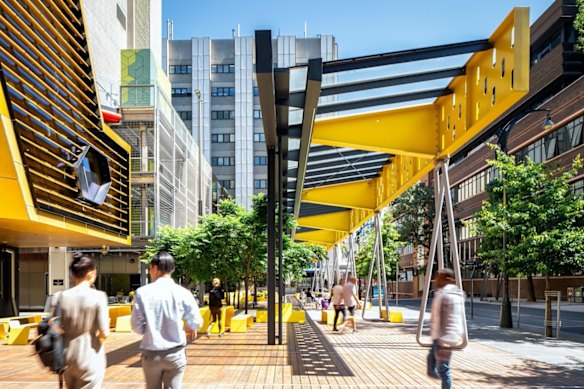
RMIT’s Doyle swoons over his own workplace and Lim is also an admirer of the buildings that comprise New Academic Street – part of RMIT’s Melbourne City campus. “[The project] transformed a whole block of Swanston Street”, says Doyle. “The Garden Building is one of my favourites – it’s innovative in its use of mass timber. It’s four storeys with a passive ventilation system – I take my students inside there because it’s an amazing case study of what a building can be.” For Lim, Edmond & Corrigan’s Building 8 is a “postmodern masterpiece”. See rmit.edu.au
Translational Research Institute, Brisbane, Qld
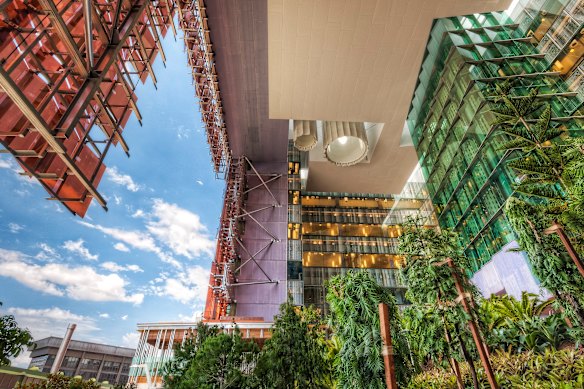
This Princess Alexandra Hospital building, by Wilson Architects and Donovan Hill, is an unlikely pick but “for those interested in how Queensland architecture can show itself in a large-scale building, it’s worth a visit”, says Ross. “It’s such a thoughtful building – the atrium is completely open, and it finds the breezes.” See tri.edu.au
PUBLIC + PRIVATE
Shine Dome, Canberra, ACT
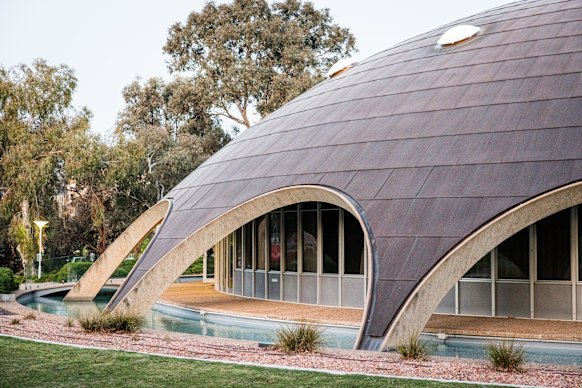
Designed by Melbourne-born architect Sir Roy Grounds (who also designed the NGV) and completed in 1959, the Shine Dome “has a bold, futuristic shape that still feels striking today”, says Butler. “However, the real gem is its central auditorium with a single encircling wall under the soaring apex of the dome – complete with famously comfortable seating designed to feel like ‘the back seat of a Humber’.” See shinedome.org.au
Federation Square, Melbourne, Vic
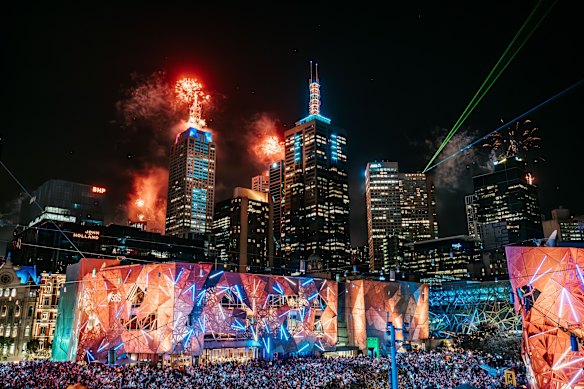
“It was an enormous undertaking at that time.” Doyle says, altering “Melbourne’s orientation [and] creating an anchor point to the south end of the CBD that didn’t exist before. The square itself and the bowl that’s created through the shaping of the landscape is an iconic location for music, for events, for protests – it’s a public confluence that never existed before.” See fedsquare.com
Bondi Pavilion, Bondi Beach, NSW
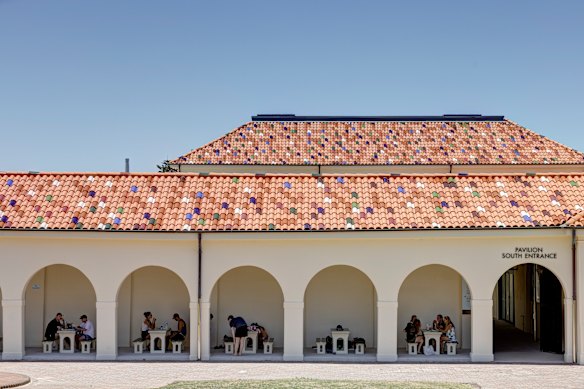
“The pavilion is both historic and closely connected to daily beach life,” McMahon says. “Following its restoration it remains familiar, featuring open verandahs, community-focused social spaces and uninterrupted ocean views that enhance its iconic status. It embodies adaptive reuse, blending original character and modern function while serving the community.” See bondipavilion.com.au
High Court of Australia, Canberra, ACT
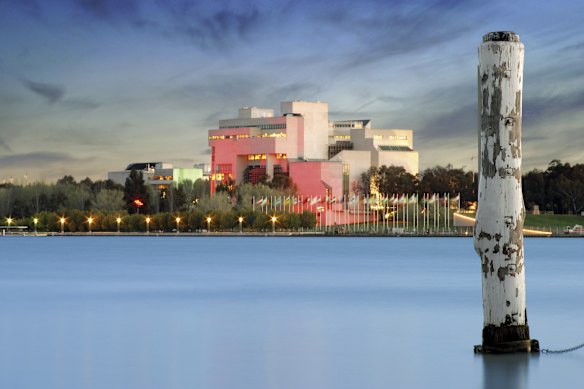
For Lim, it’s the brutalist building’s monumentality that stands out. She admires its bush-hammered concrete, its expansive glass facade, its “dramatically voluminous” 24-metre-tall public hall with sculptural concrete pillars and the large ceremonial ramp traversing the building and connecting courtrooms to the hall. See hcourt.gov.au
Holy Spirit Catholic Church, Perth, WA
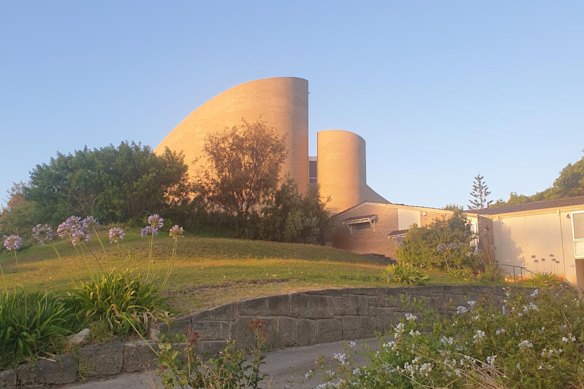
“Completed in 1974 by Forbes and Fitzhardinge Architects, this City Beach church is a surprising addition to a suburban hilltop,” says Butler. “A series of curved brick walls sweep around the site’s topography, internally and externally. For me, this building is like suburban Perth’s Ronchamp [Le Corbusier’s iconic French chapel].” See holyspiritcitybeach.com.au
Waterloo Community Centre, Sydney, NSW
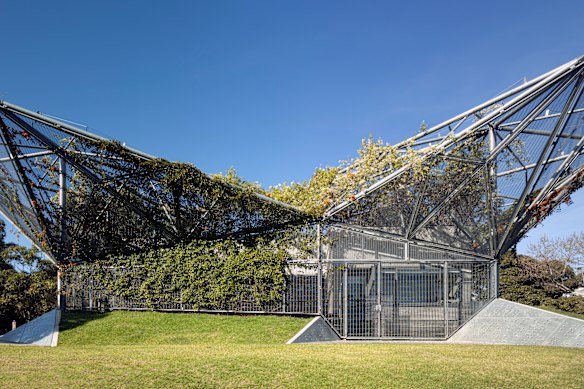
The most delightful time to view the centre, also known as Weave Youth & Community Services, says Lim, is “winter when the trumpet vine blooms bright orange”. “A clever metal mesh crown structure allows plantings to take over, changing with the seasons.” See collinsandturner.com
State Library of Queensland, Brisbane, Qld
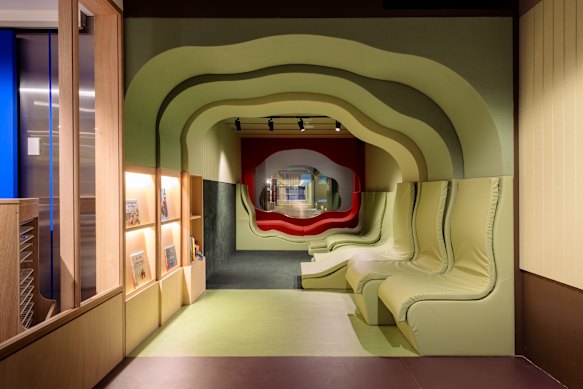
Butler says this South Bank building, also a Doyle favourite, is “often described as one of Australia’s great public living rooms”. “Originally designed in the 1980s by Robin Gibson and Partners, and redeveloped by Donovan Hill and Peddle Thorp Architects in 2006, it’s an open and welcoming space,” she says. “It’s a remarkably porous building with overlapping indoor and outdoor spaces, making the most of Brisbane’s subtropical climate.” See slq.qld.gov.au
Reader’s Digest Building, Sydney, NSW
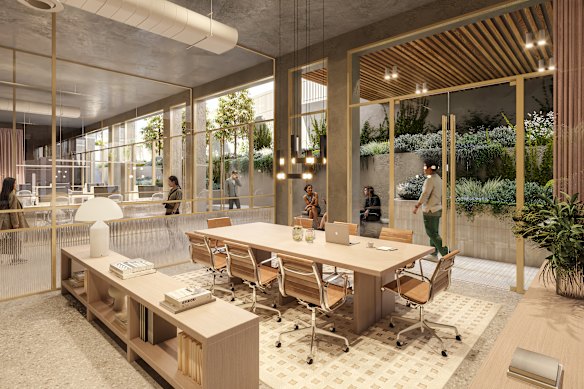
”John James’s Reader’s Digest building in Surry Hills is as unusual – a bit gothic, a bit brutalist – and as eclectic as its architect,” says Power. “Now being updated, it has exterior sculpture, a rooftop garden and a Mad Men-type interior. Home to the Digest for years and built around a floor-sized computer, it was James’s last hurrah in architecture before he quit Australia to study French gothic cathedrals.” See johnjames.com.au
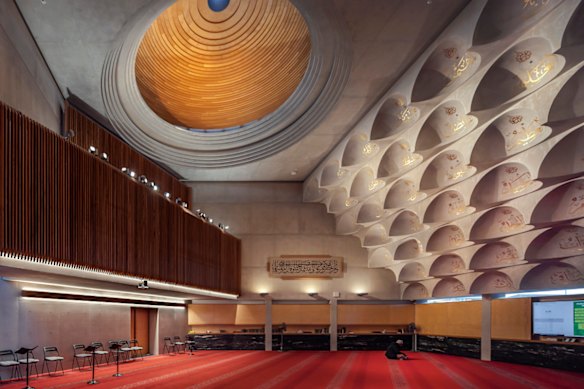
Punchbowl Mosque, Sydney, NSW
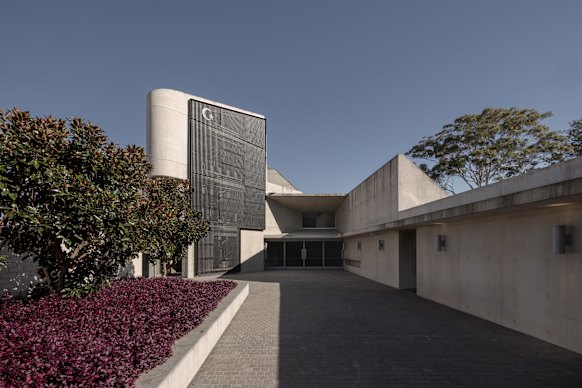
“This incredible building reinterprets traditional mosque architectural features through an artful concrete structure, light and volume,” says Lim. “The 99-concrete-domed ceiling brings pinholes of natural light into the main hall.” See candalepas.com.au
Dorney House, Sandy Bay, Tas
“This is one of the greatest houses in the country,” Ross says of the circular modernist family home that architect J. H. Esmond Dorney built in 1978 in the prestigious Hobart suburb of Sandy Bay. “The City of Hobart owns it [and] they’re still trying to work out what to do with it.” See hobartcity.com.au
STADIUMS + LEISURE
Prince Alfred Park Public Pool, Surry Hills, NSW
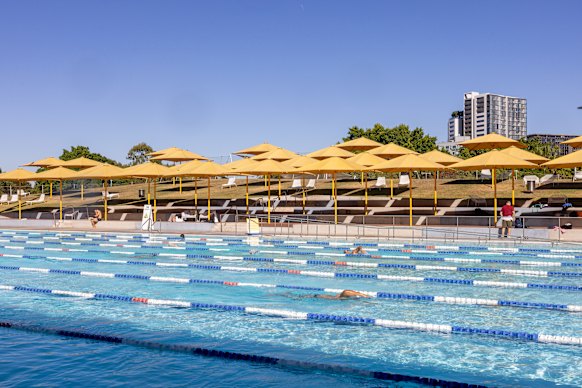
A public swimming pool is a great public living room and the 2004 decision to revitalise the near-derelict Prince Alfred Park Pool was a wise one, says Butler. “The Neeson Murcutt Architects/Sue Barnsley Design collaboration produced a space where buildings sink into the landscape for privacy from the adjacent park. The delightful yellow umbrellas are almost a signpost for the pool’s location.” See cityofsydneyleisure.com.au
AAMI Park, Melbourne, Vic
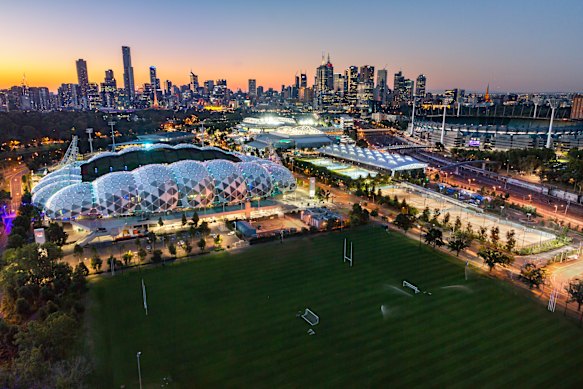
Most major Australian sports stadiums are utilitarian affairs, not architectural statements, says Dennis. Sydney’s Olympic Stadium is praised for its mammoth temporary seating capacity for the 2000 Games but never for its design. An exception is Melbourne’s rectangular Cox Architecture-designed AAMI Park. The boutique, 30,000-seat stadium with its cumulus-like “geodesic dome” roof won a major prize at the 2012 World Stadium Awards, and deservedly so. See aamipark.com.au
Wylie’s Baths, Coogee, NSW
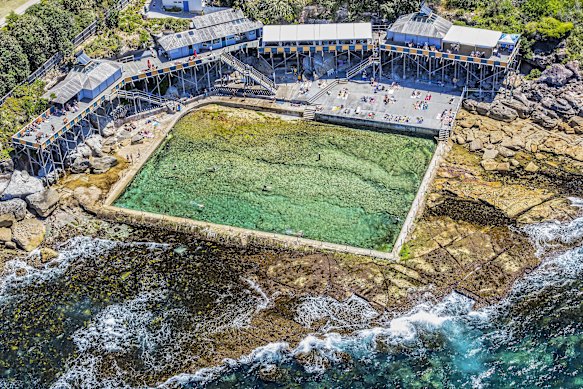
Built by swimmer and amateur builder “Harry” Wylie, and later a heritage restoration by Allen Jack + Cottier, the baths are perched on cliffs south of Coogee. “The timber-framed deck structure houses change rooms, a tuck shop and more,” says Lim. “While below, bathers seek shade under the structure or sunbathe on the concrete and sandstone rock beds. Watch out for urchins in the pool.” See wylies.com.au
Adelaide Oval, Adelaide, South Australia
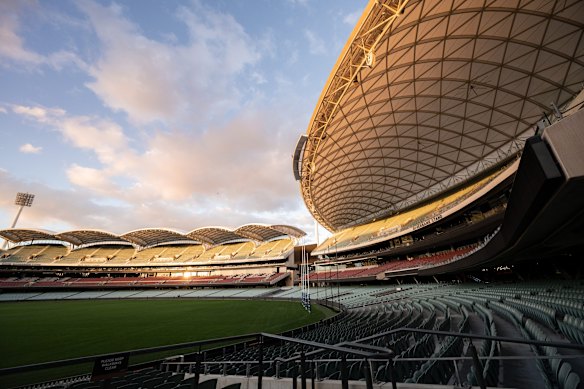
The bold, if not risky, collaborative redevelopment and redesign by Cox Architecture, Walter Brooke and Hames Sharley 12 years ago of this icon of South Australian sport has proved an aesthetic and functional triumph, says Dennis. Today, with seating capacity of more than 50,000, Adelaide Oval, which dates to 1873, is considered one of the world’s most beautiful cricket grounds for players and spectators alike. The behind-the-scenes tour is a must for sport and architecture fans alike. See adelaideoval.com.au
KGM Centre, Melbourne, Vic
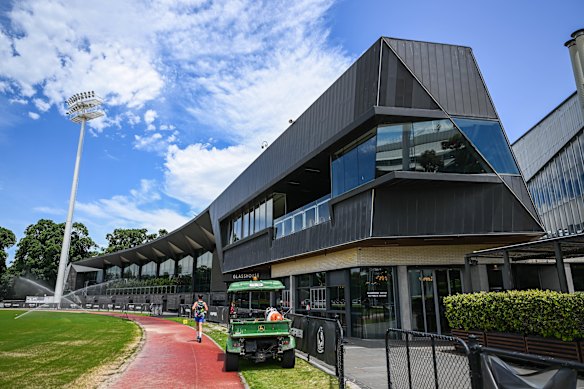
The radicalness of what was originally the 1956 Melbourne Olympics swimming venue stems from its structural gymnastics, says Doyle. “When it was built, it was this upside-down triangle and part of what’s called the heroic Melbourne period – an era when modernism was landing in Melbourne. This building [now home to Collingwood Football Club] is a confident assertion of that and what Australian modernism might look like. Architects Peter McIntyre and Kevin Borland were also very young, which is astonishing. It’s part of the built legacy of those Games.” See afl.com.au
So, what did we miss? Leave a comment below or write to Traveller at travellerletters@traveller.com.au in 100 words or less with your own choice and criteria of a worthy, must-visit Australian building. We’ll publish the most interesting correspondence at a future date.
Disclaimer : This story is auto aggregated by a computer programme and has not been created or edited by DOWNTHENEWS. Publisher: www.smh.com.au




