
Private health insurers are paying out more high-cost claims than ever before, and maternity claims are skyrocketing, as new figures reveal which hospital services have the heftiest price tags.
Insurer payments of more than $10,000 accounted for half of all hospital benefits paid out in 2025, an Australian Health Fund Council analysis found, reflecting the increasing complexity of patients’ needs and rising healthcare costs.
The council’s chief executive, Dr Rachel David, said the report should give the federal government pause as it prepared to abolish private health insurance rebates for over-65s.
Claims in the tens and hundreds of thousands of dollars increased by 9.2 per cent year-on-year, the report found. The musculoskeletal system and connective tissue diseases accounted for 27.6 per cent of large claims, while circulatory system-related issues took a 19.5 per cent share.
The largest single claim was $1.07 million for a baby with a congenital heart condition who spent almost 300 days in a public hospital.
Payouts above $10,000 for maternity and childbirth almost doubled in five years from about $182 million in 2020 to $348 million in 2025. The number of pregnancy-related high-cost claims soared by 82 per cent.
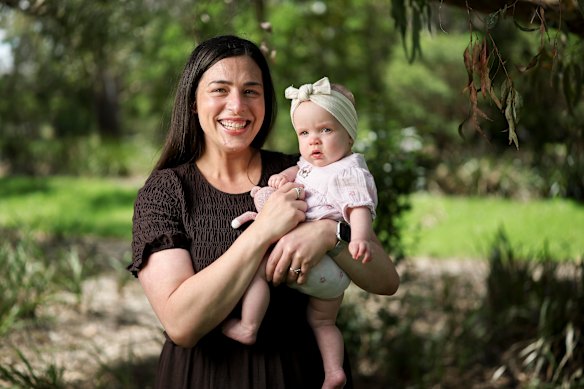
Jennifer Morganella was unexpectedly hospitalised 22 weeks into her pregnancy after experiencing numerous bleeds, which increased her risk of preterm birth.
Morganella was confined to a Melbourne hospital bed for two months over Christmas. She said she felt an overwhelming sense of gratitude for the care she received but was also anxious about the disability risk and chance of survival for her baby.
“I just knew how much each day had purpose and what it was giving my baby,” she said. “Waking up and seeing the care board updated with a new increasing gestation was a celebration.”
Morganella’s daughter, Hazel, was born by emergency caesarean at 30 weeks. She spent six weeks in special care: “I got that 45 seconds of her on my chest and a little kiss, and then she went off to NICU.”
Morganella and Hazel’s combined 100 days in hospital and life-saving care at an estimated cost of $100,000 was covered by her health insurer.
Associate Professor Serena Yu, from the University of Technology Centre for Health Economics Research and Evaluation, said resource-intensive neonatal and maternity care was not only life-saving but life-changing: “You’re essentially buying 80 years’ worth of a productive, healthy life for that newborn.”
Yu said health insurance data underrepresented the demand for this care, since public hospitals most often treated the sickest babies or highest-risk pregnancies not covered by private health insurance.
Morganella’s obstetrician, Dr Stephen Cole, said if Hazel had been born at 25 weeks instead of 30, she may have been left with a severe chronic disability: “It’s not just about length of life; it’s about quality of life.”
Cole said the rise in hospital claims above $10,000 could potentially be attributed to the introduction of new technologies and also to demographic changes, as women give birth at increasingly older ages and higher body mass index, which come with more interventions.
The rise in elective caesareans performed in the private system could be a contributor, Yu said.
She said some families may take out private health insurance specifically to have a caesarean birth at a private hospital with the doctor of their choice, and even the most uncomplicated c-sections now cost more than $10,000.
Pregnancy, childbirth and newborn care accounted for 6.2 per cent of all high claims in the 2025 report, the sixth-highest category.
Neoplasms, which include cancer care, took up an 8.2 per cent share, while injury, poisoning and external causes accounted for 8.2 per cent.
David said Australians increasingly required more complex and expensive hospital care due to the ageing population, demand for intensive mental health treatment and advances in medical technology.
“Many of the older Australians represented in this report have extremely complex healthcare needs,” she said. “If we make health insurance unaffordable … their need for healthcare won’t disappear, it will shift into the busy public hospital system.”
A federal government spokesperson said the move would have minimal impact on health fund membership, which would grow over the coming years, and accused the insurance industry of presenting modelling that suggested dramatic impacts that never eventuate.
“Insurers and hospitals need to work together and take responsibility for driving change in this sector,” the spokesperson said.
Patients aged 75 to 79 had the highest proportion of claims over $10,000, but among the five most expensive individual claims were a woman in her early 20s whose heart-imaging claim cost $650,000 and a woman in her late 30s with a $598,000 claim for heart valve disease treatment.
One in three hospital high-cost claims for young people aged between 18 and 30 in 2025 were for psychiatric and addiction treatments.
Start the day with a summary of the day’s most important and interesting stories, analysis and insights. Sign up for our Morning Edition newsletter.
From our partners
Disclaimer : This story is auto aggregated by a computer programme and has not been created or edited by DOWNTHENEWS. Publisher: www.smh.com.au