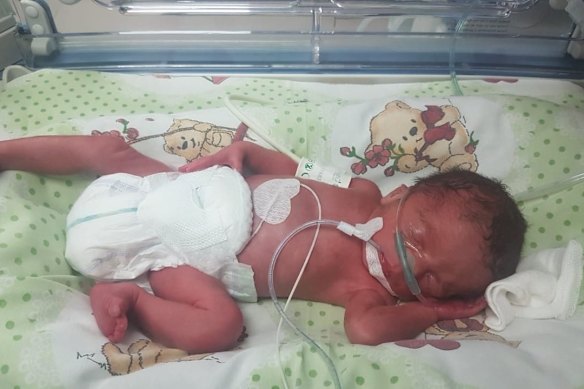
The new parents said they learnt of their son’s arrival from a photo of a tiny pink newborn lying in an incubator in an Eastern European hospital.
Jim and his wife thought it had to be a mistake. Their son, conceived using in vitro fertilisation and implanted in a surrogate named Maia* via a commercial arrangement, wasn’t due for another three months. They were supposed to receive a text when their surrogate was admitted to the hospital.
Moreover, their baby was due to be born in Russia. This baby was in Georgia.
“[We thought], it’s not our son,” Jim said. He soon received an email from censured Melbourne lawyer Paul Norris-Ongso, whom he had paid $150,000 for his company Global Surrogacy’s services. It only added to their confusion.
“As you have heard by now, there is a good chance your baby is on the way,” Norris-Ongso wrote, attaching additional invoices, but seemingly unaware of the text telling them the birth had already taken place.
“We will get you some documents to prove the pregnancy [to] overcome travel restrictions.”
After the initial chaos, the couple learnt their baby had been born three months premature. It would take four months, battling pandemic restrictions, before Jim’s wife could reach their son in Georgia.
It took almost a year to return to the family’s coastal NSW home as they fronted thousands in unpaid hospital fees and battled for parental rights in a Georgian court.
The ‘crazy car salesman’ allegedly leaving families stranded
Norris-Ongso and his company, Global Surrogacy, have been accused of running an unethical surrogacy practice, linking international clients with women in developing countries to carry their children, and cashing in on a burgeoning billion-dollar industry. The company has since rebranded to KinPath Surrogacy. Norris-Ongso resides in Portugal.
The global surrogacy industry has exploded in the past decade. Valued at $27.9 billion in 2025, it is projected to reach $201.8 billion by 2034. In Australia, only altruistic surrogacy – where surrogates are reimbursed just for expenses – is legal. This restriction drives parents-to-be towards commercial surrogacy abroad, where murky regulations allow unscrupulous operators to flourish.
This masthead has spoken to a surrogate, multiple clients and former staff, all of whom raised concerns about Norris-Ongso’s behaviour and Global Surrogacy’s operations.
Allegations arising in some but not all cases include presenting contracts which auto-delete to surrogates and do not include the clauses and services promised in the intended parents’ contract; failing to lodge citizenship paperwork for the babies, leaving families stranded abroad for months with stateless newborns; holding genetic material “hostage” to demand additional fees; and failing to provide adequate medical and psychological care for surrogates in developing nations.
Some clients have been wary of speaking publicly after legal threats from the former lawyer. Another raised concerns that they may not be able to access their embryos stored abroad if they severed ties with the company.
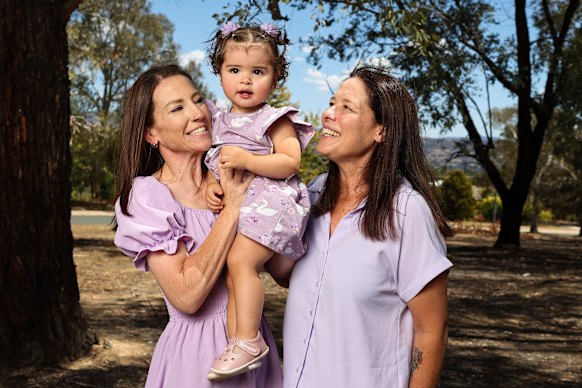
One former client, Melinda McCann, described Norris-Ongso as a “crazy car salesman” who “exploited” Colombian surrogate Dana Martinez. Martinez alleged she was told to ignore medical direction after a significant bleed and felt she was treated as “disposable” by the company.
Norris-Ongso denies any wrongdoing or running an unethical practice.
A ticket to Russia and an unpaid invoice
Nothing about the birth of Jim’s second child went as planned. Jim’s first child was born via a surrogate, an experience that was “no dramas”, he said. His experience with Norris-Ongso was vastly different.
Jim asked that his surname, his wife’s name, and his children’s names not be used to protect their children’s privacy.
The couple signed up with Global Surrogacy in 2019. “Norris-Ongso was a bit chaotic to work with initially, but we pushed through it,” Jim said. The couple were matched with a surrogate in Georgia who would travel to Russia, where the citizenship process was more straightforward, to give birth.
Their payment schedule, seen by this masthead, showed the surrogate would be paid $26,000 for delivery from the nearly $150,000 total contract. The surrogate would be paid an additional $1500 if she gave birth to twins, and $3000 if she had to have a hysterectomy due to complications.
When they received news about their son’s birth, it was the beginning of the pandemic. Within weeks, borders shut, flights were cancelled, and the world was plunged into lockdowns as the virus spread. Georgia banned entry to foreign nationals, and Australia banned citizens from leaving.
‘I think now is the time to advise others, including the relevant government departments of your gross incompetence.’Jim’s email to Paul Norris-Ongso
As Jim’s wife arranged an exemption, the family transferred Norris-Ongso over $16,000 for hospital fees, emails between Jim and Norris-Ongso note.
However, when Jim’s wife went to leave the hospital with the baby once he was healthy enough, the couple were told there was still nearly $10,000 in outstanding invoices. An email from the hospital stated that Norris-Ongso had paid only $10,000 for the first two months of care.
“They have not credited other invoices we have paid,” Jim wrote in an email to Norris-Ongso, adding his wife would pay with a credit card, so their baby could be discharged.
Invoices showed the couple paid $10,000 directly to the hospital upon discharge.
A court intervention
Then the family’s second nightmare began: Norris-Ongso had allegedly failed to lodge the correct parental responsibility paperwork, and they were unable to apply for the baby’s citizenship.
‘Paul wouldn’t answer any calls, no emails. He completely abandoned the show over there.’Jim, Global Surrogacy client
The couple were forced to hire a solicitor and enter the Georgian court system. A letter from their Georgian solicitor stated that the civil registry refused to register Jim and his wife as the baby’s parents, as the surrogacy agreement was not notarised as required under local law. Jim said they had to ask the surrogate to testify to the arrangement.
“They wouldn’t let us leave the country,” Jim said. “The judge said … he’s a Georgian citizen.”
The court eventually granted parental rights after a hearing, leaving them thousands out of pocket in legal and administrative fees. They then applied for the baby’s Australian citizenship.
“[Norris-Ongso] wouldn’t answer any calls, no emails,” Jim claimed. “He completely abandoned the show over there.” Emails to Jim from Norris-Ongso stated his messages to Jim weren’t going through.
The family finally arrived in Australia in early 2021, just before their son’s first birthday. Invoices show they spent $44,000 on accommodation from the time of the baby’s hospital discharge to when they departed for Australia.
Jim requested a refund of more than $26,000 for the double-paid neonatal intensive care unit and legal costs, which Norris-Ongso acknowledged in emails to Jim was accurate. A few months later, Jim warned he would launch recovery action.
“It is necessary for other potential parents not to experience what we have gone through with you, and the significant trauma you have put [us] through,” Jim wrote.
“I think it is important that others are warned about you. I think now is the time to advise others, including the relevant government departments of your gross incompetence.”
Norris-Ongo responded by acknowledging some refunds were due but claimed Jim’s own payments had been “significantly delayed”. “It has been taking longer to repay you … because of the significant effect [the] COVID-19 pandemic has had on the company’s business,” he wrote in an email.
He added a legal threat: “Should you publish any information beyond the summary above, I will be sure to defend and protect my company’s reputation”.
Jim was eventually reimbursed for the hospital and legal fees owed, around 18 months after the birth, emails show.
Norris-Ongso declined to respond to individual questions but provided a general statement.
“The pandemic, lockdowns and border restrictions significantly disrupted international surrogacy programs,” he said.
“It became impossible in some cases to complete programs exactly as originally designed, and all parties involved were required to find practical solutions in exceptionally difficult circumstances.”
An embryo ‘hostage’
Sydney couple Peter* and Stephen* signed a contract with Global Surrogacy in 2023 for two babies, to be born using the same egg donor with each of their genetic material to two Colombian surrogates, so they could have siblings close in age. They have asked for pseudonyms to be used.
Their $184,000 contract, seen by this masthead, stated the double program was offered on the assumption that two pregnancies would occur within three months of each other, with the fees fixed for one year. They transferred the bulk of the sum.
As the first surrogate’s pregnancy progressed, the pair tried for a second. But after the second surrogates’ transfer failed to take, Peter said Norris-Ongso’s responses started becoming slower and more sporadic. He communicated with the pair via the encrypted messaging app Signal.
Norris-Ongso requested the couple pay for an additional surrogacy program, claiming they no longer met the criteria for the double program due to using an embryo with different genetic material to the original plan. He requested an additional $61,000.
Peter alleged that when the fertility clinic was ready to proceed with the second surrogacy using an embryo from the same IVF cycle that resulted in the successful pregnancy, Norris-Ongso intervened on multiple occasions, stopping the process to demand more money.
“It was very nasty timing … He went back on his word,” Peter claimed. “He held us captive because we had embryos, DNA material [with him],” Peter claimed.

Peter said that their first surrogate also suffered “significantly delayed” payments from Global Surrogacy, receiving her delivery fee three months after the birth, mirroring the experience of surrogate Danna Martinez.
He also claimed Norris-Ongso failed to lodge citizenship paperwork correctly. The couple requested assistance from Australian politicians and lodged the documentation themselves, leaving Colombia over a month later than planned.
“We were running out of visa, which meant we had to leave the country, but [our baby] couldn’t,” Peter said.
Norris-Ongso said genetic material was held by independent clinics, and he and his company could not hold genetic material “hostage”. He said even when there were invoices owed to Global Surrogacy or the clinic, “the clinic released medical files and material upon request by the client”.
Another couple, who were also matched with a surrogate in Colombia and requested their names not be used, said their surrogate needed psychological support and struggled with attachment to the baby, trying to give parenting advice after the child was with them.
The surrogate, who had heard warnings about other surrogates not being paid on time by the company, then hired a lawyer and refused to sign parental rights paperwork until she was paid in full, text messages seen by this masthead showed.
The couple said they had concerns about Norris-Ongso’s legal advice after allegedly finding errors in the documentation he provided, and they submitted the citizenship paperwork themselves.
Norris-Ongso previously said surrogates were told they would be paid in instalments after birth to avoid tax, contrary to what their contracts stated.
Norris-Ongso declined to comment on specifics, saying that it wasn’t appropriate or fair to publicly discuss private contractual disputes. “This obligation we have is not always reciprocated by the [clients],” he said.
“Not every complaint by [clients] presents the full picture.”
Allegations of legally dubious and ethically exploitative practises
Norris-Ongso is also accused of using his legal background to issue aggressive threats to silence clients and colleagues from speaking up about what they saw as his unethical practises.
He told this masthead the company would “vigorously defend our reputation, including in this case”.
The former corporate and civil lawyer launched Melbourne-based surrogacy advocacy law firm IPT Law in 2009 following his own surrogacy journey, before launching Global Surrogacy in 2012. It became insolvent and unable to pay its debts in 2021, according to documents lodged with the Australian Securities & Investments Commission.
In 2019, Norris-Ongso registered his company in Hong Kong as GloSurr HK, according to the country’s company registry, which lists it as an “international fertility and consultancy agency”.
Entering into a commercial surrogacy arrangement is a criminal offence in Hong Kong. Several former clients told this masthead they considered legal action; however, their contracts stated Global Surrogacy’s operations were governed by Hong Kong law, which would be unlikely to recognise their suit.
“All corporations have been established with the assistance of legal counsel,” Norris-Ongso said. “I am comfortable with our operations.”
In June 2025, the company rebranded as Kinpath Surrogacy, with Norris-Ongso listed as director and his husband as shareholder. The company also recently registered in Delaware, US, and has offices in Hong Kong and the US.
In 2021, Norris-Ongso was subject to disciplinary action by the Victorian Legal Services Commissioner for “unsatisfactory professional conduct”. He doesn’t hold a current practising certificate in Australia. He is listed on the Kinpath Surrogacy website as an “Australian lawyer”, but it does not indicate he does not currently hold a practising certificate.
Norris-Ongso said details on the regulators’ disciplinary action were related to overcharging a client and directly receiving and forwarding a client’s payment to a surrogacy agency, but said further information was “none of [this masthead’s] business”.
“I am a lawyer. I do not hold myself out as a practising lawyer or suggest to anyone that I am giving them legal advice,” he said.
Multiple clients contacted by this masthead reported being threatened with defamation lawsuits by Norris-Ongso, alongside Jim.
In 2016, Sam Everingham of surrogacy consultancy Growing Families was forced to apologise after Norris-Ongso launched defamation proceedings for social media posts questioning Global Surrogacy’s ethics, fees, and “exploitative” practices.
Andy Leonard, who ran a surrogacy Facebook page, was left $25,000 out of pocket after a user left a negative comment on the page, viewed by just six people. He eventually settled with Norris-Ongso for $3000 but incurred exorbitant legal fees. The actor and father of two was forced to move, take on extra work, and has launched a GoFundMe to recoup his losses.
Responding to questions put to him by this masthead, Norris-Ongso said he had successfully “brought a claim against Everingham and his cronies on multiple occasions”.
Kinpath Surrogacy’s website states the company operates in 12 countries and has led to over 220 births.
“KinPath stands for transparent, ethical and professional surrogacy programs,” Norris-Ongso said. “We respect and protect surrogates, including by continuing to support and reimburse them in difficult circumstances.”
A ‘seedy’ industry
Surrogacy lawyer Sarah Jefford said none of the allegations published by this masthead were surprising, warning the international surrogacy industry could be “seedy”.
She said, commonly, surrogacy agencies advertised to Australian clients with “guaranteed baby packages”. The arrangements were often secret, with staff flying in to meet parents-to-be in hotel lobbies. Operators worked behind a “smokescreen”, based offshore from the surrogates, and clients had no clue how the chain of command worked, sending tens of thousands of dollars into the ether.
She said companies often established themselves in countries where no legal action could be brought by clients, such as where adoption by gay parents was illegal, like in Georgia, or in Hong Kong.
There was zero regulation or recourse for what happened abroad, she said: “They can advertise here, drag them overseas and take all their money.”
Companies frequently rebranded, she said, meaning many operated with “impunity”.
“There is no entitlement or right to have a child, but people will do whatever it takes, and people can have some sympathy for that,” she said, adding many clients had experienced stillbirths or spent their life savings on fertility treatments.
She warned for-profit service providers could facilitate commercial surrogacy abroad and “face no consequence” for encouraging Australians to engage in surrogacy arrangements in countries where surrogacy had “proven to be unregulated, unethical, exploitative and risky”.
She said it also wasn’t unusual for parents to pay more than $100,000 only for surrogates to receive less than $5000.
In November, the Australian Law Reform Commission released a discussion paper, for which Jefford was consulted.
The discussion paper, released in November, noted that financial and administrative barriers drove Australians abroad. Attempting to criminalise commercial surrogacy drove the practise underground, while current laws didn’t target the “appropriate actors”.
The commission suggested establishing a national regulator to oversee standards, alongside surrogacy support organisations, to facilitate ethical domestic matches.
*Names changed for privacy.
Be the first to know when major news happens. Sign up for breaking news alerts on email or turn on notifications in the app.
Disclaimer : This story is auto aggregated by a computer programme and has not been created or edited by DOWNTHENEWS. Publisher: www.smh.com.au