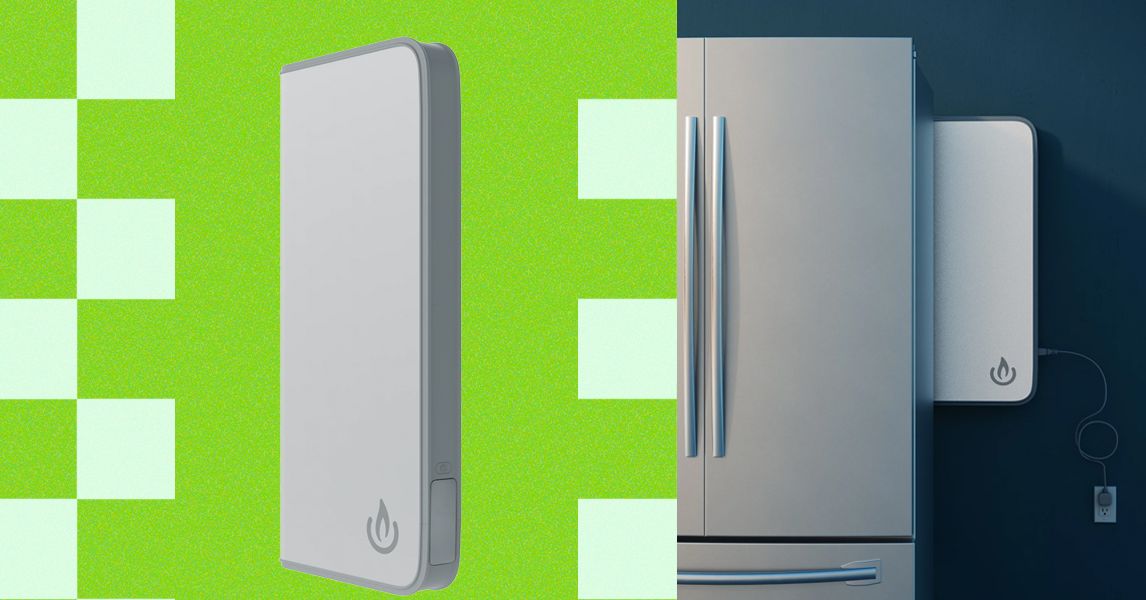
As with all home batteries, there’s some bonus value in Backup to be found in running the battery when there’s not a power outage. That’s because you can take advantage of Time of Use (TOU) rate billing from your utility, running off of battery power during peak times when rates are high (usually the afternoon and evening), and drawing from the grid and recharging the batteries when rates are low. I had to do some research to find out if my utility provider even offered TOU billing, as I’ve had a conventional, static rate plan since we moved into this house four years ago. Turns out they did, and I promptly switched over to the new one to give this a try.
It’s easy to set up a battery schedule in the Backup app: Just set the time each day you want the battery to kick in and the time for it to switch back to grid power under the Scheduling tab. Charging can be paused during certain times of the day as well, and you can set a lower limit for how far the batteries can drain. Weekends can be excluded from all of this at your discretion.
Unfortunately, that’s it: You can’t set multiple on/off cycles during the day (my provider has two peak disconnected billing times during the winter, so this would have been nice), nor can you set different schedules for different times of year (again, my provider has three different billing schedules, depending on the month). If you’re going to spend thousands of dollars on backup batteries, it would be useful to be able to really fine-tune how they’re used. I did encounter one bug when trying to save the schedule, but a quick force-quit and restart ultimately got everything working fine.
The other missing feature is a log. Power nerds like me would love to see how long the battery ran each day, how much power was used during each run, how much power it required to recharge it, and potentially how much money was saved. Unfortunately, there’s no logging system at all in the Backup app aside from a simple record of when outages happened along with any errors or updates.
It’s easy to do the rough math on how much money I’m now saving. For the fall, I am able to shift four hours (5 to 9 pm) of refrigerator running time that would normally cost 8.6 cents per kWh to the BioLite batteries, which recharge after hours at 4.3 cents per kWh. While the numbers are surely imperfect due to the vagaries of energy loss among these various components, I’m now able to move 680 Wh of usage from the higher rate to the lower rate each day. Total savings: 3 cents per day, or about a dollar a month. That’s admittedly not very impressive, but in the summer months, the peak usage rate here hits 16.2 cents per kWh, moving monthly savings up to three dollars each month.
OK, still not that impressive, but not nothing.
A Costly Life Vest
One final feature of note is that BioLite ships the unit with a power strip, complete with an optional magnetic backing that lets you slap it onto the side of your fridge. This power strip attaches to a second outlet on the Backup and can be used to connect additional devices to your battery backup system. The power strip is totally optional, but it’s a capable product, with three standard outlets, two USB-A, and two USB-C plugs. Ultimately, I didn’t use it because I didn’t have anywhere convenient to place it, and nothing to plug into it anyway, but it’s a nice-to-have feature that I’ll hold onto in case the power cuts out this winter and I want to run other devices in the dark. With 1800 watts of output, the battery is strong enough to power everything from a microwave oven to an air fryer.
That’s just a small bonus to push the value of Backup by BioLite a bit further into sanity because at $1,999 for a single battery and $3,499 for the pair, the math isn’t easy to justify. Realistically, the real benefit to the system comes almost entirely from its use in case of emergency, protecting what could be hundreds of dollars of groceries from spoiling because of a random ice storm—and making it possible to cook them, too, even if the lights in the rest of the house are out.
Disclaimer : This story is auto aggregated by a computer programme and has not been created or edited by DOWNTHENEWS. Publisher: wired.com