
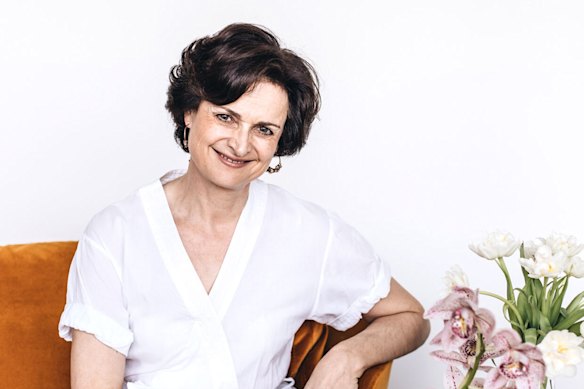

When Julie Gibbs was running Penguin’s lifestyle imprint Lantern, she declared cookbooks could take “anything from 18 months to four years” to complete. It was an estimate borne of experience: the cookbook guru had published big culinary names including Kylie Kwong, Matt Moran, Maggie Beer and Stephanie Alexander. “It is important to choose ideas with staying power,” she said.
Today her comments, from an interview with digital publication The Design Files in 2013, have come back to bite her.
For the past seven years, Gibbs has been working on the Australian Culinary Archive: a $1.5 million dollar project supported by taxpayer funding that was supposed to culminate in a “landmark” book to coincide with the Powerhouse Parramatta’s much-anticipated opening on November 7.
But the Herald can reveal there is no sign of the book, which has been in the works for four of those years. “The Powerhouse looks forward to launching the publication in 2027,” a spokesperson said.
Yet last year, the museum still hoped to meet the publication deadline.
“To coincide with the launch of Powerhouse Parramatta, Powerhouse Publishing will release a landmark publication – The Australian Culinary Archive (working title),” it said in a description of the role of archive advisor published in March last year, which was awarded to Gibbs.
In two separate roles published in October last year, the Powerhouse sought an editorial advisor and editorial support and proofreading services for “a 1000-page publication that documents the Australian Culinary Archive”. The project was described as “nearing completion”.
According to the Powerhouse’s website, France-based Australian food writer Libby Travers has been collaborating with Gibbs on the book “over the past few years”. Travers wrote on her personal blog about a 2024 research trip to the elBulli museum in Spain.
“I was there to look at the ways in which culinary history and culture can be recorded and represented – a research trip for the book I am writing with the erudite and exceptional Julie Gibbs,” she wrote. “It is a book that will tell the story of the past 50 years of cooking in Australia via the Powerhouse Museum’s Culinary Archive.”
A Powerhouse spokesperson confirmed Gibbs has been involved with developing the archive and book since 2019, while Travers was engaged to edit the book and then as editorial advisor but was not paid travel or research fees.
“The archive has been under development for seven years … at an average annual cost of $120k per year including acquisitions, fees, and domestic travel,” the spokesperson said.
“A publication to present this archive is currently in development. This has been a four-year project. The total cost is about $165k per year including editorial, design, photography, typesetting, rights and clearances costs. The rights, clearances and permissions process has been complex as it relates to materials for items that are up to 50 years old and is ongoing.”
These figures – totalling $840,000 for the archive and $660,000 for the book – do not include internal museum costs, such as staffing.
Questions over the book come amid heightened scrutiny on the museum over budget concerns. On October 13, the Herald revealed Kwong had been awarded a $440,000 contract to be a culinary ambassador for the Powerhouse a month after then CEO Lisa Havilah said her involvement was due to end.
Kwong has previously had cookbooks published by Gibbs, who described the chef as “my bestie” on social media in 2014. The Herald does not suggest either of the women participated in wrongdoing.
Havilah has stepped aside from her role pending “investigations into governance and procurement”, with NSW Government Architect Abbie Galvin stepping in as acting CEO and NSW Treasury executive Cassandra Wilkinson parachuted in as chief operating officer.
In 2020, it was estimated the archive would take “at least two years to collect” before items would be catalogued and digitised at the museum.
Designed to be “a living record of the people who have shaped Australia’s food culture”, it includes material from chefs, producers, vendors, writers, photographers, critics and diners. Objects collected include a whisk from Gibbs’ chef ex-husband Damian Pignolet, a label for chocolates sold by Sean Moran and a stool from Kwong’s restaurant Billy Kwong.
Gibbs has had three contracts in her tenure at the Powerhouse. First she was head consultant for the archive, then an “artistic associate” as part of a controversial $2.6 million program that was terminated, and since last year archive advisor. Her current contract expires in July next year, with an option to extend it by another year.
When she was awarded her first role, Gibbs told the Herald’s Good Food she felt “like the luckiest person in the world”, adding “I’m travelling all over Australia to interview incredibly influential people about the paths they’ve trodden and see what treasures are hiding in their storerooms and cupboards”.
Start the day with a summary of the day’s most important and interesting stories, analysis and insights. Sign up for our Morning Edition newsletter.
 Clair Weaver is a senior writer at The Sydney Morning Herald.
From our partners
Disclaimer : This story is auto aggregated by a computer programme and has not been created or edited by DOWNTHENEWS. Publisher: www.smh.com.au



