- Garment workers violently protest for increased minimum wages.
- Protests led to factory closures, security force deployment.
- Government alleges political interference; wage board formed.
- Unrest threatens garment industry, global supply chain implications.
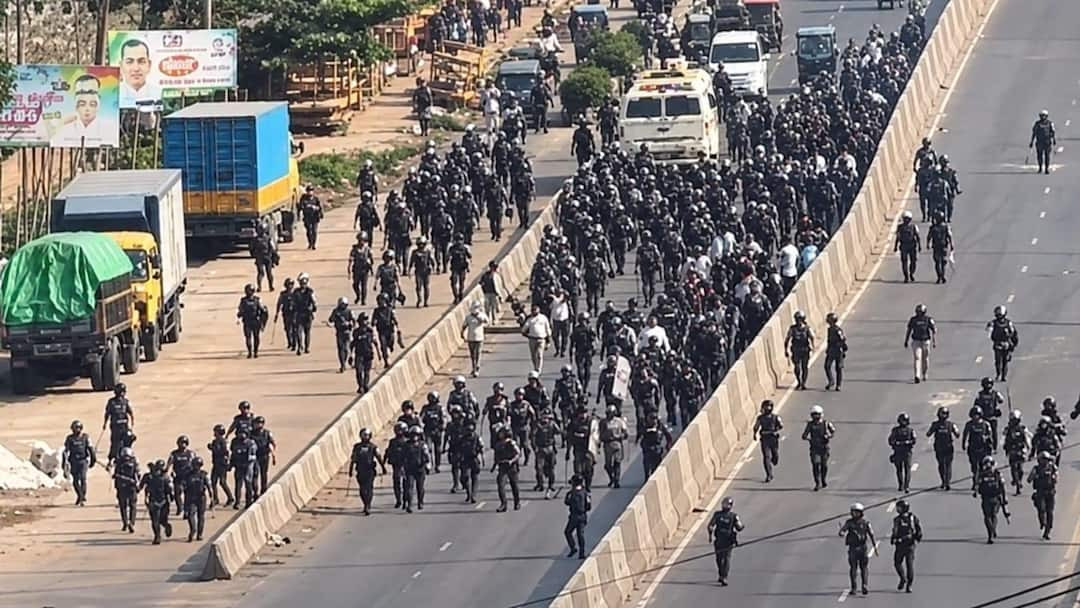
Violent protests by garment workers demanding a subtantial hike in minimum wages continued across Bangladesh for the third consecutive day on Monday, with thousands of demonstrators clashing with police, blocking major highways and setting vehicles on fire. The escalating unrest has forced hundreds of factories to shut and prompted authorities to deploy additional paramilitary forces.
Workers are demanding that their minimum monthly wage be increased more than double from 12,500 Bangladeshi taka to 30,000 taka (around $242). Demonstrations were reported in several industrial areas, including Gazipur, Ashulia, Mirpur and Narayanganj, while factories in and around Dhaka remained closed amid concerns over further violence.
According to the Bangladesh Garment Manufacturers and Exporters Association (BGMEA), 670 of around 4,000 registered garment factories in Dhaka, Gazipur and central Mymensingh have been forced to suspend operations.
Workers Block Highways, Clash With Security Forces
Hundreds of workers blocked the Dhaka-Tangail highway in Gazipur, a major industrial belt north of the capital, while demonstrators also took to the streets in Mirpur. Protesters reportedly vandalised vehicles, set tyres on fire and torched police vans.
Clashes were also reported in Ashulia and Narayanganj. Police used tear gas, water cannons and batons to disperse demonstrators, while additional Border Guard Bangladesh (BGB) personnel were deployed to help restore order.
Gazipur Deputy Commissioner Mohammad Nurul Karim Bhuiyan said 10 platoons of BGB personnel had been sent to the industrial zone. Industrial Police Superintendent Amzad Hossain said more than 150 factories in Gazipur alone had shut on Monday.
At least two BGB personnel and several others, including journalists, were injured in the clashes, according to local media reports. Sunday’s violence had left at least 50 people injured, including around 15 police personnel.
The unrest has also affected factory operations in other industrial hubs. Industry representatives said workers from at least 529 factories in Dhaka and surrounding areas, including Savar, Ashulia, Jirani and Gazipur, had left their workplaces.
Wage Board Formed, But Protests Continue
The demonstrations have continued despite the government’s announcement on Sunday that it would set up a wage board to review the existing pay structure and recommend revised minimum wages.
The board, headed by Senior District and Sessions Judge Sheikh Ashfaqur Rahman, includes representatives of workers and factory owners, as well as independent experts.
Labour leaders, however, say the formation of the board has not addressed workers’ immediate concerns over pay, inflation and rising household expenses. The current minimum monthly wage is 12,500 taka, while protesters are seeking 30,000 taka.
PM Rahman Convenes Emergency Meeting
The unrest prompted Prime Minister Tarique Rahman to convene an emergency meeting late Sunday with the Home Minister, Labour Minister and other senior ministers to discuss the situation.
Home Minister Salahuddin Ahmed said the prime minister had directed the government to protect workers’ rights and improve their living standards while ensuring that production and exports were not disrupted. He also urged law enforcement agencies to take action against those involved in violence and disorder.
“We are requesting law enforcement agencies to crack down on those involved in violence, unruly behaviour and unnecessary indiscipline and unrest,” AFP quoted Ahmed as saying.
Labour and Employment Minister Ariful Haque Choudhury had urged workers to return to their jobs following the wage board announcement, expressing hope that it would begin its work at the earliest.
Government Alleges Awami League Role In Unrest
The government has also alleged that supporters of the banned Awami League are attempting to fuel the protests and destabilise the country.
Home Minister Ahmed claimed that some factory owners associated with the party, along with former lawmakers and junior ministers, were involved in creating unrest. Prime Minister Tarique Rahman had also linked the situation to alleged attempts to destabilise Bangladesh ahead of December.
Labour and Employment Adviser Mahdi Amin said the government had found evidence of attempts by fugitive forces to infiltrate the workers’ movement, in an apparent reference to the Awami League. He warned that those involved would face legal action.
Dhaka Metropolitan Police have arrested at least 14 factory workers and leaders and activists of the disbanded Awami League over alleged involvement in sabotage and vandalism during the past two days. Police said the arrests were linked to acts allegedly carried out under the cover of the garment workers’ wage movement.
Awami League Condemns Crackdown On Garment Workers
The Awami League has criticised the authorities’ handling of the protests, alleging that garment workers demanding better wages amid rising inflation are facing police crackdowns and intimidation.
In a post on social media, the party referred to videos purportedly showing men carrying bamboo sticks and allegedly threatening violence against protesting workers. It also raised concerns over reports of armed intimidation and the detention and assault of workers.
“Where are the UN and international human rights organisations? Workers’ rights must not be selective. Stand with Bangladesh’s garment workers. Fair wages, dignity, and justice are non-negotiable,” the post read.
Garment workers demanding fair wages amid soaring inflation are facing police crackdowns, while videos show men carrying bamboo sticks and allegedly threatening violence against them. Reports of armed intimidation and the detention and assault of workers raise serious questions about workers’ safety, freedom of protest, and the protection of labour rights. Where are the UN and international human rights organisations? Workers’ rights must not be selective. Stand with Bangladesh’s garment workers. Fair wages, dignity, and justice are non-negotiable. #RMGWorkersProtest #Bangladesh #BNP
— Bangladesh Awami League (@albd1971) November 2, 2026
Bangladesh’s Garment Industry Faces Disruption
Bangladesh is the world’s second-largest garment exporter after China, and the sector is a major source of the country’s export earnings. It employs more than four million workers and accounts for over 80 per cent of Bangladesh’s total exports, according to the supplied reports.
The industry exported garments worth $38.70 billion in the 2025-26 fiscal year, BGMEA figures cited by PTI showed. Bangladeshi garment products are sold in more than 150 countries, with Europe and the United States among the key markets.
Factory owners have cited falling orders, stagnant prices and higher raw material import costs as obstacles to meeting the workers’ demand for a substantial wage increase. Exporters have also warned that prolonged unrest could lead to order cancellations by Western buyers.
With workers continuing their demonstrations and factories suspending operations, the wage dispute has become a major challenge for Bangladesh’s garment sector.
(With agency inputs)
Disclaimer : This story is auto aggregated by a computer programme and has not been created or edited by DOWNTHENEWS. Publisher: abplive.com