Brought to you by BULLS N’ BEARS
James Pearson
Barkly Rare Earths has notched up another processing breakthrough at its namesake rare earths project in the Northern Territory, delivering extraction rates of between 97 and 98 per cent in three laboratory tests using a potentially simpler and cheaper processing method.
Conducted by independent metallurgical laboratory Nagrom, the testwork involved heating rare earths-bearing material to temperatures of 600 and 700 degrees Celsius without adding any upfront chemicals.
The heating process is known as dry calcification and effectively prepares the rare earth minerals for extraction, potentially cutting some of the costly and complicated chemical treatment steps traditionally needed to unlock rare earths.
The material was subsequently treated with hydrochloric acid, delivering an impressive 98 per cent extraction rate for both magnet rare earth oxides (MREO) and total rare earth oxides (TREO).
‘Having two high-extraction routes now lets us optimise and compare them side by side as we work towards flowsheet finalisation.’
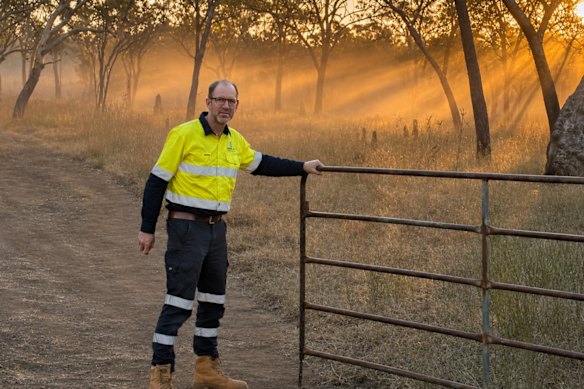
Barkly Rare Earths managing director Craig Wright
Two further tests using sulphuric acid after heating the material achieved 97 per cent MREO extraction, including one conducted at the lower calcination temperature of 600 degrees.
The real kicker is that all three tests delivered extraction rates of at least 97 per cent for the four valuable magnet rare earths – neodymium, praseodymium, terbium and dysprosium.
Those critical minerals are essential ingredients in the powerful permanent magnets used in electric vehicles, wind turbines, robotics and advanced defence technologies.
Barkly also chalked up a consistent 90 per cent yttrium extraction rate across all three tests. The heavy rare earth is increasingly sought after for aerospace alloys, advanced ceramics, lasers and defence technologies.
Importantly, only eight to 10 per cent of the treated material dissolved during leaching, suggesting the process selectively targeted the valuable minerals rather than unnecessarily dissolving large quantities of unwanted material.
The company says these findings could prove invaluable when designing a commercial processing plant, where chemical consumption, energy requirements and waste handling can make or break a project’s economics.
Another intriguing result was the extraction of between 97 and 99 per cent of the phosphorus contained in the material.
Barkly believes the phosphorus could potentially be recovered as a saleable by-product, opening another avenue to offset processing costs, although further testing is required.
Barkly Rare Earths managing director Craig Wright said: “These tests were undertaken based on our detailed understanding of the mineralogy and they support our working hypothesis that calcination may offer an effective, simpler and lower-cost processing route than a traditional caustic conversion flowsheet.”
The newest tests follow an earlier metallurgical success in August, when 99 per cent magnet rare earths extraction was achieved using a more conventional caustic conversion process followed by acid leaching.
Both methods have now demonstrated extraction rates exceeding 97 per cent in preliminary testing, giving management two options to investigate as it searches for the most economical processing route.
Next up, the company plans larger-scale tests to confirm the results, refine processing conditions and investigate upgrading the ore before chemical treatment.
The metallurgical success adds another dimension to Barkly’s ambitions at its sprawling 5030-square-kilometre project, which already hosts a 40-million-tonne resource grading 2100 parts per million (ppm) TREO, including 710ppm MREO. However, that could be just the tip of the iceberg, with the company outlining a hefty exploration target ranging from 200 million to a whopping one billion tonnes of resource.
The junior explorer is also progressing a 10,000-metre aircore program designed to expand the existing resource and test its broader mineralised corridor.
As of mid-October, Barkly had punched 89 holes for 2168m, with further assays still in the pipeline. The company is also tendering for a second rig to accelerate its exploration push.
Most recently, the drill bit struck significant rare earths mineralisation in 13 of 16 holes, lifting the overall success rate to more than 93 per cent, with 56 of 60 assayed holes delivering hits.
Standout intercepts included 1.5m grading 2171ppm TREO, featuring a richer 0.5m section running at 4550ppm TREO. Another hole delivered the campaign’s widest intercept to date, returning 5.5m at 1035ppm TREO.
Barkly says the results have extended mineralisation another eight kilometres into previously untested ground, stretching the mineralised corridor at the company’s flagship project to a sprawling 23km.
Management says it’s targeting an updated resource estimate before Christmas, followed by another round of revisions in the first quarter of 2027.
Armed with two promising extraction methods, a substantial rare earths resource and a drill bit continuing to build scale, Barkly now has the task of turning its laboratory success into a commercially competitive operation. If the simpler calcination route stacks up economically, it could prove a valuable piece of the company’s Northern Territory rare earths puzzle.
Is your ASX-listed company doing something interesting? Contact: mattbirney@bullsnbears.com.au
From our partners
Disclaimer : This story is auto aggregated by a computer programme and has not been created or edited by DOWNTHENEWS. Publisher: www.smh.com.au