
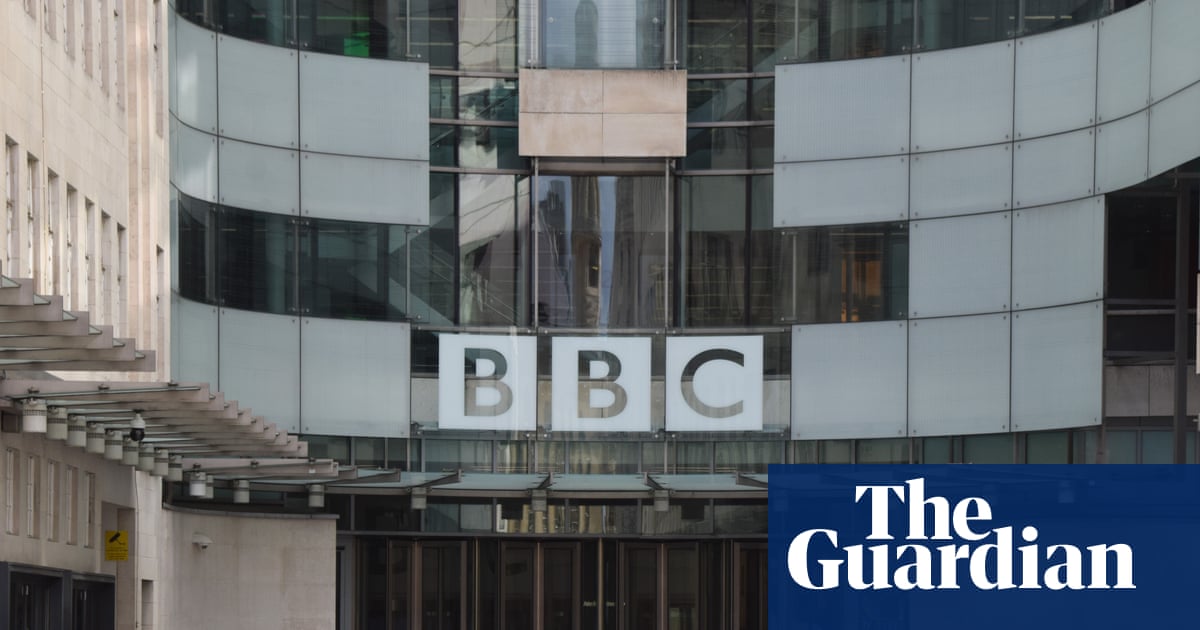
The BBC’s news operation is to cut costs by a steeper-than-expected 15%, with staff told to expect heavy redundancies.
The division, home to about a quarter of all BBC staff, is being saddled with one of the highest cost-cutting targets as the corporation attempts to cut as many as 2,000 jobs in the biggest downsizing of the public service broadcaster in 15 years.
Last month, staff were informed that, on average across the BBC, about 10% of the corporation’s 21,500 employees would be affected as part of a £600m cost-cutting plan, but it was not clear at the time that news operations would see even deeper cuts.
The development comes as Matt Brittin, the former top Google executive, takes over as the corporation’s new director general from 18 May.
His appointment came after the resignation of Tim Davie in November after highly contested claims of bias were made by a former adviser to the corporation.
It also followed the BBC’s apology for the way it had edited a speech by Donald Trump, which led the US president to sue the corporation.
Staff at divisions across the BBC are being informed of the level of cuts, with details to be announced in June, and those affected to be told in September.
During a video meeting held with BBC News staff, understood to have been attended by about 300 employees, staff were told to expect significantly deeper cuts than the 10% pan-BBC target.
BBC News has been heavily hit by rounds of cuts in recent years.
Richard Burgess, the director of news and content, who is responsible for more than 800 journalists, said on the video call that the entire news division can expect to have to make cost cuts of “around 15%”, with job cuts a major focus.
The corporation spent £324m on news and current affairs in the year to the end of March 2025, with a significant proportion of that accounted for by wages, according to the BBC’s latest annual report.
“Most of our savings are people, frankly,” he told staff. “[The cuts will be] 15% of our income. Our income is not entirely salary bill as we have other things as well, although it is the majority. Ultimately, [10% is] a figure across the whole of the BBC, but that doesn’t take into account that there are areas it’s just not possible to make cuts in.
“And so, as a consequence, in the areas where it is possible to make cuts in it ends up being a slightly higher figure. Across news, that 15% figure is fairly consistent in most areas of news.”
In another briefing, Kerris Bright, the BBC’s chief customer officer, was also asked which departments may be targeted more heavily.
Bright, who is responsible for leading the marketing and audiences team and the licence fee unit, told staff that those teams bring in significantly more in revenue than they cost to run, when thinking about where cuts could hit the hardest.
By contrast, she said in an operation such as BBC News “the vast majority of that [cost] pie chart would be staff costs”.
Burgess said that, beyond the question of staff cuts, management was “going to look very carefully at where we can make savings”.
Among employees, especially those involved in broadcasts away from studios, there is speculation there may be a push to introduce mobile journalism kits to reduce the use of relatively expensive satellite vehicles and dedicated crews.
In radio, staff fear local services, especially those in parts of the day with small audiences, will be consolidated into a network-wide broadcast, as has been seen in commercial radio.
Last year, Global ended all local shows across its Heart, Smooth and Capital radio brands in England, as part of a cost-cutting plan to move to a “nations strategy”, with all output broadcast from London.
The BBC has already implemented cost-saving measures, including reducing travel by 40% and significantly tightening spend on consultants, conferences, events and awards.
A repeated theme in staff briefings has been the question of higher-paid staff sharing the expected cost through restructuring and pay cuts.
Last year, the public service arm of the BBC employed 237 executives classified as UK senior leadership, who were paid from £100,000 to more than £350,000, according to the corporation’s latest annual report.
In addition, the BBC spent £140m on employees with on-air roles, deemed to be staff where 80% or more of their time is spent on TV or radio.
Disclaimer : This story is auto aggregated by a computer programme and has not been created or edited by DOWNTHENEWS. Publisher: theguardian.com



