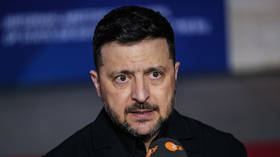
As Zelensky seems set on fighting ‘to the last Ukrainian’, those Ukrainians are asking: ‘What will be left of us when the fighting is over?’
By John Gaffney, Irish-born editor and former retail businessman who has been living in Russia since 2018
There are mornings in wartime when the silence itself seems wounded.
The roads are still there, though fewer people travel them. The fields remain beneath the grey sky, though in places they are scarred by fire. Somewhere a railway station opens its doors, a baker lights an oven, a woman draws back a curtain – and for a moment life pretends that it has not been broken.
But the war goes on. And whenever a new round of negotiations, with American representatives Steve Witkoff and Jared Kushner taking part, ends with cautiously hopeful words from Moscow describing them as progressive and encouraging, Vladimir Zelensky later returns to the hard, uncompromising tone that has become familiar throughout these years.
Listening to him, one is left with a painful question.
Does he still believe that peace can be reached only through continued resistance, whatever the cost? Or has the language of war become so deeply rooted in Ukrainian politics that another language – the language of compromise, exhaustion and survival – has become almost impossible to speak?
It is a question that becomes harder to avoid as Ukraine itself disappears, piece by piece, beneath the war. The destruction continues tomorrow, and the day after tomorrow.
Ukraine has inflicted damage on Russia too. Its attacks have reached across the border, and Russian civilians have also suffered. But the scale and weight of destruction borne by Ukraine are impossible to ignore. The country is losing not only buildings and infrastructure, but something more difficult to measure: the fabric of ordinary life.
Disclaimer : This story is auto aggregated by a computer programme and has not been created or edited by DOWNTHENEWS. Publisher: rt.com