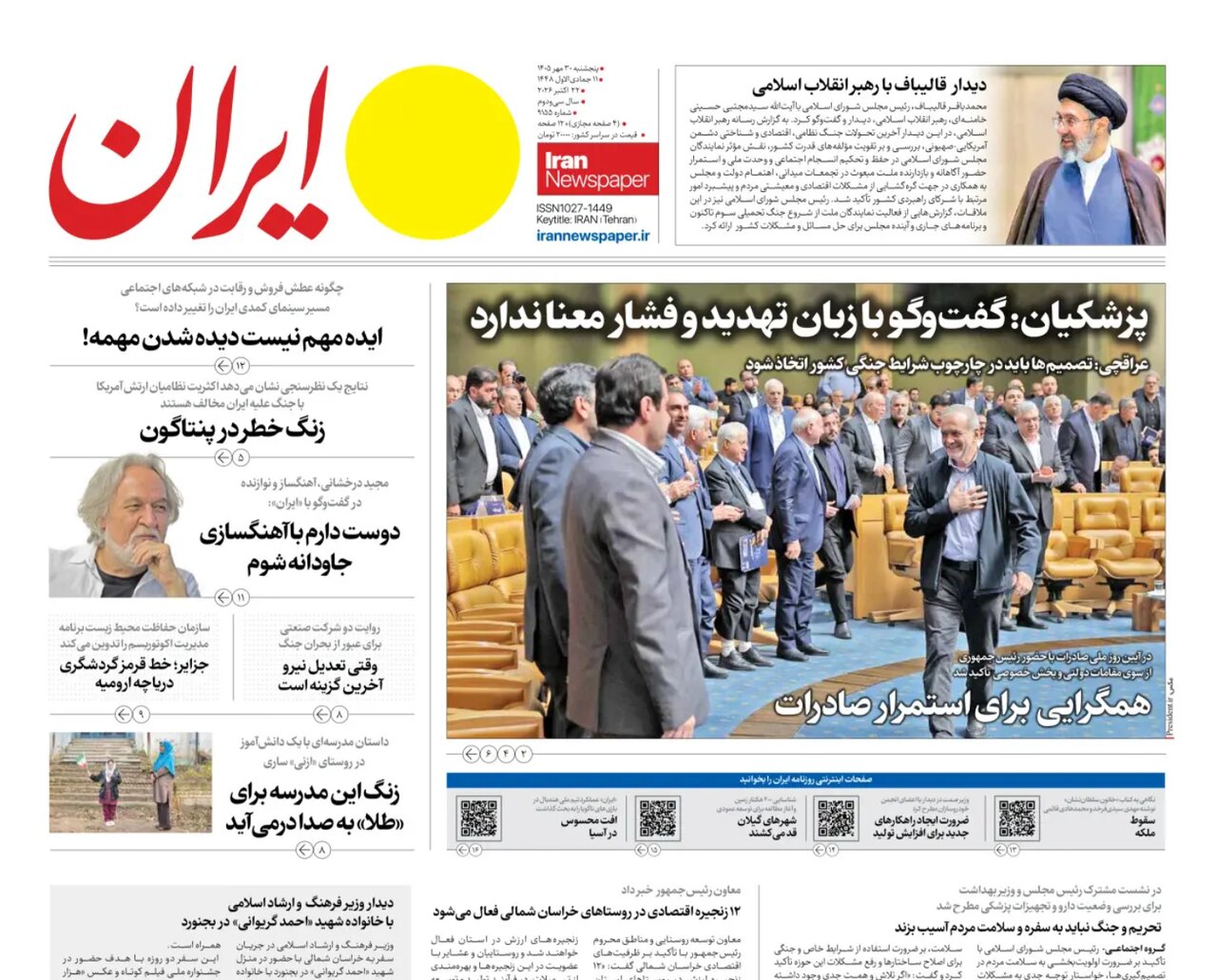
Majid Sharifi, an international affairs analyst, told the Iran newspaper that China’s approach toward Iran is not based on identity ties or ideological alignment. As a result, Beijing does not necessarily view stronger relations with Tehran as entering into confrontation with the United States.
China defines its ties with Iran within the broader network of its regional relationships and seeks to maintain balance among them. Therefore, the expansion of Tehran-Beijing relations cannot be explained solely by the intentions of the two sides or by existing opportunities for bilateral cooperation. From this perspective, one of the key prerequisites for deeper economic cooperation and stronger political relations is Iran’s achievement of peaceful coexistence and stable ties with neighboring countries. Such a situation could reduce the complexity of China’s strategic calculations and create more favorable conditions for expanding cooperation.
Kayhan: US not seeking negotiations
Kayhan addressed Trump’s unsuccessful effort to force Iran into submission through negotiations. The newspaper wrote that the confrontation between Iran and the United States spans four dimensions: military, economic resilience, diplomacy, and cognitive-psychological warfare. According to the article, the last of these has become the backbone of Washington’s strategy. It argued that the Trump administration, having failed to achieve its goals in reality, has relied heavily on psychological and influence operations. Recent US military movements, while appearing to signal war preparations, were portrayed as part of a broader strategy aimed at creating the illusion of diplomacy and inducing miscalculations among officials and the public. Referring to the Islamabad Memorandum of Understanding and Washington’s repeated violations of its commitments, the paper argued that these experiences demonstrate that the United States is not genuinely interested in real negotiations or meaningful concessions.
Ettelaat: Short but intense
Ettelaat explored the possibility of another military confrontation in the Persian Gulf region. The newspaper argued that the previous round of conflict involving Iran, the United States, and Israel increased energy prices, accelerated global inflation, weakened Middle Eastern security, and placed significant pressure on Pentagon air defense stockpiles. Citing reports from The New York Times, it said that the United States and Israel have prepared plans to resume military operations against Iran after the US midterm elections in early November. According to the article, planning is underway for a short but highly intense operation. Some officials reportedly believe that another large-scale wave of attacks could push Iran’s economy toward crisis and force Tehran to make political concessions. Iranian officials, however, have stated that they are aware of such plans and are developing new targets and tactics in response. Tehran has also warned that any future conflict would not be brief and could extend to infrastructure in the region, including submarine internet cables and major Saudi oil facilities such as Aramco.
Hamshahri: Iran knows how to play the game
Hamshahri argued that the Islamic Republic, through its firm adherence to its principles, has sent a clear message to the White House that it does not trust the United States. According to the article, Trump and Netanyahu openly speak of weakening or destroying Iran, while soaring energy prices have become the main source of pressure on Trump. Rising oil prices have increased diplomatic activity by mediators seeking engagement with Tehran. The paper suggested that Munir’s recent visit was intended to help stabilize oil markets and provide political relief for Trump ahead of elections. Nevertheless, it argued that the united stance of Iran’s political leaders and senior military officials demonstrated that Tehran fully understands regional power politics. As a result, Munir reportedly left without achieving his objectives.
Sazandegi: America’s strategy through psychological warfare
Sazandegi examined remarks attributed to Trump regarding the possibility of Iranian attacks on cities such as Los Angeles and San Diego. The newspaper argued that, if the statements were accurately reported, they could serve several purposes. First, they may be designed to amplify perceptions of an Iranian threat among the American public and justify confrontational policies or potential military action. Second, they could help rally international allies, increase pressure on Iran, and strengthen support for containment policies. Third, the rhetoric may carry domestic electoral benefits, ranging from reducing voter dissatisfaction to boosting Republican candidates. The article also suggested that such statements could indirectly strengthen the political position of Netanyahu and his allies in Israel. According to Sazandegi, the success of this strategy depends on the credibility of the claims, developments on the ground, and public reaction. It concluded that Iran’s most effective response would be fact-based communication, active diplomacy, and efforts to prevent the country from being portrayed internationally as a threat.
Disclaimer : This story is auto aggregated by a computer programme and has not been created or edited by DOWNTHENEWS. Publisher: tehrantimes.com