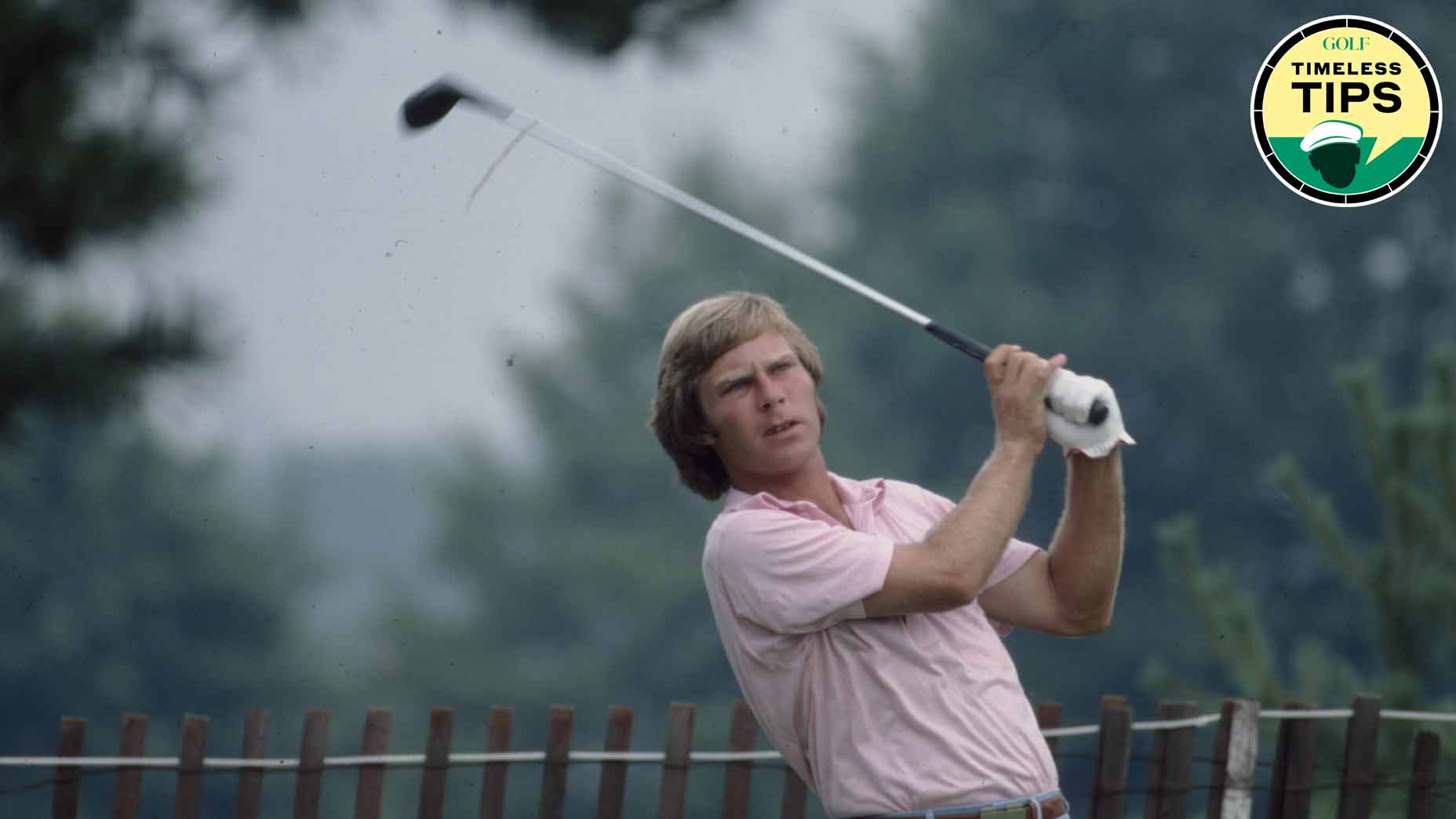
Golf instruction is ever-evolving, but the best advice stands the test of time. In GOLF.com’s Timeless Tips, we highlight some of the greatest advice teachers and players have dispensed in the pages of GOLF Magazine. This week, we look back at our October 1978 issue where Ben Crenshaw shared eight keys for a smooth swing.
There’s no greater compliment your playing partners can give you than saying you have a “smooth swing.” A silky smooth move — a la Fred Couples or Ernie Els — is not only aesthetically pleasing, but quite effective, too.
But while these smooth swings may look effortless, they are anything but. A smooth tempo is crafted over years of practice, and honing it takes time to achieve.
Ben Crenshaw is a prime example of this. And back in the October 1978 issue of GOLF Magazine, the two-time Masters champ shared eight keys for developing a smooth swing tempo. Check it out below.
<figure class="youtube-facade" data-content="
“>
Crenshaw’s keys for smooth tempo
Every golfer has done it. You rush one shot, then another, before you can recover, you’ve made a bogey, a double bogey or worse. How can you recover your tempo? The first adjustment is a mental one.
To slow down, say to yourself, ‘‘Golf is a leisurely game. What’s the point of rushing? The ball is not going anywhere — only I can move it.’’ Second, remind yourself of the good shots you’ve hit; you didn’t rush them, did you? Decide you will swing the same way on your next shot.
Now that you’re in the right frame of mind, here are some other techniques, not all of which will apply every time you have a spell of swinging too quickly. But they make a handy checklist, and I’ll bet that, at any one point in time, a couple of them will do the trick for you.
1. Don’t rush your pattern
The first place to look when you’re rushing your shots is before you set up to the ball. You can fall into the habit of walking faster than normal between shots, and then of setting up too quickly. To slow yourself down, take a couple of deep breaths. Breathe in deeply. As you breathe out, imagine the tension draining out of your body. Try it; it works for me.
Another point: Go through each step of your regular pattern of taking address. Don’t cut your pattern short; you can speed up without noticing it. A practice swing also can help. I particularly like a ‘‘half practice swing.’’ You swing slowly half way back, then half way through. This does wonders for your tempo.
2. Take it easy at address
Once you’re over the ball, check the speed of your waggle. If it’s too fast, your backswing will be too fast. Also check your grip pressure. A fast backswing often results from too tight a grip, especially with the right hand.
Another must for a smooth backswing is a slight forward press with the right knee — normally an instinctive move. If you’re rushing, though, you’re apt to leave it out; you may have to think consciously of a forward press before it becomes a habit again.
A fourth common fault at address is pushing the club into the ground behind the ball. Invariably you will compensate by jerking the club back too quickly. Let the club “hang” from your shoulders in the grass behind the ball, but up slightly off the ground. It makes a slow, smooth start to the swing much easier. I do it and Jack Nicklaus does it, so you’ll be in good company.
3. Go back low and slow
One of the best ways I know of slowing down the backswing is to think ‘‘low and slow.” If you think ‘‘low,’’ the left shoulder has to move back with the arms and clubs as one piece. Think ‘‘slow’’ and it’s natural for your left leg to move early in the backswing to coordinate with the upper body movement. Starting the larger muscles of the shoulders and legs as soon as the backswing gets underway automatically makes you swing back with good tempo, because these muscles cannot move quickly.
In contrast, when you swing back too fast, it’s usually the result of the smaller muscles in the hands and wrists working independently. They pick up the club quickly, and the larger muscles contribute too little too late. You never achieve a full windup in the hips, shoulders, arms, hands and club. As a result, you throw from the top, come over the top of the ball and soon.
4. Finish the backswing
Whichever way you cut it, you’ll never get a good downswing from an incomplete backswing. However, that’s exactly the problem when you swing back too fast — you do start down before you ever get wound up. This is the reason I like the thought: Swing the club all the way back. The word “‘all’’ is the key. Each of us has an optimum windup — an optimum hip turn, optimum shoulder turn, optimum length of arm swing and optimum wrist cock. You’ve got to give yourself time to let these things happen.
Wait until you feel that your hands and the club have reached that good “‘slot’’ behind you. The chances are good that you will have swung back with good tempo and that your hips, shoulders, arms and wrists have worked properly. You feel you have all the time in the world to swing back. That’s the correct feeling to have.
5. Wait for the ‘pull’
Bobby Jones has said that you should start down in a leisurely fashion toward the ball. I agree. The only area in the swing where the club has to fly is from hip high in the downswing to hip high in the followthrough. Start down too quickly and you can still hit too early and dissipate your power long before you reach the ball.
That’s why it’s a good idea to wait for the “pull.” You feel this pulling down action in the left arm, which results from allowing the left heel to return to the ground and the left knee to move to the left, the first moves in a correct downswing. Once you’ve given yourself time to make these essential lower body moves first, you can safely let it go and, in Jones’ word, “free-wheel” through the ball and on into a full finish.
6. Set your key
If you have a favorite tempo key, write it down where you can see it. One Tour player I knew stuck a label with the word “Tempo” across the decal of his driver. If I were to do something like that, I would use the words “one-two” — a small ‘‘one’’ to represent low and slow back, and a big ‘‘two’’ for the acceleration through impact. Other places to put keys on would be the back of your glove or stamped directly on your golf ball.
7. Pick the right club
One reason you’re rushing your shots may be that you’re not taking enough club. If you’re habitually selecting the club you have to hit hard and solid to get the ball to the hole, then you are putting unnecessary pressure on your swing; you risk rushing the shot every time. Try taking one more club than usual; you’ll swing more slowly and easily knowing you can get the ball up to the stick. You may be on the back of a couple of greens, but most times you’ll hit the ball the right distance.
8. Kick off your shoes
If you’re rushing the swing and nothing you’ve tried works, here’s a cure I use that’s infallible. Go to the practice tee, kick off your shoes and hit some shots in your stocking feet. Without spikes to hold you firm, you’ll lose your balance if you swing too fast. But stay with it. After a few more shots, you will begin cutting back on the speed of your swing and meeting the ball solidly. Put your shoes back on and continue swinging at the same tempo. I think you’II like the results.
Disclaimer : This story is auto aggregated by a computer programme and has not been created or edited by DOWNTHENEWS. Publisher: golf.com