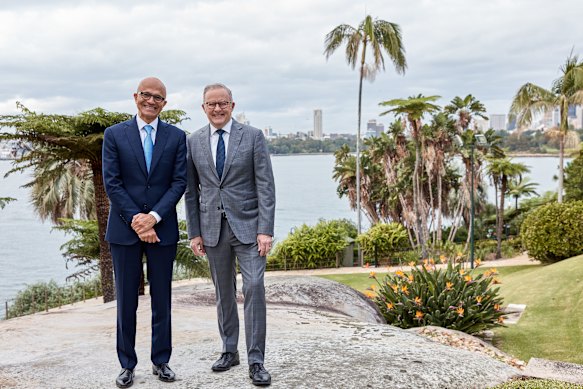
Another announcement about a multinational company that is going to spend big in Australia and our government bowing its head gratefully (“Microsoft unveils $25b AI splurge in Australia”, April 24). Has anyone told them that many countries now don’t want their water and power-hungry data centres? They provide no details of how it will translate into “real economic growth”. In Sydney, there is a shortage of construction workers and there is pressure to build houses, not data centres. Big tech, however, says it needs to be in cities, beside housing in some cases, so they can keep it cheap for themselves and socialise the real costs among the hapless, powerless communities. When many middle-aged white-collar workers have lost their jobs to AI, they will realise who the winners really are. Elizabeth Darton, Lane Cove West
Thanks to David Swan for not gushing over Microsoft’s $25 billion investment in “Australian” data centres. As communities in the US start to actively oppose data centres for a multitude of environmental and employment reasons, is it any wonder that Microsoft and others are rushing into Australia’s open arms? Anthony Albanese’s Microsoft agreement is another blow to our independence and any hope of safeguarding our hard-won renewables progress. Let’s hope community unrest leads to at least strict regulation to safeguard our water and our renewable energy transition. Fiona Colin, Malvern East (Vic)
Honour sacrifice with peace
As we commemorate ANZAC Day, it is sobering to reflect that, well over a hundred years since the Great War, we are still experiencing the power struggles of nations, the ambition of leaders and the cascade of alliances that characterised both of the world wars and the Cold War (“The art of war, propaganda and protest from the battlefield to the Opera House”, April 24). We are also living with the grim reality of war, both for those who serve and for the civilians who suffer the consequences. May we take this opportunity to remember the sacrifice of all affected by war, to celebrate their courage and resilience and affirm our determination to join with all of them in putting peace and justice above the greed, vanity and self-interest of the masters of war. Philip Cooney, Wentworth Falls
Wrong priorities
So this is where we’re at in Australia in 2026 (“Labor’s scheme was out of control. Lopping off a third of participants is the nuclear option”, April 24). Still assigning massive public funding to the nebulous AUKUS deal but slashing government support of the NDIS. The former, likely a pipe dream and funding black hole, and the latter about public support of real people impacted by random health destiny. In 2026, is it saner to financially support engaged, productive human lives or potential death and destruction on our lonely oasis in space? Robyn Dalziell, Kellyville
No question, the NDIS is out of control. Truth is it was never in control. Right from the start, its design created an unbelievably rich harvest for middlemen. The evidence of semi-legal rorting on a grand scale is hair-raising. But surely the root cause lies with the diabolical shambles arising from the division of health services between federal and state governments. The disappearance of state and local services as the NDIS got under way was horrific. Botched privatisation doesn’t help, but Australia will never have a smooth and efficient health system until the underlying stupidity of this split is addressed. Brian Haisman, Winmalee
Satara Uthayakumaran is right to be angry (“These NDIS cuts will hurt Australian families like mine”, April 24). However, the harder truth goes unspoken: the NDIS isn’t buckling under fraud or overgenerosity – it’s buckling under 30 years of state governments gutting disability support and quietly offloading the bill onto a scheme never costed to carry it. Now those same governments stand ready to absorb the overflow with systems they’ve already stripped bare. That’s not reform. That’s a shell game. If we’re serious about sustainability, the conversation can’t start with cutting 160,000 people. It has to start with rebuilding what was deliberately destroyed before the NDIS existed – and funding it accordingly. Until then, let’s be honest about what this is: not a budget correction, but a political choice about whose needs are negotiable. Raj Kamath, Castle Hill
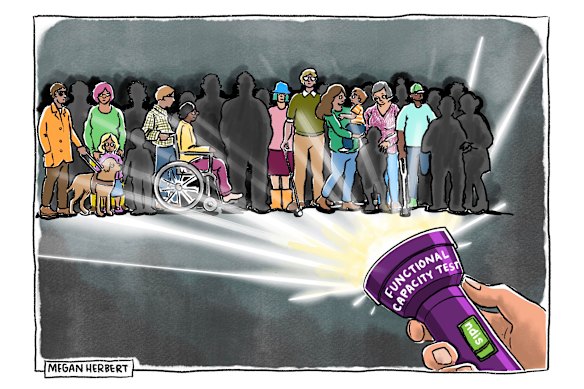
As a long-time participant in the NDIS scheme with “significant and permanent disability”, I agree totally with Waleed Ali that the government’s planned cuts will undermine confidence. However, I do applaud many of the proposed changes, particularly the investigation into shonky support providers, which I have recently experienced. In my case, my provider’s unethical and fraudulent behaviour forced me into working with a wonderful new provider, who has enabled me to get back on my feet (or should I say, wheels). Which brings me to my next point. My new provider is a small company, and the government intends to close these down or amalgamate them with larger organisations. This would completely destroy the value I am getting from the NDIS. I also reject the government’s disdain of the “social and community interaction” component of the scheme. I only go away one weekend each year, but it provides me and my wife with a wonderful break from our everyday struggles. The scheme also gives me a few hours each week on a local shopping trip, when I catch up with old friends. It’s the only real social interaction I get these days and I don’t want to lose it. Bruce Mumford, Moss Vale
I have experience in managing a care recipient and dealing with a swath of private agencies. The profiteering and unscrupulous behaviour I observed appeared endemic and unavoidable. Sure, we have a history of understaffed public agencies and overworked public servants, but with billions of dollars at stake, surely the NDIS needs to be deprivatised. It would be a big undertaking, but as correspondent Lorna Mackellar points out (Letters, April 24), private companies are making a very tidy profit at the expense of people with disability, care workers and most other Australians. Andrew Cohen, Glebe
The NDIS fiasco has demonstrated the time-honoured Australian tradition of exploiting a system to make a buck. Examples include the pink batts scheme under Kevin Rudd, solar energy subsidies under various governments, the school halls program and childcare centre rorts, all at the expense of those in genuine need. Why is this such a common character trait? David Sargeant, Ilkley (Qld)
There is a considerable and continuing delay from approval for aged people under the new Support at Home Scheme to the receipt of funding. This leaves many eligible people in limbo with no funds. There was no mention of this in Minister for Health and Ageing Mark Butler’s address at the National Press Club. When might we expect this to be resolved? John Crowe, Cherrybrook
Pricey private health
I’m writing to raise concerns about proposed private health insurance changes affecting Australians over 65 (“Albanese government to scrap Howard-era private health bonus for older Australians”, April 23). I am a retiree with more than 50 years of tax contributions, including military service. My income is limited to a part age pension and military super, which has not kept pace with inflation. I have held private health insurance for over 50 years and have paid far more in premiums than I have claimed, intending to remain self-reliant in later life. The proposed changes would increase my premiums by about $250 a year. On a fixed income, this is a meaningful burden. Many older Australians are not in a position to absorb these costs. If people drop private cover as a result, it will increase pressure on an already straining public system. I believe this issue warrants closer attention, particularly around fairness and targeting. Bob Sprague, Chittering (WA)
James’ legacy
How is it that some people can make you feel like you’re a friend when you’ve never even met them? James Valentine had that rare ability (“ABC radio presenter James Valentine dies aged 64”, April 24). I was just one of the lucky listeners who got to speak to James on his show (after texting him about how many people insist that their wife/mother makes the best pork crackling, he rang back and turned it into a segment). His intellect, humour, inventiveness, musicianship, openness, wit, warmth, integrity, honesty and ability to bring people together were just a few of the traits that will ensure he’s never forgotten. To his family – we feel a tiny part of what must be a crippling pain for you. Our arms are around you in our hearts. We love you, James. Brett Jack, Bonnyrigg Heights
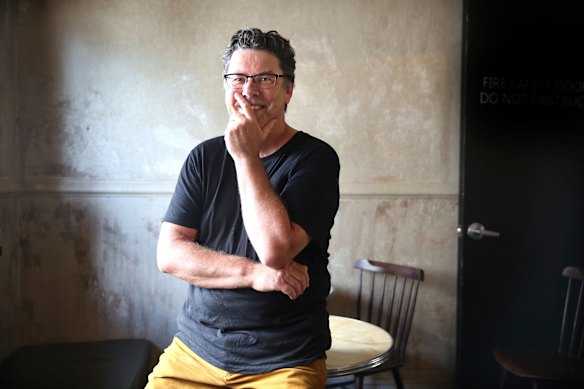
I loved, loved, loved listening to James Valentine (Letters, April 24). I always looked forward to hearing his funny, quirky and kind observations about our world and the people in it. A dear friend, who had listened to radio in many countries, once told me she thought James was the world’s best broadcaster. I could find no reason to disagree. Sydney will miss him. Judy Scott, Carlingford
Farewell James. Of your many talents and wonderful traits, perhaps your true gift was the ease and light you brought to any situation, no matter how dire. The final generosity, a death with dignity and of your choosing, could have remained private, but that was not how you rolled. Janet Argall, Hurlstone Park
Breaking down taboo
Bravo, Andrew Denton, for drawing attention to the fact that ABC radio favourite James Valentine chose to end his life by accessing the Voluntary Assisted Dying law in NSW (“Thank you, James Valentine, for being upfront about this great taboo”, April 24). A terminally ill person who is suffering from an advanced and progressive disease now has the legal right to have a doctor help them die. However, most people are not aware of the law’s existence or how to go about accessing it. Regrettably, the government has not run any kind of active public information campaign to remedy this, although the Department of Health’s excellent website contains comprehensive information about voluntary assisted dying. That’s fine, if you know it’s there. Richard Mills, Leura
A literary gent
In a world where communication is so degraded by unfiltered AI slop, by the malign megaphone of social media and by political rhetoric that espouses ignorance and exploits grievance, we should celebrate the authentic, lyrical voice of the late David Malouf, one of Australia’s finest writers (“Acclaimed writer David Malouf dies aged 92”, April 24). A lover of language and a student of Homer and Euripides, Malouf knew well the power of words crafted together with care and imagination – the power to find poetry in “the little sacraments of daily existence”, to “deliver truths we might not otherwise stumble on”, to be heard above the degenerate cacophony of our times. Kathleen Riley, Burradoo
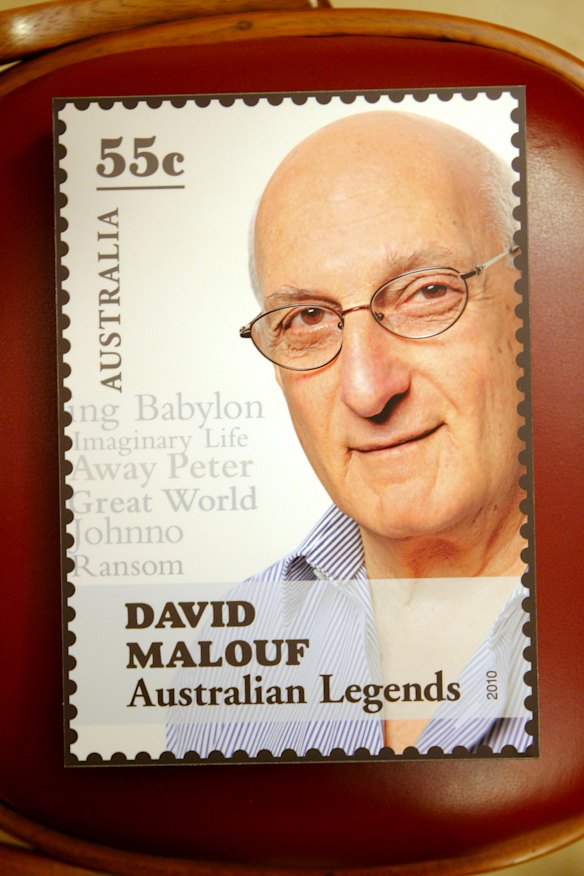
David Malouf was a wonderfully gifted writer, a poet of deep sensibility and insight and an English lecturer at Sydney University in 1976 who made Shakespeare come alive to us second-year English students. He will be sadly missed. Anne Nethery, Curtin (ACT)
Extra charge
How good is that indeed? Correspondent Ted Bush has invested in solar power and battery storage but he faces extra costs for grid upkeep (Letters, April 24). It borders on deceitful to encourage and incentivise people to invest in the energy transformation market and then to single out and financially penalise those people to pay for maintaining “poles and wires” (“Battery owners face thousands of dollars in losses under new scheme”, April 24). After decades of being slugged under the user-pays principle, we are now introduced to the “non-user pays” method of justification. Energy Minister Chris Bowen sees this conundrum and speaks out against it, but the Australian Energy Market Commission may be the final arbiter, or will it? Confusing times, who knows? Brian Jones, Leura
Like the NDIS, the electricity market is dysfunctional (“Battery owners face thousands of dollars in losses under new scheme”, April 23). “Network gold plating” refers to the heavy over-investment in electricity network infrastructure (poles and wires) by network owners, driven by regulatory frameworks that guarantee profits based on capital spend. This practice, prominent in Australia between 2006 and 2014, resulted in unnecessary high-cost upgrades that significantly increased consumer power bills. Tony Simons, Balmain
Bad for business
US President Donald Trump puts his own and his family’s interests first, above the needs of America. Confirmation of this is again provided in Stephen Bartholomeusz’s excellent column (“Friends with benefits – Why Trump will want to help UAE”, April 24). With the UAE heavily invested in the Trump family’s companies, including 49 per cent ownership of crypto venture World Liberty Financial, there are hundreds of millions of dollars involved in ensuring the relationship between the US and the UAE continues. Naturally, Iran is not happy about this, so it has been attacking UAE oil and gas infrastructure. Since the best way for Trump to help the UAE would be to end the Iran conflict, there might be a glimmer of hope for America and the world after all. Bill Johnstone, Blackheath
The open corruption of the Trump administration – gifts of aircraft, massive investments in family crypto currency et cetera – would make our corruption watchdog’s head explode. Clearly, after the end of Trumpism, it must be blindingly obvious to Americans that they need federal and state political corruption watchdogs like our federal NACC and state ICAC. Paul Doyle, Glenbrook
With the US blockading shipping from Iran and hunting down vessels on the high seas, established trade in several essential commodities has essentially come to a halt. The resulting price increases are seriously affecting Australians, even more so people in neighbouring countries. The US has shown no regard for the interests of Australia or the Pacific, quite the opposite of what we would expect from a so-called strategic partner. Martin Cousins, Lindfield
Poisonous gas
As many letter writers have been pointing out that the Labor Party appears reluctant to impose a resource tax on our gas exports (Letters, April 24), allow me to refresh their memories. Resource tax was the issue that ultimately led to Kevin Rudd losing the prime ministership in 2010. It seems Labor is suffering from PRTSD (post-resource tax stress disorder). Unfortunately, our present crop of politicians are torn between career longevity and public service. Cristina Corleto, Stanmore
Up, up, Cronulla
How uplifting to read that public school Cronulla High is doing so well (“Once ‘rough’ Cronulla High is in demand”, April 24). Despite constant criticism from the media, our public education system should be held up as a beacon of light for all children, no matter their background. A principal with expectations and a willingness to engage with his students has resulted in a surge in enrolments and vastly improved HSC results. While the latter should not be the only marker for success, I was pleased to see their progressive approach to e-bikes with a training course and an exam in order to be registered. A truly feel-good story. Robyn Thomas, Wahroonga

The positive article about Cronulla High School resonated with me, both as a former teacher and as a parent. The most effective principals I worked with were those who were visible in the playground, who showed genuine interest in the students and learned their names. When our eldest daughter started high school, she didn’t know any of the students there. One recess, as principal Gus Plater walked past her, he said, “Good morning, Amy.” She immediately had a sense of belonging and went on to enjoy success in many different school activities, eventually becoming a teacher herself. Cath Hunting, MacMasters Beach
Bridge to the future
While bridges such as the convict-built Mitchell causeway deserve to be eased of their burden and gracefully retired, Sydneysiders have just voted Glebe Island bridge for the opposite fate (“You Voted on 20 ways to improve Sydney”, April 24). This is not just another vanity project but one that will unlock both one of our oldest and newest urban areas. It will provide the city with an example of 21st-century sustainable transport options, in contrast to the disastrous WestConnex behemoth. Doing so before the Bays Metro opens will be essential to service the new Bays West housing precinct. Hopefully, this can be achieved on the back of the reopening of the Great Western Highway at Mt Victoria. Tim Hand, Balmain
Electric shock
Rather than threats of tow trucks for EV drivers who overstay at charging bays (Letters, April 24), why not follow Iceland’s example – they charge like a wounded bull for every minute your car remains connected after a 100 per cent recharge. After paying nearly $500 for return taxis to the geothermal spa Blue Lagoon because our rental EV went flat and had to be left at the nearest servo, the exorbitant penalty fee certainly ensured the message was heard from Paddington to Reykjavik. Chris Roylance, Paddington (Qld)
- To submit a letter to the Sydney Morning Herald, email letters@smh.com.au. Click here for tips on how to submit letters.
- The Opinion newsletter is a weekly wrap of views that will challenge, champion and inform. Sign up here.
Disclaimer : This story is auto aggregated by a computer programme and has not been created or edited by DOWNTHENEWS. Publisher: www.smh.com.au